JSTOR Global Plants Home
  • Home
  • Browse
  • About
  • Access
  • Account
    • Saved Items
    • Profile
  • Log in

Global Plants

Skip to Main Content
  • JSTOR Global Plants Home
  • Global Plants

    • Browse
    • About
    • Access
    • Account
      • Saved Items
      • Profile
Log in
  • Browse
  • About
  • Access
  • Account
    • Saved Items
    • Profile
Advanced Search

Compilation
Sacciolepis nana

3 Images see all

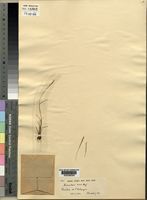
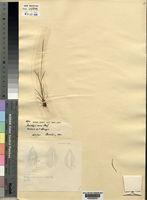
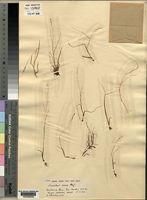
Isosyntype of Sacciolepis nana Stapf [family POACEAE]
Previous
Next

Name

Identification
Sacciolepis micrococca Mez [family POACEAE ] (stored under name); Sacciolepis nana Stapf [family POACEAE ]
Related name
  • Sacciolepis nana
  • Sacciolepis micrococca

Flora

Entry for SACCIOLEPIS nana Stapf [family POACEAE]
Herbarium
Royal Botanic Gardens, Kew (K)
Collection
Flora of Tropical Africa
Resource Type
Reference Sources
Entry From
Flora of Tropical Africa, Vol 9, page 1, (1917) Author: (By O. STAPF.)
Names
SACCIOLEPIS nana Stapf [family POACEAE]
Panicum myosuroides Stapf ex Cheval. var. sudanensis [family POACEAE], Sudania, 87, 88, 102, and in Miss. Chari-Lac Tchad, Étud. Fl. Afr. Centr. Franç. i. 363 (name only).
Information
Annual, growing apparently gregariously and forming small tufts, excluding the flowering culms 2–3 in. high. Culms erect up to slightly over 6 in. high, very slender, filiform, smooth and glabrous like the whole plant, with rarely more than 2 distinctly elongated internodes, the uppermost by far the longest, the preceding 1–2 in. long, shortly exserted. Basal leaf-sheaths loose, widened downwards, spongy but thin, 1/2– 3/4 in. long, pale lead-coloured, the upper tighter to tight, sulcate-striate with minute truncate shoulders; ligules hyaline, very short, truncate, ciliolate; blades filiform to setiform, folded, with an acute or subacute point, from less than 1–2 in. long, up to over 1/4 lin. wide (when folded), soft, suberect, delicately 7-nerved, papillose above on the nerves. False spikes more or less to long exserted, erect, straight, 3/4–1 1/2 in. by 1/2– 3/4 lin., very slender and somewhat loose, with the racemules 1 1/2–2 lin. long and more or less distinct; axis very slender; pedicels short, smooth, with minute discoid tips. Spikelets oblong to elliptic-oblong in outline, acute to obtuse (when mature), symmetrical, slightly turgid, up to slightly over 1/2 lin. long, olive-green or brownish. Glumes very thin, very finely nerved; lower ovate, subacute, 3-nerved, two-thirds the length of the spikelet; upper corresponding in outline and size to the spikelet, 7-nerved. Lower floret barren; valve similar to the glume and of the same length; valvule ovate-lanceolate, nerveless, 1/8 lin. long or quite rudimentary. Upper floret hermaphrodite, elliptic-oblong, acute, 3/8– 1/2 lin. by 1 1/4 lin., pale, polished.
Distribution
Ubangi-Shari North Central M'Brous country; Kaga Do, Chevalier, 5911! 5921! Boma Poste, Chevalier, 5961 4!Ubangi-Shari North Central Dar Banda; Kaga M'Bra, Chevalier, 6643!
Notes
This is possibly a stunted condition of S. micrococca, but the facies of the extremely slender spikes is very peculiar, their racemules being more or less marked out instead of being merged in the cylindrical arrangement of the spike, whilst the spikelets point more forward than they do in S. micrococca. All the specimens quoted were evidently growing in black mud.

Related Materials

  • Terms and Conditions
  • Privacy Policy
  • Cookie Policy
  • Cookie Settings
  • Accessibility
  • Help
  • Contact Us
  • Facebook
  • Twitter
ITHAKA

JSTOR is part of ITHAKA, a not-for-profit organization helping the academic community use digital technologies to preserve the scholarly record and to advance research and teaching in sustainable ways.

©2000-2026 ITHAKA. All Rights Reserved. JSTOR®, the JSTOR logo, JPASS®, Aluka®, and ITHAKA® are registered trademarks of ITHAKA.

╳