JSTOR Global Plants Home
  • Home
  • Browse
  • About
  • Access
  • Account
    • Saved Items
    • Profile
  • Log in

Global Plants

Skip to Main Content
  • JSTOR Global Plants Home
  • Global Plants

    • Browse
    • About
    • Access
    • Account
      • Saved Items
      • Profile
Log in
  • Browse
  • About
  • Access
  • Account
    • Saved Items
    • Profile
Advanced Search

Compilation
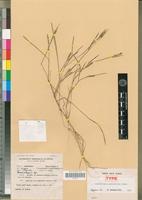
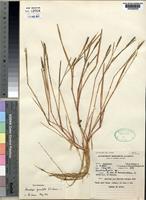
Sacciolepis geniculata

2 Images see all

Type of Sacciolepis geniculata B.K.Simon [family POACEAE]
Isotype of Sacciolepis geniculata Simon [family POACEAE]
Previous
Next

Name

Identification
Isotype of Sacciolepis geniculata Simon [family POACEAE ] Verified by Simon, B.K., Sacciolepis myosuroides (R.Br.) A.Camus [family POACEAE ] (stored under name);
Related name
  • Sacciolepis geniculata
  • Sacciolepis myosuroides

Flora

Entry for Sacciolepis spiciformis A. Rich. Stapf [family GRAMINEAE]
Herbarium
Royal Botanic Gardens, Kew (K)
Collection
Flora Zambesiaca
Resource Type
Reference Sources
Entry From
FZ, Vol 10, Part 3, (1989) Author: W. D. Clayton
Names
Sacciolepis spiciformis A. Rich. Stapf [family GRAMINEAE], in F.T.A. 9: 756 (1920). Type from Ethiopia.
Panicum spiciforme A. Rich. [family GRAMINEAE], Tent. Fl. Abyss. 2: 359 (1851). Type as above.
Panicum huillense Rendle [family GRAMINEAE], Cat. Afr. Pl. Welw. 2: 174 (1899). Type from Angola.
Sacciolepis huillensis Rendle Stapf [family GRAMINEAE], in F.T.A. 9: 755 (1920). — Sturgeon in Rhod. Agric. Journ. 50: 418 (1953). — Chippindall in Meredith, Grasses & Pastures of S. Afr.: 358 (1955). — Jackson & Wiehe, Annot. Check List Nyasal. Grass.: 57 (1958). — Clayton & Renvoize in F.T.F.A., Gramineae: 458 (1982). Type as above.
Sacciolepis lebrunii Robyns [family GRAMINEAE], in Bull. Jard. Bot. Brux. 9: 185 (1932). Type from Zaire.
Sacciolepis geniculata Simon [family GRAMINEAE], in Kirkia 8: 86 (1971). Type: Zambia, Mweru-Wantipa, Phipps & Vesey-FitzGerald 3295 (SRGH, holotype; K, isotype).
Sacciolepis luciae Simon [family GRAMINEAE], in Kirkia 8: 85 (1971). Type: Zimbabwe, Nyanga (Inyanga), Crook 789 (SRGH, holotype; K, isotype).
Information
Annual, growing in clumps. Culms 5–80 cm. high. Leaf laminae linear, papillose on raised nerves above. Panicle 1–20 cm. long, cylindrical, slender, borne above the foliage or rarely nestling amongst it. Spikelets 1–1.7(2) mm. long, ovate, glabrous or hispidulous.
Habitat
Damp or swampy soils; pools on rock and ironstone outcrops
Range
Cameroon and Ethiopia to Natal
Altitude range
0–2300 m.
2300
0
Distribution
Zambia N Mbala, Uningi Pans. 24.vi.1956, Robinson 1769 (K).Zimbabwe W Matobo, iv.1955. Miller 2763 (K; SRGH).Malawi N Nyika Plateau, 5.ii.1968. Simon, Williamson & Ball 1650 (K; SRGH).Mozambique N Ribáuè, 31.i.1964, Tone & Paiva 10357 (K).Zambia W Kalenda dambo, Mwinilunga, 16.iv.1960, Robinson 3611 (K).Zambia C Chakwenga Headwaters, 27. iii. 1965, Robinson 6553 (K).Zambia S Victoria Falls, 17.viii.1947, Brenan & Trapnell 7727 (K).Zimbabwe C Chindamora Reserve, 25.iii.1952, Wild 3789 (K; SRGH).Zimbabwe E Chimanimani, 18.iv.1957, Goodier & Phipps 18 (K; SRGH).Zimbabwe S Bikita, 5.v.1969, Biegel 3016 (K; SRGH).Malawi S Citembo dambo, Mposa, 13.v.1952, Jackson 817 (K).Mozambique Z Mologué R., 8.vii.1943, Torre 5688 (K).Mozambique MS Dororo, 13.vii.1948, Fischer & Schweickerdt 7480 (K; PRE).Mozambique GI Massangena to Machaila, 3.ix.1955, Myre & Carvalho 2237 (K).
Distribution (external)
Madagascar
Notes
The types of S. spiciformis and S. luciae are plants of small stature with large (up to 2 mm.) spikelets, but seem to represent mountain forms at the limit of normal variation rather than distinct taxa. S. geniculata has geniculate basal nodes and panicles nestling amongst the foliage, but the distinction is obscured by intermediates and it seems to be no more than a rock pool ecotype.

Related Materials

  • Terms and Conditions
  • Privacy Policy
  • Cookie Policy
  • Cookie Settings
  • Accessibility
  • Help
  • Contact Us
  • Facebook
  • Twitter
ITHAKA

JSTOR is part of ITHAKA, a not-for-profit organization helping the academic community use digital technologies to preserve the scholarly record and to advance research and teaching in sustainable ways.

©2000-2026 ITHAKA. All Rights Reserved. JSTOR®, the JSTOR logo, JPASS®, Aluka®, and ITHAKA® are registered trademarks of ITHAKA.

╳