JSTOR Global Plants Home
  • Home
  • Browse
  • About
  • Access
  • Account
    • Saved Items
    • Profile
  • Log in

Global Plants

Skip to Main Content
  • JSTOR Global Plants Home
  • Global Plants

    • Browse
    • About
    • Access
    • Account
      • Saved Items
      • Profile
Log in
  • Browse
  • About
  • Access
  • Account
    • Saved Items
    • Profile
Advanced Search

Compilation
Sacciolepis auriculata

7 Images see all

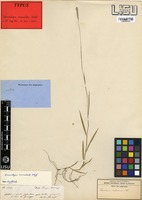
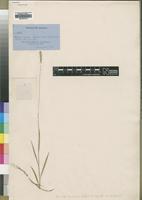
Type of Sacciolepis auriculata Stapf [family POACEAE]
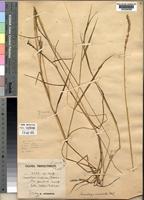
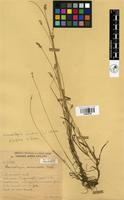
Sacciolepis indica (L.) Chase [family POACEAE]
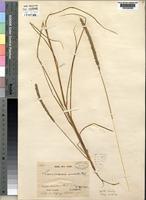
Isotype of Sacciolepis auriculata Stapf [family POACEAE]
Type of Sacciolepis auriculata Stapf [family POACEAE]
Filed as Sacciolepis indica (L.) A.Chase [family GRAMINEAE]
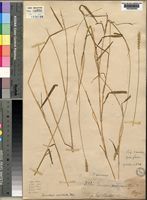
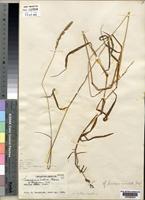
Syntype of Sacciolepis leptorrhachis Stapf [family POACEAE]
Previous
Next

Name

Identification
Sacciolepis auriculata Stapf [family POACEAE ] (stored under name);
Related name
  • Panicum indicum
  • Sacciolepis leptorrhachis
  • Sacciolepis indica
  • Panicum interruptum
  • Sacciolepis auriculata

Flora

Entry for SACCIOLEPIS auriculata Stapf [family POACEAE]
Herbarium
Royal Botanic Gardens, Kew (K)
Collection
Flora of Tropical Africa
Resource Type
Reference Sources
Entry From
Flora of Tropical Africa, Vol 9, page 1, (1917) Author: (By O. STAPF.)
Names
SACCIOLEPIS auriculata Stapf [family POACEAE]
Panicum indicum Rendle [family POACEAE], in Cat. Afr. Pl. Welw. ii. 174; Cheval. Sudania, 105; not of Linn.
Information
Perennial (?), up to 3 ft. high. Culms slender, easily compressible, ascending from an often long-decumbent and rambling base emitting long (over 6 in.) aerial roots from its nodes, the erect portion about 5-noded and sparingly branched, the lower internodes soon bared by the sheaths slipping off, 2–3 in. by 1–1 1/2 lin., the lowest sometimes more or less compressed, the uppermost up to over 1 ft. long, all quite glabrous and smooth. Leaf-sheaths herbaceous, somewhat firm, prominently striate, glabrous and smooth or sparingly hairy upwards, more or less compressed and keeled upwards, produced at the mouth into acute or subacute auricles, up to 2 lin. long, shorter than the internodes; ligules thinly membranous, laterally adnate to the auricles; blades linear from a gradually attenuated or equally wide base which is much narrower than the mouth of the sheath, upwards tapering to a fine point, over 6 (rarely up to 9) in. by 1 1/2–2 lin., flexuous, at first plicate-convolute, then flat, quite glabrous or rarely very sparingly hairy, smooth except along the upwards scaberulous margins, midrib slender, prominent below and whitish, lateral nerves 2–3 on each side, generally obscure. False spike erect on a long-exserted peduncle, straight or flexuous, 1–6 in. by 3–3 1/2 lin., dense, continuous or here and there slightly interrupted or constricted; pedicels very short, smooth, with discoid tips. Spikelets ovate, subacute to acutely acuminate, symmetrical or slightly oblique, 1 1/2 to over 1 3/4 lin. by 3/4– 7/8 lin., pale greyish-green to a warm straw-colour, glabrous or more or less hairy, with finely tubercle-based short hairs. Lower glume broad-ovate, subacute to almost obtuse in dorsal view, half or over half the length of the spikelet, thin, 5- (rarely 3- or 7-) nerved; upper broad-oblong to ovate-oblong in dorsal view, tip hyaline and rather obtuse if flattened out, finely and prominently 9- (rarely 7-) nerved. Lower floret ♂ or barren: valve very similar to the upper glume, but slightly shorter, 9-nerved; valvule narrow, distinctly shorter than the valve; anthers 3/4 lin. long. Upper floret hermaphrodite, oblong, subacute, 3/4– 9/10 lin. by 1/3– 2/5 lin., white, polished.
Distribution
Angola Lower Guinea Pungo Andongo; in marshy meadows near Pedras de Guinga, Welwitsch, 2826!Uganda Nile Land low swamps between Ukoko and Makaswa, 4000 ft., Dummer, 2951!Ubangi-Shari North Central Senussi Country; Ndelle, Chevalier, 6798!French Guinea Upper Guinea Baffing Valley, in wet places, Pobéguin, 1745! 1745 b!Nigeria Upper Guinea Lagos; in damp situations, Dawodu, 157!Nigeria Upper Guinea Borgu, Barter, 752!
Notes
Panicum indicum, as understood by Linnæus, is a small weak annual with small spikes and spikelets and exauriculate leaf-sheaths. The nearest approach to it in Africa is S. spiciformis (see above, p. 756). It seems to be limited to the Indo-Malayan region from Ceylon to North Australia. The various varieties, among them var. elatum (see below under S. leptorrhachis), admitted in the Flora of British India are mostly referable to S. angusta, Stapf (Panicum angustum, Trin.). None of them has the auricled leaf-sheaths characteristic of the African plant described here.

Related Materials

  • Terms and Conditions
  • Privacy Policy
  • Cookie Policy
  • Cookie Settings
  • Accessibility
  • Help
  • Contact Us
  • Facebook
  • Twitter
ITHAKA

JSTOR is part of ITHAKA, a not-for-profit organization helping the academic community use digital technologies to preserve the scholarly record and to advance research and teaching in sustainable ways.

©2000-2026 ITHAKA. All Rights Reserved. JSTOR®, the JSTOR logo, JPASS®, Aluka®, and ITHAKA® are registered trademarks of ITHAKA.

╳