JSTOR Global Plants Home
  • Home
  • Browse
  • About
  • Access
  • Account
    • Saved Items
    • Profile
  • Log in

Global Plants

Skip to Main Content
  • JSTOR Global Plants Home
  • Global Plants

    • Browse
    • About
    • Access
    • Account
      • Saved Items
      • Profile
Log in
  • Browse
  • About
  • Access
  • Account
    • Saved Items
    • Profile
Advanced Search

Compilation
Strophanthus kombe

5 Images see all

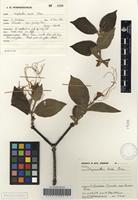
Filed as Strophanthus kombe Oliv. [family APOCYNACEAE]
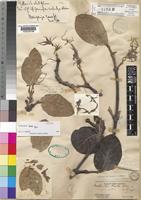
Holotype of Strophanthus kombe Oliv. [family APOCYNACEAE]
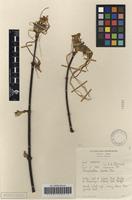
Filed as Strophanthus kombe Oliv. [family APOCYNACEAE]
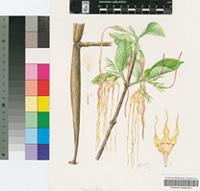
Strophanthus kombe Oliv.
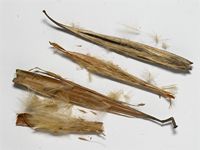
Strophanthus kombe Oliv.; fruit
Previous
Next

Name

Identification
Strophanthus kombe Oliv. [family APOCYNACEAE ]
Related name
  • Strophanthus kombe

Flora

Entry for Strophanthus kombe [family APOCYNACEAE]
Herbarium
South African National Biodiversity Institute, Compton Herbarium, Cape Town (SAM)
Collection
Flora of Southern Africa
Resource Type
Reference Sources
Entry From
Flora of South Africa, (2003) Author: Dr J.P. Roux
Names
Strophanthus kombe [family APOCYNACEAE]
Information
Shrub or woody climber; stems hispid-tomentose when young, becoming glabrescent and scabrid with age; bark grey or black, dotted with lenticels; Leaves subsessile, elliptic to broadly elliptic or ovate-elliptic, 8-16 cm long and 4-5-10 cm broad, obtuse at the base, apex rounded to abruptly acute or apiculate, densely hispid-tomentose when young, glabrescent and scabrid above when mature, drying dark brownish above, paler below; secondary nerves 7-10 on each side, oblique, distinct below; petiole 0-5 mm long, channelled above; axillary glands present. Inflorescence cymose, compact, 1—several-flowered, terminal on short branches, appearing together with or before the leaves, hispid; peduncles short; bracts narrowly lanceolate, 6 mm long; pedicels slender, 7-10 mm long. Flowers cream to yellowish with red or purple markings, scented. Calyx hispid-tomentose, 10-14 mm long; sepals linear-lanceolate. Corolla pubescent without; tube narrowly cylindric at the base for 7-9 mm then campanulate-infundibuliform for 7-10 mm; lobes produced into long, slender, pendulous appendages, 6-12 cm long; throat scales very short, densely papillose. Stamens included, subsessile; anthers lanceolate, acuminate, sagittate, 4-5 mm long, polliniferous in the upper half, shortly apiculate. Ovary of 2 free carpels, densely tomentose; style filiform, 10-12 mm long; stigma enclosed by the anthers, capitate, with a reflexed frill at the base. Fruit of 2 follicular mericarps eventually spreading at 180°; follicles 20-40 cm long and 2-3-5 cm broad at the base, tapering gradually to 5-8 mm and then abruptly expanding to 10-14 mm at the apex, brown, glabrous, longitudinally striate and markedly lenticellate. Seeds lanceolate-oblong, 14-16 mm long, tomentose, light brown; awn plumose, 10-15 cm long, with a naked stalk 3-4 cm long; cotyledons oblong; endosperm scanty.
Habitat
On rocky situations and in wooded ravines, S. kombe can form a strong climber up to 7 m tall but, on the deep sand adjoining Portuguese East Africa, it grows as a low shrub 1 • 5 m high. It is known as the main constituent of an arrow poison and the specific epithet is derived from a native vernacular name for it. S. kombe is closely allied to S. hispidus A.DC. but differs from the latter in the more compact inflorescence produced on very abbreviated shoots, the narrow, not foliaceous, bracts and the slightly longer corolla tube. S. hispidus occurs in west tropical Africa as far south as the Congo. The pods of the two species appear to be more or less identical.
Use
1. Strophantus kombe Oliv. in Hook., Ic. PI. t. 1098 (1871); Stapf in F.T.A. 4, 1: 173 (1902); Codd, Bot. Surv. S. Afr. Mem, 26: 158 (1951). Syntypes: South tropical Africa, Zambesi-land, Kirk s.n. (K); Manganja Hills, Meller s.n. (K).
Range
Found in dry, lowveld woodland, often on rocky situations in north-eastern Transvaal, extending into Mozambique and the Rhodesias to Tanganyika.

Related Materials

  • Terms and Conditions
  • Privacy Policy
  • Cookie Policy
  • Cookie Settings
  • Accessibility
  • Help
  • Contact Us
  • Facebook
  • Twitter
ITHAKA

JSTOR is part of ITHAKA, a not-for-profit organization helping the academic community use digital technologies to preserve the scholarly record and to advance research and teaching in sustainable ways.

©2000-2026 ITHAKA. All Rights Reserved. JSTOR®, the JSTOR logo, JPASS®, Aluka®, and ITHAKA® are registered trademarks of ITHAKA.

╳