JSTOR Global Plants Home
  • Home
  • Browse
  • About
  • Access
  • Account
    • Saved Items
    • Profile
  • Log in

Global Plants

Skip to Main Content
  • JSTOR Global Plants Home
  • Global Plants

    • Browse
    • About
    • Access
    • Account
      • Saved Items
      • Profile
Log in
  • Browse
  • About
  • Access
  • Account
    • Saved Items
    • Profile
Advanced Search

Compilation
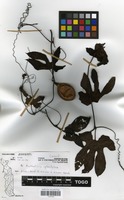
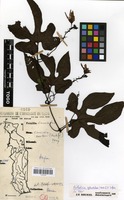
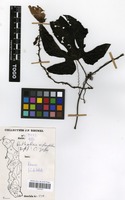
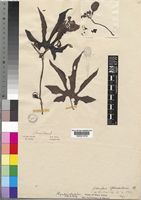
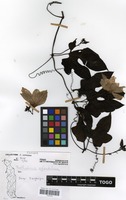
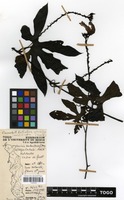
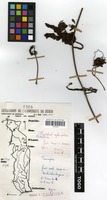
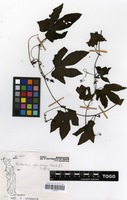
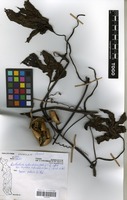
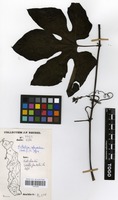
Ruthalicia eglandulosa

10 Images see all

Filed as Ruthalicia eglandulosa (Hook. f.) C.Jeffrey [family CUCURBITACEAE]
Type of Ruthalicia eglandulosa (Hook.f.) C.Jeffrey [family CUCURBITACEAE]
Filed as Ruthalicia eglandulosa (Hook. f.) C.Jeffrey [family CUCURBITACEAE]
Previous
Next

Name

Identification
Adenopus eglandulosus Hook.f. [family CUCURBITACEAE ] Physedra eglandulosa (Hook.f.) Hutch. & Dalziel [family CUCURBITACEAE ] Verified by Hutchinson & Dalziel, Ruthalicia eglandulosa (Hook.f.) C.Jeffrey [family CUCURBITACEAE ] (stored under name);
Related name
  • Adenopus eglandulosus
  • Physedra eglandulosa
  • Ruthalicia eglandulosa
  • Coccinia barteri
Common name
  • gã gĕ su (JMD) (LIBERIA, MANO), Burkill, H.M. 1985. The useful plants of west tropical Africa, Vol. 1
  • tagiri (FCD) (SIERRA LEONE, KRIO), Burkill, H.M. 1985. The useful plants of west tropical Africa, Vol. 1
  • an-gbende (FCD) (SIERRA LEONE, TEMNE (Sanda)), Burkill, H.M. 1985. The useful plants of west tropical Africa, Vol. 1
  • ahobégu (B&D) (IVORY COAST, KYAMA), Burkill, H.M. 1985. The useful plants of west tropical Africa, Vol. 1
  • Loko) an-gbende (FCD) (SIERRA LEONE, TEMNE (Port), Burkill, H.M. 1985. The useful plants of west tropical Africa, Vol. 1
  • tiètièpalo (B&D) (IVORY COAST, KWENI), Burkill, H.M. 1985. The useful plants of west tropical Africa, Vol. 1
  • floméné (B&D) (IVORY COAST, BAULE), Burkill, H.M. 1985. The useful plants of west tropical Africa, Vol. 1
  • kojo applied to certain spherical hard-shelled fruits, but properly this is Strychuos spinosa (Loganiaceae) (FCD) kσli-gojo (def.-i) = leopard’s blow-blow (trumpet) (Fisher; FCD) (SIERRA LEONE, MENDE), Burkill, H.M. 1985. The useful plants of west tropical Africa, Vol. 1
  • zapinkii (K&B) zapuki (K&B) (IVORY COAST, KRU-GUERE), Burkill, H.M. 1985. The useful plants of west tropical Africa, Vol. 1

Information

Entry for Ruthalicia eglandulosa (Hook. f.) C. Jeffrey [family CUCURBITACEAE]
Herbarium
Royal Botanic Gardens, Kew (K)
Collection
Useful Plants of West Tropical Africa
Resource Type
Reference Sources
Entry From
Burkill, H.M. 1985. The useful plants of west tropical Africa, Vol 1
Names
Physedra eglandulosa (Hook. f.) Hutch. & Dalz. [family CUCURBITACEAE]
Ruthalicia eglandulosa (Hook. f.) C. Jeffrey [family CUCURBITACEAE]
Common names
SIERRA LEONE: KRIO tagiri (FCD) MENDE kojo applied to certain spherical hard-shelled fruits, but properly this is Strychuos spinosa (Loganiaceae) (FCD) kσli-gojo (def.-i) = leopard’s blow-blow (trumpet) (Fisher; FCD) TEMNE (Port Loko) an-gbende (FCD) TEMNE (Sanda) an-gbende (FCD) LIBERIA: MANO gã gĕ su (JMD) IVORY COAST: BAULE floméné (B&D) KRU-GUERE zapinkii (K&B) zapuki (K&B) KWENI tiètièpalo (B&D) KYAMA ahobégu (B&D)
Uses
sap Medicines: generally healing leaf-sap Medicines: eye treatments leaf-sap Medicines: laxatives, etc. leaf-sap Medicines: liver, etc. whole plant Medicines: cutaneous, subcutaneous parasitic infection fruit Medicines: fabrifuges sap Medicines: antidotes (venomous stings, bites, etc.) plant Phytochemistry: miscellaneously poisonous or repellent fruit-shell Products: pastimes-carving, musical instruments, games, toys, etc. Social: religion, superstitions, magic Social: sayings, aphorisms
Description
A climber of bush and forest areas, to about 6 m long, widespread in the Region from Mali to S Nigeria. The fruit is bright scarlet with yellow markings.The plant is very poisonous (3), though the sap is used as a poison-antidote in Ivory Coast and to treat burns (1). The Guere of Ivory Coast use the leaf-sap in enemas and in eye-instillations in treatment of jaundice (6). In Sierra Leone the fruit of a large form is sold in Freetown market for crushing and cooking to make a liquid with which Mendes wash babies with fever (5). Nevertheless the ripe fruit is eaten by animals (2). A decoction of the whole plant is sometimes used in Ivory Coast-Upper Volta as a parasiticidal wash (6).The fruit shell is hollowed out, pierced with holes and used as a horn by boys in Sierra Leone, one of several fruits bearing the Mende name kokoi (5). This is kσlo-gokoi, the leopard’s blow-blow. Strychnos sp. (Loganiaceae) is ngolo-gokoi, the baboon’s blow-blow.The plant has medico-magical application in Liberia to treat shortness of breath: the leaves are rubbed on the chest and then on a stick whereby the malady is ‘transferred’ to the stick (Harley fide 4). Superstitious use is also recorded by the Temne of Port Loko area of Sierra Leone: a section of leafy stem bearing a fruit is cut and attached with suitable ‘swear’ to plants to prevent thieving. The hands of a thief will swell up (5).
References
References:1. Bouquet & Debray, 1974: 78, as Physedra eglandulosa. 2. Chakravarty, 1968: 447–51. 3. Chevalier, 1920: 295, as Cephalandra sylvatica A. Chev. 4. Dalziel, 1937. 5. Deighton 2801, K. 6. Kerharo & Bouquet, 1950: 43, as Physedra eglandulosa Hutch. & Dalz.
Contributor
Royal Botanic Gardens, Kew (K)

Related Materials

  • Terms and Conditions
  • Privacy Policy
  • Cookie Policy
  • Cookie Settings
  • Accessibility
  • Help
  • Contact Us
  • Facebook
  • Twitter
ITHAKA

JSTOR is part of ITHAKA, a not-for-profit organization helping the academic community use digital technologies to preserve the scholarly record and to advance research and teaching in sustainable ways.

©2000-2026 ITHAKA. All Rights Reserved. JSTOR®, the JSTOR logo, JPASS®, Aluka®, and ITHAKA® are registered trademarks of ITHAKA.

╳