JSTOR Global Plants Home
  • Home
  • Browse
  • About
  • Access
  • Account
    • Saved Items
    • Profile
  • Log in

Global Plants

Skip to Main Content
  • JSTOR Global Plants Home
  • Global Plants

    • Browse
    • About
    • Access
    • Account
      • Saved Items
      • Profile
Log in
  • Browse
  • About
  • Access
  • Account
    • Saved Items
    • Profile
Advanced Search

Compilation
Rumex ursinus

7 Images see all

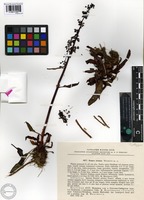
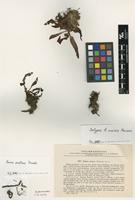
Filed as Rumex ursinus M.I. Maximova [family POLYGONACEAE]
Isotype of Rumex ursinus Maximova, M. 1979 [family POLYGONACEAE]
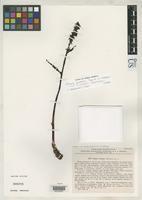
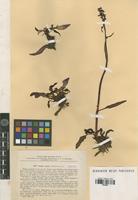
Isotype of Rumex ursinus Maximova [family POLYGONACEAE]
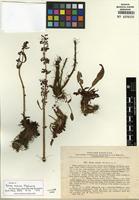
Type of Rumex ursinus Maximova [family POLYGONACEAE]
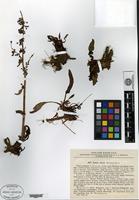
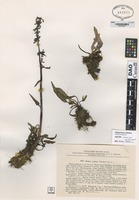
Isotype of Rumex ursinus Maximova [family POLYGONACEAE]
Isotype of not on sheet [family NOT ON SHEET]
Previous
Next

Name

Identification
Rumex ursinus Maximova [family POLYGONACEAE ] (stored under name); Verified by Maximova, 1982
Related name
  • Rumex ursinus
  • Rumex arcticus
Common name
  • Arctic dock, Flora of North America Vol. 5

Flora

Entry for Rumex arcticus Trautvetter [family POLYGONACEAE]
Herbarium
Flora of North America (FNA)
Collection
Flora of North America
Resource Type
Reference Sources
Entry From
Flora of North America, Vol 5,
Names
Rumex arcticus Trautvetter [family POLYGONACEAE], in A. T. von Middendorff, Reise Siber., 1(2,1): 29. 1847
Rumex aquaticus Linnaeus subsp. arcticus (Trautvetter) Hiitonen [family POLYGONACEAE]
Rumex arcticus var. kamtschadalus (Komarov) Rechinger f. ex Tolmatchew [family POLYGONACEAE]
Rumex arcticus var. latifolius Tolmatchew [family POLYGONACEAE]
Rumex domesticus Hartman var. nanus Hooker [family POLYGONACEAE]
Rumex kamtschadalus Komarov [family POLYGONACEAE]
Rumex longifolius de Candolle var. nanus (Hooker) Meisner [family POLYGONACEAE]
Rumex ursinus M. M. Maximova [family POLYGONACEAE]
Treatment Author(s)
Sergei L. Mosyakin
Information
Plants perennial, glabrous or nearly so, with fusiform, oblique rootstock, occasionally with horizontal, short-creeping rhizome. Stems erect, simple or branched in distal 2/3 (then with few, comparatively short branches), 10–70(–100) cm. Leaves: ocrea deciduous or partially persistent at maturity; blade narrowly lanceolate, lanceolate, or oblong-lanceolate, normally 5–15(–20) × 1.5–5 cm, base cuneate to broadly cuneate, rarely truncate or very weakly cordate, margins entire or rarely indistinctly repand, flat, apex acute or subacute. Inflorescences terminal, occupying distal 1/2–2/3 of stem, interrupted, paniculate, simple or nearly so (branches, when present usually less than 7–8 cm). Pedicels articulated in proximal 1/3, filiform, 5–13(–17) mm, usually not more than 2–2.5 times as long as inner tepals, articulation weakly evident, not swollen. Flowers 7–15 in whorls; inner tepals ovate, 4.5–7.5(–8) × 4–6(–7) mm, base truncate to weakly cordate, margins entire, apex obtuse or subacute; tubercles absent. Achenes reddish brown, 3–4 × 1.5–2 mm. 2n = 40, 120, ca. 170, ca. 200.
Phenology
mar-may (spring), jun-aug (summer)
Altitude range
0–1000 m;
Distribution
ne Europen Asia (arctic and subarctic zones).USA AlaskaCanada B.C.Canada N.W.T.Canada NunavutCanada Yukon
Discussion
Rumex arcticus is polymorphic, as are R. aquaticus in the narrow sense and R. occidentalis. However, unlike R. aquaticus and R. occidentalus, it is represented by at least two chromosome races (G. A. Mulligan and C. Frankton 1972; Á. Löve 1986). Plants morphologically transitional between R. arcticus and R. aquaticus were described from Kamchatka as R. kamtschadalus (= R. arcticus var. kamtschadalus). The same forms occasionally occur in northwestern North America. According to Á. Löve and D. Löve (1975b) and Á. Löve (1986), they are usually tetraploids (2n = 40) and deserve recognition at the species level. However, they are not always morphologically distinct from R. arcticus. The group needs additional study, and at present I prefer to keep the tetraploid plants provisionally within R. arcticus, regarding them as var. kamtschadalus.
A few highly sterile specimens with mostly abortive flowers, which I have seen in Alaskan herbarium material, most probably represent hybrids between tetraploid and 12-ploid races of the R. aquaticus group.
Plants with unusually wide, triangular-oblong, or almost ovate leaves were described as var. latifolius Tolmatchew. This seems to be a predominant variety on the Beringian coast of Chukotka and Wrangel and Ratmanov islands (A. I. Tolmachew 1966). I also have seen at least two collections of this variety from the western coast of Alaska. The enigmatic var. perlatus Hultén may belong here (see discussion under 8. R. lapponicus).
Rumex arcticus has been reported from Churchill in northeastern Manitoba (H. J. Scoggan 1978–1979, part 3). That record needs confirmation because some northern forms of R. arcticus and R. occidentalis are similar.

Related Materials

  • Terms and Conditions
  • Privacy Policy
  • Cookie Policy
  • Cookie Settings
  • Accessibility
  • Help
  • Contact Us
  • Facebook
  • Twitter
ITHAKA

JSTOR is part of ITHAKA, a not-for-profit organization helping the academic community use digital technologies to preserve the scholarly record and to advance research and teaching in sustainable ways.

©2000-2026 ITHAKA. All Rights Reserved. JSTOR®, the JSTOR logo, JPASS®, Aluka®, and ITHAKA® are registered trademarks of ITHAKA.

╳