

Compilation
Rumex stenophyllus
1 Images see all
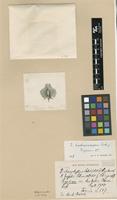
Name
Identification
Rumex hadroocarpus Rech.f. [family POLYGONACEAE ] (stored under name); Verified by Rechinger, K.H., 1947 Rumex stenophyllus Ledeb. [family POLYGONACEAE ] Verified by Hayakawa R., Rumex regeli F.Schmidt [family POLYGONACEAE ] Verified by Schirjaeff, G.,
Related name
- Rumex regeli
- Rumex stenophyllus
- Rumex hadroocarpus
Common name
- Narrow-leaved or narrowleaf dock, Flora of North America Vol. 5
Flora
Entry for Rumex stenophyllus Ledebour [family POLYGONACEAE]
Herbarium
Flora of North America (FNA)
Collection
Flora of North America
Resource Type
Reference Sources
Entry From
Flora of North America, Vol 5,
Names
Rumex stenophyllus Ledebour [family POLYGONACEAE], Fl. Altaica, 2: 58. 1830
Rumex alluvius F. C. Gates & McGregor [family POLYGONACEAE]
Rumex crispus Linnaeus var. dentatus Schur [family POLYGONACEAE]
Rumex obtusifolius Linnaeus var. cristatus Neilreich [family POLYGONACEAE]
Rumex odontocarpus Sandor ex Borbás [family POLYGONACEAE]
Treatment Author(s)
Sergei L. Mosyakin
Information
Plants perennial, glabrous or very indistinctly papillose normally only on veins of leaf blades abaxially, with fusiform, vertical rootstock. Stems erect, branched distal to middle, 40–80(–130) cm. Leaves: ocreae usually deciduous, rarely partially persistent at maturity; blade oblong-lanceolate, lanceolate, or narrowly lanceolate, normally 15–25(–30) × 2–7 cm, base cuneate or truncate, margins entire or irregularly denticulate, usually crisped and undulate, or, occasionally, flat, apex acute or subobtuse. Inflorescences terminal, occupying distal 1/2 of stem, dense or interrupted at base, narrowly paniculate, branches usually straight or occasionally arcuate. Pedicels articulated in proximal 1/3, filiform, 3–8 mm, articulation distinctly swollen. Flowers 20–25 in whorls; inner tepals orbiculate-ovate or occasionally ovate-deltoid, 3.5–5 × 3–5 mm, base truncate or slightly cordate, margins denticulate, apex acute or subacute, teeth 4–10 at each side, 0.2–1.5 mm; tubercles normally 3, equal or subequal, less than 2 times as wide as inner tepals. Achenes usually reddish brown or dark brown, 2–2.5(–3) × 1–1.5 mm. 2n = 60.
Phenology
mar-may (spring), jun-aug (summer), sep-nov (fall)
Altitude range
0–1600 m;
Distribution
cse Europec Asia (s Siberia).USA Calif.USA Colo.USA IowaUSA Kans.USA Minn.USA Mo.USA Mont.USA Nebr.USA Nev.USA N.Mex.USA N.Dak.USA Okla.USA S.C.USA S.Dak.USA UtahUSA Wash.USA Wyo.Canada Alta.Canada Man.Canada Ont.Canada Que.Canada Sask.
Discussion
Within its native range Rumex stenophyllus is mostly confined to slightly saline coastal and alluvial (riparian) habitats. It has successfully colonized a wide range of ruderal and segetal habitats in both Europe and North America. Further spread of this species in the central and southwestern United States and southern Canada may be expected (D. Löve and J.-P. Bernard 1958). It was placed by K. H. Rechinger (1949) in subsect. Stenophylli Rechinger f.
According to J. K. Morton and J. M. Venn (1990), reports of Rumex stenophyllus from Ontario refer to the hybrid R. crispus × R. obtusifolius, but R. stenophyllus may be found in the province in the future. Rumex stenophyllus may be distinguished from that hybrid by its fertile fruits and more uniform inner tepals.
Native/Introduced
introduced;