JSTOR Global Plants Home
  • Home
  • Browse
  • About
  • Access
  • Account
    • Saved Items
    • Profile
  • Log in

Global Plants

Skip to Main Content
  • JSTOR Global Plants Home
  • Global Plants

    • Browse
    • About
    • Access
    • Account
      • Saved Items
      • Profile
Log in
  • Browse
  • About
  • Access
  • Account
    • Saved Items
    • Profile
Advanced Search

Compilation
Rumex palustris

10 Images see all

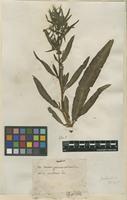
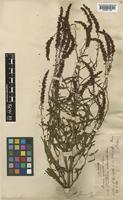
Filed as Rumex palustris Sm. [family POLYGONACEAE]
Rumex palustris Sm. [family POLYGONACEAE]
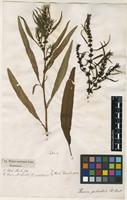
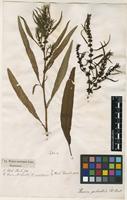
Filed as Rumex palustris Sm. [family POLYGONACEAE]
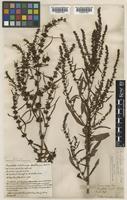
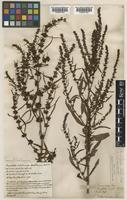
Syntype of Rumex palustris Sm. [family POLYGONACEAE]
Rumex palustris Sm. [family POLYGONACEAE]
Filed as Rumex palustris Sm. [family POLYGONACEAE]
Filed as Rumex indet. [family POLYGONACEAE]
Rumex palustris Sm. [family POLYGONACEAE]
Filed as Rumex palustris Sm. [family POLYGONACEAE]
Previous
Next

Name

Identification
Rumex palustris Sm. [family POLYGONACEAE ] (stored under name); Rumex maritimus L. [family POLYGONACEAE ] Rumex limosus Thuill. [family POLYGONACEAE ]
Related name
  • Rumex persicarioides
  • Rumex maritimus
  • Rumex palustris
  • Rumex subspicatus
  • Rumex limosus
  • Rumex spicatus
  • Rumex indet.
Common name
  • Marsh dock, Flora of North America Vol. 5

Flora

Entry for Rumex palustris Smith [family POLYGONACEAE]
Herbarium
Flora of North America (FNA)
Collection
Flora of North America
Resource Type
Reference Sources
Entry From
Flora of North America, Vol 5,
Names
Rumex palustris Smith [family POLYGONACEAE], Fl. Brit., 1: 394. 1800
Treatment Author(s)
Sergei L. Mosyakin
Information
Plants annual or biennial, glabrous or very weakly short-papillose mostly in inflorescence and on leaf blades, with fusiform, vertical rootstock. Stems erect, normally branched in distal 2/3, occasionally almost near base, 10–60(–100) cm. Leaves: ocrea normally deciduous, rarely partially persistent at maturity; blade lanceolate or oblong-lanceolate, gradually narrowed at both ends, (10–)15–30(–35) × 1.5–6 cm, more than 4 times as long as wide, base narrowly to broadly cuneate, margins entire, flat or, rarely, weakly undulate, apex acute, rarely subobtuse. Inflorescences terminal, occupying distal 1/2 of stem, rarely more, reddish brown at maturity, usually lax, interrupted in proximal 1/2 or 2/3, broadly paniculate; branches spreading. Pedicels articulated near base or at least in proximal 1/3, filiform, 3–6 mm, articulation weakly evident. Flowers 15–25(–30) in rather dense whorls; inner tepals narrowly triangular, narrowly rhombic-triangular, or linguliform, (2.5–)3–3.5(–4) × 1.2–1.5(–2) mm (excluding teeth), normally ca. 2 times as long as wide, base truncate or broadly cuneate, margins prominently dentate, apex acute very rarely subacute, straight, teeth (1–)2–3, normally at each side of margins, subulate-filiform, bristlelike, straight, 1–2(–3) mm, usually as long as width of inner tepals; tubercles 3, equal or subequal, apex obtuse, smooth. Achenes light brown, 0.9–1.75 × 0.6–1 mm. 2n = 60.
Phenology
jun-aug (summer)
Altitude range
0 m;
Distribution
Europe.USA Calif.USA N.J.
Discussion
Rumex palustris was reported for the first time from North America by J. E. Dawson (1979) based on specimens misidentified as R. maritimus and R. pulcher, collected in 1877 and 1959, respectively. Rumex palustris is not known to be invasive, and these collections probably represent only occasional, chance introductions.
Native/Introduced
introduced;

Related Materials

  • Terms and Conditions
  • Privacy Policy
  • Cookie Policy
  • Cookie Settings
  • Accessibility
  • Help
  • Contact Us
  • Facebook
  • Twitter
ITHAKA

JSTOR is part of ITHAKA, a not-for-profit organization helping the academic community use digital technologies to preserve the scholarly record and to advance research and teaching in sustainable ways.

©2000-2026 ITHAKA. All Rights Reserved. JSTOR®, the JSTOR logo, JPASS®, Aluka®, and ITHAKA® are registered trademarks of ITHAKA.

╳