JSTOR Global Plants Home
  • Home
  • Browse
  • About
  • Access
  • Account
    • Saved Items
    • Profile
  • Log in

Global Plants

Skip to Main Content
  • JSTOR Global Plants Home
  • Global Plants

    • Browse
    • About
    • Access
    • Account
      • Saved Items
      • Profile
Log in
  • Browse
  • About
  • Access
  • Account
    • Saved Items
    • Profile
Advanced Search

Compilation
Rumex orthoneurus

9 Images see all

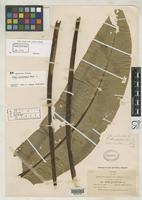
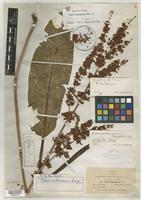
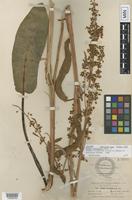
Isolectotype of Rumex orthoneurus Rechinger, K.H. 1936 [family POLYGONACEAE]
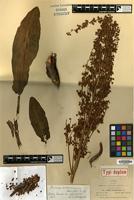
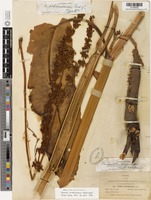
Isotype of Rumex orthoneurus Rech.f. [family POLYGONACEAE]
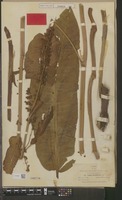
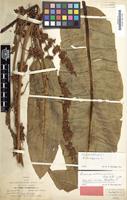
Isotype of Rumex orthoneurus Rech. f. [family POLYGONACEAE]
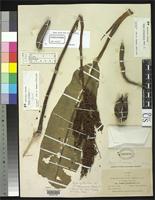
Type of Rumex orthoneurus Rech.f. [family POLYGONACEAE]
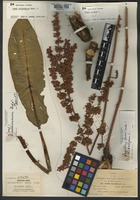
Isolectotype of Rumex orthoneurus Rechinger, K.H. 1936 [family POLYGONACEAE]
Isotype of Rumex orthoneurus Rech.f. [family POLYGONACEAE]
Previous
Next

Name

Identification
Rumex orthoneurus Rech.f. [family POLYGONACEAE ] (stored under name); Verified by Not on sheet.,
Related name
  • Rumex orthoneurus
Common name
  • Chiricahua or Blumer’s dock, Flora of North America Vol. 5

Flora

Entry for Rumex orthoneurus Rechinger f. [family POLYGONACEAE]
Herbarium
Flora of North America (FNA)
Collection
Flora of North America
Resource Type
Reference Sources
Entry From
Flora of North America, Vol 5,
Names
Rumex orthoneurus Rechinger f. [family POLYGONACEAE], Repert. Spec. Nov. Regni Veg., 40: 294. 1936
Rumex densiflorus Osterhout subsp. orthoneurus (Rechinger f.) Á. Löve [family POLYGONACEAE]
Treatment Author(s)
Sergei L. Mosyakin
Information
Plants perennial, glabrous or indistinctly papillose-pubescent especially on leaf blade veins abaxially, with creeping or fusiform rhizomes. Stems erect, branched above middle (only in inflorescence), 60–100 cm. Leaves: ocrea deciduous or partially persistent at maturity; blade with lateral veins ± equal in size, oblong or oblong-lanceolate, 20–40(–50) × 8–15(–18) cm, more than 3 times as long as wide, base broadly cuneate, obtuse, or weakly cordate, margins entire, flat, apex acute, subacute, or acuminate. Inflorescences terminal, occupying distal 1/2 of stem, often dense, narrowly paniculate. Pedicels articulated in proximal 1/2, filiform, (5–)12–15(–17) mm, articulation indistinct, scarcely visible. Flowers 10–20 in whorls; inner tepals ovate-deltoid, 4.5–7 × 3.5–7 mm, widest in proximal 1/3, base truncate or weakly emarginate, margins erose to weakly serrate or indistinctly denticulate in basal part, apex acute to acuminate; tubercles absent. Achenes brown, 2.5–4 × 1.5–2.5 mm. 2n = 120.
Phenology
mar-may (spring), jun-aug (summer)
Altitude range
2500 m;
Distribution
USA Ariz.USA N.Mex.USA Mexico (Sonora).
Discussion
Rumex orthoneurus has been reported from northern Mexico (M. Fishbein 1993). The species is in the Center for Plant Conservation’s National Collection of Endangered Plants.

Related Materials

  • Terms and Conditions
  • Privacy Policy
  • Cookie Policy
  • Cookie Settings
  • Accessibility
  • Help
  • Contact Us
  • Facebook
  • Twitter
ITHAKA

JSTOR is part of ITHAKA, a not-for-profit organization helping the academic community use digital technologies to preserve the scholarly record and to advance research and teaching in sustainable ways.

©2000-2026 ITHAKA. All Rights Reserved. JSTOR®, the JSTOR logo, JPASS®, Aluka®, and ITHAKA® are registered trademarks of ITHAKA.

╳