JSTOR Global Plants Home
  • Home
  • Browse
  • About
  • Access
  • Account
    • Saved Items
    • Profile
  • Log in

Global Plants

Skip to Main Content
  • JSTOR Global Plants Home
  • Global Plants

    • Browse
    • About
    • Access
    • Account
      • Saved Items
      • Profile
Log in
  • Browse
  • About
  • Access
  • Account
    • Saved Items
    • Profile
Advanced Search

Compilation
Rumex fueginus

6 Images see all

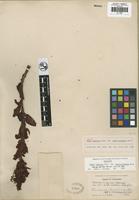
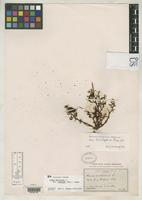
Holotype of Rumex fueginus Phil. var. ovato-cordatus Rech. f. [family POLYGONACEAE]
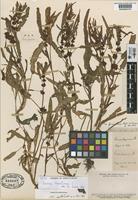
Type of Rumex fueginus Phil. [family POLYGONACEAE]
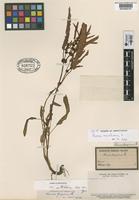
Isotype of Rumex fueginus Phil. [family POLYGONACEAE]
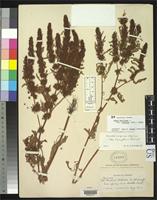
Type of Rumex fueginus Phil. [family POLYGONACEAE]
Lectotype of Rumex fueginus var. tanythrix Rechinger, K.H. 1937 [family POLYGONACEAE]
Filed as Rumex fueginus var. brachythrix Rechinger, K.H. 1937 [family POLYGONACEAE]
Previous
Next

Name

Identification
Rumex fueginus Phil. [family POLYGONACEAE ] (stored under name);
Related name
  • Rumex maritimus
  • Rumex fueginus
Common name
  • American golden or Tierra del Fuego dock, Flora of North America Vol. 5

Flora

Entry for Rumex fueginus Philippi [family POLYGONACEAE]
Herbarium
Flora of North America (FNA)
Collection
Flora of North America
Resource Type
Reference Sources
Entry From
Flora of North America, Vol 5,
Names
Rumex fueginus Philippi [family POLYGONACEAE], Anales Univ. Chile, 91: 493. 1895
Rumex maritimus Linnaeus subsp. fueginus (Philippi) Hultén [family POLYGONACEAE]
Rumex maritimus Linnaeus var. fueginus (Philippi) Dusen [family POLYGONACEAE]
Treatment Author(s)
Sergei L. Mosyakin
Information
Plants annual, rarely biennial, usually distinctly papillose-pubescent mostly in inflorescence and on leaf blades abaxially, or occasionally at most weakly papillose-pubsecent, with fusiform, vertical rootstock. Stems erect (some dwarf alluvial forms may be with ascending or almost prostrate branches), branched in distal 2/3, occasionally almost near base, (4–)15–60(–70) cm. Leaves: ocrea mostly partially persistent at maturity; blade lanceolate or lanceolate-linear, rarely oblong-lanceolate, (3–)5–25(–30) × (1–)1.5–3(–4) cm, more than 4 times as long as wide, base abruptly truncate, slightly cordate, or rarely broadly cuneate, margins entire or subentire to obscurely repand, normally undulate and crisped, apex acute very rarely subobtuse. Inflorescences terminal, occupying distal 1/2 of stem (occasionally most of stem), usually reddish brown or red (greenish yellow when mature), usually rather dense, interrupted in proximal part, broadly paniculate. Pedicels articulated near base or at least in proximal 1/3, filiform, 3–7(–9) mm, articulation weakly evident, occasionally indistinctly swollen. Flowers 15–30 (occasionally more) in rather dense whorls; inner tepals narrowly triangular or narrowly rhombic-triangular, 1.5–2.5 × 0.7–0.9(–1.2) mm (excluding teeth), normally ca. 2 times as long as wide, base truncate or broadly cuneate, margins usually prominently dentate, rarely with shorter teeth, or almost entire, apex acute, straight, teeth 2–3, at each side of margins, subulate-filiform, bristlelike, straight, 1–3 mm, usually 1.5–2.5(–4) times as long as width of inner tepals; tubercles 3, brownish or reddish, linear-lanceolate to fusiform, equal or subequal, rarely unequal, distinctly narrower than inner tepals, ca. 0.5 times as wide as inner tepals or less, apex acute or subacute, usually distinctly reticulate-pitted (especially in herbarium specimens). Achenes light brown, 1.1–1.4 × 0.6–0.8 mm. 2n = 40.
Phenology
mar-may (spring), jun-aug (summer), sep-nov (fall)
Altitude range
0–2500 m;
Distribution
MexicoSouth America (s and mountains)Europe.USA AlaskaUSA Ariz.USA Ark.USA Calif.USA Colo.USA Conn.USA Del.USA IdahoUSA Ill.USA IowaUSA Kans.USA Ky.USA MaineUSA Md.USA Mass.USA Mich.USA Minn.USA Mo.USA Mont.USA Nebr.USA Nev.USA N.H.USA N.Mex.USA N.Y.USA N.Dak.USA OhioUSA Oreg.USA Pa.USA R.I.USA S.Dak.USA Tex.USA UtahUSA Vt.USA Wash.USA Wis.USA Wyo.Canada Alta.Canada B.C.Canada Man.Canada N.B.Canada N.W.T.Canada N.S.Canada Ont.Canada P.E.I.Canada Que.Canada Sask.Canada Yukon
Discussion
Rumex fueginus, in spite of its similarities to R. maritimus, is more closely related to R. persicarioides. Specimens of R. fueginus often are misidentified as R. maritimus, and the name R. persicarioides has been applied to R. fueginus. This confusion obscures distribution patterns among members of the aggregrate.
Several varieties have been described based mostly on teeth variation. These taxa appear to have little taxonomic significance, with the possible exception of var. athrix (St. John) Rechinger f., which has entire or subentire inner tepals and occurs in arid regions of the southwestern United States (H. St. John 1915; K. H. Rechinger 1937).
Rumex fueginus is known in Europe as an uncommon, casual alien.

Related Materials

  • Terms and Conditions
  • Privacy Policy
  • Cookie Policy
  • Cookie Settings
  • Accessibility
  • Help
  • Contact Us
  • Facebook
  • Twitter
ITHAKA

JSTOR is part of ITHAKA, a not-for-profit organization helping the academic community use digital technologies to preserve the scholarly record and to advance research and teaching in sustainable ways.

©2000-2026 ITHAKA. All Rights Reserved. JSTOR®, the JSTOR logo, JPASS®, Aluka®, and ITHAKA® are registered trademarks of ITHAKA.

╳