JSTOR Global Plants Home
  • Home
  • Browse
  • About
  • Access
  • Account
    • Saved Items
    • Profile
  • Log in

Global Plants

Skip to Main Content
  • JSTOR Global Plants Home
  • Global Plants

    • Browse
    • About
    • Access
    • Account
      • Saved Items
      • Profile
Log in
  • Browse
  • About
  • Access
  • Account
    • Saved Items
    • Profile
Advanced Search

Compilation
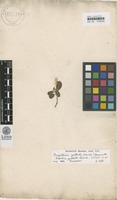
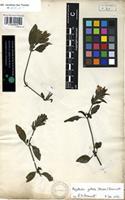
Ruellia guttata

2 Images see all

Holotype of Ruellia guttata Forssk. [family ACANTHACEAE]
Isotype of Ruellia guttata Forssk. [family ACANTHACEAE]
Previous
Next

Name

Identification
Asystasia guttata (Forssk.) Brummitt [family ACANTHACEAE ] (stored under name); Verified by R.K. Brummitt, 1977 Ruellia guttata Forssk. [family ACANTHACEAE ] Verified by Not on Sheet,
Related name
  • Ruellia guttata
  • Asystasia guttata

Flora

Entry for ASYSTASIA guttata (Forssk.) Brummitt [family ACANTHACEAE]
Herbarium
Royal Botanic Gardens, Kew (K)
Collection
Flora Somalia
Resource Type
Reference Sources
Entry From
Flora Somalia, (2000) Author: by M. Hedrén (Asystasia, Barleria, Duosperma, Hypoestes, Ichthyostoma, Isoglossa, Justicia, Lepidagathis, Peristrophe, Ruellia, Ruspolia) and M. Thulin (Acanthus, Anisotes, Blepharis, Crabbea, Crossandra, Dicliptera, Dyschoriste, Ecbolium, Elytraria, Megalochlamys, Neuracanthus, Rhinacanthus, Ruttya, Satanocrater, Thunbergia) [updated by M. Thulin 2008]
Names
ASYSTASIA guttata (Forssk.) Brummitt [family ACANTHACEAE], (1983);
Ruellia guttata Forssk. [family ACANTHACEAE], (1775). [type as above]
ASYSTASIA coleae Rolfe [family ACANTHACEAE], (1895);. types: N1, “Golis” Range, Lort Phillips s.n. & Cole s.n., “Adda Galla”, James & Thrupp s.n. (all K syn.).
Barleria somalensis Franch. [family ACANTHACEAE], (1882);. type: northern Somalia, without precise locality, Révoil s.n. (P holo.).
Parasystasia somalensis (Franch.) Baill. [family ACANTHACEAE], (1891);. type: northern Somalia, without precise locality, Révoil s.n. (P holo.).
ASYSTASIA somalensis (Franch.) Lebrun & Touss. [family ACANTHACEAE], (1948);. type: northern Somalia, without precise locality, Révoil s.n. (P holo.).
Parasystasia kelleri Lindau [family ACANTHACEAE], (1897);. types: N1, “Dscherato”, Keller 189, 192 (Z syn., not seen).
Information
Perennial herb, often from woody rootstock, up to 45–90 cm tall, often much branched from the base; stems fairly densely pubescent, especially below nodes, with white up to 0.3–1 mm long spreading hairs. Leaf-blades lanceolate, up to 20–30(–67) x 8–16(–35) mm, sparsely to densely pubescent with up to c. 0.3–1 mm long antrorse hairs, especially towards the base of young leaves, apex acute, base attenuate; petiole up to c. 5–11(–40) mm long. Inflorescences dense terminal spikes on up to 10–45 mm long peduncles; bracts lanceolate to elliptic-lanceolate, sessile, indumentum as for leaves but sometimes ciliate with up to 1.5 mm long hairs, up to 40 x 8 mm, becoming gradually smaller towards the apex of the inflorescence; bracteoles ovate-lanceolate, up to 15–20 x 5.5–8 mm, less hairy than the bracts. Calyx densely pubescent with c. 0.1 mm long spreading fine hairs; lobes triangular-subulate, up to 9–10(–13) x 1–1.5 mm long in flower, up to 12–13(–16) mm in fruit. Corolla cream with green spots, c. 18–25 mm long; lobes with free part c. 7 mm long. Anthers c. 2.5–3 mm long, slightly displaced by up to 1 mm. Capsules densely pubescent with c. 0.2 mm long spreading to appressed hairs all over and also with subsessile glandular hairs, up to27 mm long, sterile for the lower 2/5. Seeds flattened, tuberculate, with an irregular outline.
Range
N1–3; S1 eastern tropical Africa and tropical Arabia.
Altitude range
200–1400 m.
Distribution
SOMALIA Wood S71/52; Gillett 4873, Thulin, Abdi Dahir & Abdisalam Hassan 9007.
Distribution (external)
Ethiopia
Notes
Hubnoleh (Som.). Thulin & Bashir Mohamed 6959, from a limestone/gypsum ridge at 200 m in S1, differs slightly from the remaining material in having much larger leaves and a more dense indumentum of the calyx.

Related Materials

  • Terms and Conditions
  • Privacy Policy
  • Cookie Policy
  • Cookie Settings
  • Accessibility
  • Help
  • Contact Us
  • Facebook
  • Twitter
ITHAKA

JSTOR is part of ITHAKA, a not-for-profit organization helping the academic community use digital technologies to preserve the scholarly record and to advance research and teaching in sustainable ways.

©2000-2026 ITHAKA. All Rights Reserved. JSTOR®, the JSTOR logo, JPASS®, Aluka®, and ITHAKA® are registered trademarks of ITHAKA.

╳