JSTOR Global Plants Home
  • Home
  • Browse
  • About
  • Access
  • Account
    • Saved Items
    • Profile
  • Log in

Global Plants

Skip to Main Content
  • JSTOR Global Plants Home
  • Global Plants

    • Browse
    • About
    • Access
    • Account
      • Saved Items
      • Profile
Log in
  • Browse
  • About
  • Access
  • Account
    • Saved Items
    • Profile
Advanced Search

Compilation
Rubus kingaensis

3 Images see all

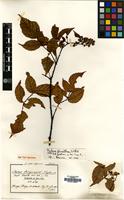
Isotype of Rubus kingaensis Engl. [family ROSACEAE]
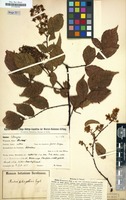
Type of Rubus kingaensis Engl. [family ROSACEAE]
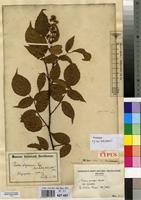
Isotype of Rubus kingaensis Engl. [family ROSACEAE]
Previous
Next

Name

Identification
Isotype of Rubus kingaensis Engl. [family ROSACEAE ] Verified by Not on sheet, Rubus pinnatus Willd. [family ROSACEAE ] (stored under name); Verified by Not on sheet,
Related name
  • Rubus kingaensis
  • Rubus pinnatus

Flora

Entry for Rubus pinnatus Willd. [family ROSACEAE]
Herbarium
Royal Botanic Gardens, Kew (K)
Collection
Flora Zambesiaca
Resource Type
Reference Sources
Entry From
FZ, Vol 4, Part 0, page 7, (1978) Author: E. J. Mendes
Names
Rubus pinnatus Willd. [family ROSACEAE], Sp. Pl 2: 1081 (1799).—Harv. in Harv. & Sond., F.C. 2: 287 (1862) —Oliv. in F.T.A. 2: 374 (1871).—Focke in Bibl. Bot. 72, 2: 177 (1911).— C. E. Gust. in Arkiv Bot. 26A, 7: 45 (1934).—R. A. Grah. in F.T.E.A., Rosaceae: 37 (1960). Type from St. Helena.
Rubus kingaensis Engl. [family ROSACEAE], Bot. Jahrb. 30: 313 (1901).—Focke, tom. cit.: 173 (1911).—C. E. Gust., tom. cit.: 47(1934). Type from Tanzania.
Rubus pinnatus subsp. afrotropicus Engl. [family ROSACEAE], Pflanzenw. Afr. 3, 1: 294 (1915).— Mendes in C.F.A. 4: 2 (1970). Syntypes from Cameroon, Tanzania etc.
Rubus pinnatus var. afrotropicus Engl. C. E. Gust. [family ROSACEAE], tom. cit.: 46 (1934).— R. A. Grah., tom. cit.: 38(1960). Syntypes as above.
Rubus pinnatus forma subglandulosus C. E. Gust. [family ROSACEAE], in Kew Bull. 1938: 183 (1938). Type from Kenya.
Rubus pinnatus var. subglandulosus C. E. Gust. R. A. Grah. [family ROSACEAE], in Kew Bull. 12: 406 (1958). Type as above.
Information
Straggling bush or scrambler up to c. 3·5 m. high. Flowering branches glabrous or occasionally somewhat tomentose, dark reddish-brown, rarely whitish-pruinose below, with glabrous yellowish or brownish decurved prickles 2–5 mm. long. Leaves 10–19 x 8–12 cm., 2–4-jugate or the uppermost ones ternate, rather thin and membranous in texture; petiole and rhachis aculeate like the stems; lateral leaflets shortly petiolulate, the terminal one with petiolule 0·5–2 cm. long. Leaflets ovate-acute to oblong-acuminate, with finely serrate margin; superior surface dark green, glabrous; inferior surface pale green, entirely glabrous or villous on main veins, the midrib not or finely aculeate, the lateral veins without prickles. Stipules narrowly linear, very occasionally with a few stipitate glands. Inflorescences terminal and axillary, (3)8–36 cm. long, narrowly pyramidal or pyramidal, usually much longer than the leaves, the branches spreading, greyish-tomentose. Calyx greyish-tomentose, very occasionally glandular-hairy, divided into lanceolate-acuminate lobes 5–8 mm. long. Petals usually present although inconspicuous, pink, narrow, shorter than the sepals. Fruits globose, c. 0·6 mm. long, red when ripe; carpels relatively few (10–35), glabrous.
Habitat
Clearings in forests by streams, swamp forest margins
Range
Widespread in tropical and southern Africa
Altitude range
1100–2230 m.
2230
1100
Distribution
Mozambique MS Manica Distr., Dombe, Maronga, 7.viii.1945, Simão 435 (LISC; LM).Mozambique Z Mormmbala, 7.viii.1942, Torre 4542 (COI; LISC; LMU).Zambia E Nyika Plateau, Chowo Forest, 2230 m., 14.xi.1967, Richards 22543 (K; LISC).Mozambique N Maniamba, 20.iv.1934, Torre 846 (COI; LISC).Zambia C Serenje, 22.ix.1961, Fanshawe 6704 (FHO).Zambia N Mpongwe, 17.ix.1963, Fanshawe 7990 (K).Zimbabwe E Melsetter, Kasipiti, c. 1295 m., 20.ix.1964, Loveridge 1164 (LISC; SRGH).
Distribution (external)
St. Helena
Ascension Is.

Related Materials

  • Terms and Conditions
  • Privacy Policy
  • Cookie Policy
  • Cookie Settings
  • Accessibility
  • Help
  • Contact Us
  • Facebook
  • Twitter
ITHAKA

JSTOR is part of ITHAKA, a not-for-profit organization helping the academic community use digital technologies to preserve the scholarly record and to advance research and teaching in sustainable ways.

©2000-2026 ITHAKA. All Rights Reserved. JSTOR®, the JSTOR logo, JPASS®, Aluka®, and ITHAKA® are registered trademarks of ITHAKA.

╳