JSTOR Global Plants Home
  • Home
  • Browse
  • About
  • Access
  • Account
    • Saved Items
    • Profile
  • Log in

Global Plants

Skip to Main Content
  • JSTOR Global Plants Home
  • Global Plants

    • Browse
    • About
    • Access
    • Account
      • Saved Items
      • Profile
Log in
  • Browse
  • About
  • Access
  • Account
    • Saved Items
    • Profile
Advanced Search

Compilation
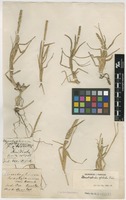
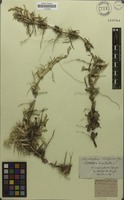
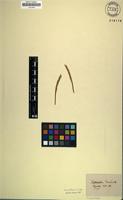
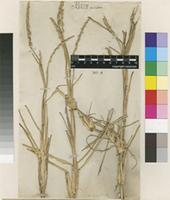
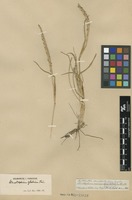
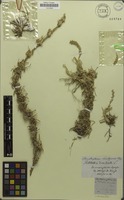
Rottboellia dimidiata

14 Images see all

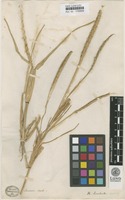
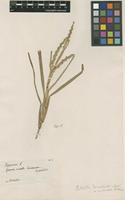
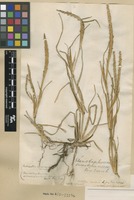
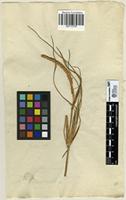
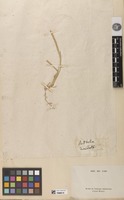
Filed as Rottboellia dimidiata Thunb. [family POACEAE]
Filed as Rottboellia dimidiata (L.) L.f. [family POACEAE]
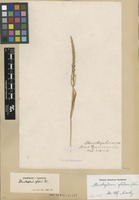
Filed as Stenotaphrum swartzianum Nees [family POACEAE]
Filed as Stenotaphrum americanum [family POACEAE]
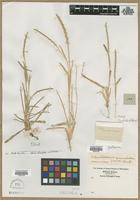
Filed as Stenotaphrum glabrum Trin. [family POACEAE]
Filed as Stenotaphrum dimidiatum (L.) Brongn. [family POACEAE]
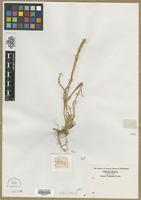
Type? of Rottboellia dimidiata Gaertn. [family POACEAE]
Filed as Rottboellia dimidiata (L.) L.f. [family POACEAE]
Filed as Rottboellia dimidiata (L.) L. f. [family POACEAE]
Filed as Stenotaphrum glabrum Trin. [family POACEAE]
Filed as Rottboellia sp. [family POACEAE]
Filed as Rottboellia dimidiata L. [family POACEAE]
Filed as Stenotaphrum glabrum Trin. [family POACEAE]
Filed as Stenotaphrum dimidiatum (L.) Brongn. [family POACEAE]
Previous
Next

Name

Identification
Rottboellia dimidiata (L.) L.f. [family POACEAE ] (stored under name); Verified by Not on sheet, Rottboellia dimidiata (L.) L.f. [family POACEAE ] Verified by Thunberg, Carl Peter,
Related name
  • Rottboellia sp.
  • Stenotaphrum americanum
  • Tripsacum indet.
  • Rottboellia dimidiata
  • Rottbollia indet.
  • Stenotaphrum glabrum

Flora

Entry for STENOTAPHRUM dimidiatum Brongn. [family POACEAE]
Herbarium
Royal Botanic Gardens, Kew (K)
Collection
Flora of Tropical Africa
Resource Type
Reference Sources
Entry From
Flora of Tropical Africa, Vol 9, page 1, (1917) Author: (By O. STAPF.)
Names
STENOTAPHRUM dimidiatum Brongn. [family POACEAE], Bot. Voy. Coq. 127 (excl. vars. β & γ). —Nees, Fl. Afr. Austr. 63; Durand & Schinz, Consp. Fl. Afr. v. 787 (partly); K. Schum. in Engl. Pfl. Ost-Afr. C. 106 (partly).
STENOTAPHRUM complanatum Schrank [family POACEAE], in Bot. Zeit. 1824, ii. Beil. 26; Kunth, Enum. i. 137; Nees, Agrost. Bras. 93; Thwait. Enum. Pl. Zeyl. 361; Baker, Fl. Maurit. 440; Balf. f. Bot. Rodrig. 83; Hook. f. in Trim. Handb. Fl. Ceyl. v. 172.
STENOTAPHRUM madagascariense Kunth [family POACEAE], Rev. Gram. ii. 211, and Enum. i. 524, Suppl. 99; Steud. Syn. Pl. i. 118.
STENOTAPHRUM swartzianum Peters [family POACEAE], Reise Mossamb. ii. 549; not of Nees.
Panicum dimidiatum Linn. [family POACEAE], Sp. Pl. ed. i. 57 (excl. syn.), and Mant. ii. 323; N L. Burm. Fl. Ind. 25, t. 8, f. 3 (excl. syn.; figure bad); Retz. Obs. vi. 23; Willd. Sp. Pl. i. 339; Roxb. Fl. Ind. i. 287.
Panicum poæforme Boj. [family POACEAE], Hort. Maurit. 365 (name), not Willd.
Rottboellia dimidiata Linn. f. [family POACEAE], Suppl. 114, not of Thunb.
Rottboellia complanata Sw. [family POACEAE], in Berl. Ges. Nat. Freunde Mag. iv. (1810), 89, t. 5; Boj. Hort. Maurit. 372.
Information
Perennial with a rather slender branched closely noded knotty rhizome. Culms ascending from an often long trailing base which is rooting and branching from the numerous nodes, the branches either also trailing or more usually forming fan-shaped bunches of leaves which may remain barren or grow out into secondary few- (mostly 1–2-) noded erect or shortly ascending secondary culms, rising from a few inches to over 1 ft. above the ground; all the internodes, but particularly those of the base, strongly compressed, glabrous, smooth. Leaf-sheaths very much compressed, keeled, the lower pallid, soon diverging and more or less persistent, all glabrous or ciliate upwards, very rarely loosely hairy all over; ligule a fringe of very short hairs; blades folded in vernation, then flat, exactly linear from a shortly contracted base, with subobtuse or rounded tips, 1–5 (rarely to 7) in. by 2–6 lin., green, glabrous, scabrid along the margins towards the tip, otherwise smooth, midrib and the very close and numerous nerves very fine. False spikes solitary, terminal on the primary and secondary culms, rarely with an additional spike from the last sheath but one, 1 1/2–5 (rarely more) in. long, borne on an ultimately long-exserted rather slender glabrous peduncle; common axis glabrous, with a more or less wavy stout midrib, flat on the back and acutely keeled on the face, the lateral angles of its internodes, the intermediate of which are 2 1/2–4 lin. long, alternately herbaceously marginate and herbaceously winged, with the wing produced into a short or long lanceolate acute tooth or lobe, or both lateral angles winged but with the wings alternately narrower and wider and the latter only toothed or lobed or (lowest internodes) only marginate, margins scabrid, the whole rhachis therefore when seen from the back ribbon-like, alternately lobed or toothed or entire downwards, 1–2 1/2 lin. wide, and, seen from the face, more or less distinctly chambered, the chambers alternately to the right and the left of the midrib. Racemes sessile, sunk in the chambers or shortly exserted from them, mostly 3–5- (rarely 2- or 6–8-)spiculate, 2 1/2–5 (rarely 6) lin. long, distant by their own or less than their own length or the lowest remote; rhachis wavy or zig-zag, ending in a subulate point, triquetrous, flattened, with the lateral angles marginate or more or less winged downwards, internodes less than 1 lin. long, glabrous or more or less ciliate downwards; pedicels reduced to very short sometimes ciliate stumps. Spikelets if more than 3 more or less 2-seriate and laterally contiguous or imbricate, lanceolate-oblong, subacuminate to acutely acuminate, 2–2 1/4 lin. long, pallid. Glumes very dissimilar; lower a whitish nerveless membranous to chartaceous ovate obtuse or rounded scale, 1/2– 3/4 lin. long, finely asperulous and more or less ciliolate on the top; upper glume very convex to boat-shaped, semi-ovate or semi-elliptic in profile, acute, usually slightly shorter than the spikelet, membranous, typically 7-, but sometimes up to 9- and even 11-nerved, glabrous or ciliolate towards the tip. Lower floret ♂: valve corresponding in outline and size to the spikelet as seen from the front, more or less coriaceous, often very much so, and then the 5 (rarely 7) nerves very obscure or invisible except in the acumen, glabrous or ciliolate near the tip; valvule somewhat shorter than the valve. Upper floret hermaphrodite, as long as the lower or very slightly shorter; valve and valvule lanceolate, acute or acuminate, thinly chartaceous, smooth, glabrous or more or less ciliolate upwards, the former 5-nerved, the latter 2-nerved with rounded sides; stigmas rather large.
Range
Also in Madagascar and the neighbouring islands of the Indian Ocean and in Ceylon and the Southern Deccan.
Distribution
Zanzibar Mozamb. Dist. Last ! Dowson, 120!Pemba Island Mozamb. Dist. Dowson, 120! Lyne, 112!Portuguese East Africa Mozamb. Dist. Kongone Island, mouth of Zambesi, Kirk !
Notes
This ought to be as useful for making lawns in the tropics and for fodder as S. secundatum. In fact, its softer and greener foliage would seem to render it preferable.

Related Materials

  • Terms and Conditions
  • Privacy Policy
  • Cookie Policy
  • Cookie Settings
  • Accessibility
  • Help
  • Contact Us
  • Facebook
  • Twitter
ITHAKA

JSTOR is part of ITHAKA, a not-for-profit organization helping the academic community use digital technologies to preserve the scholarly record and to advance research and teaching in sustainable ways.

©2000-2026 ITHAKA. All Rights Reserved. JSTOR®, the JSTOR logo, JPASS®, Aluka®, and ITHAKA® are registered trademarks of ITHAKA.

╳