JSTOR Global Plants Home
  • Home
  • Browse
  • About
  • Access
  • Account
    • Saved Items
    • Profile
  • Log in

Global Plants

Skip to Main Content
  • JSTOR Global Plants Home
  • Global Plants

    • Browse
    • About
    • Access
    • Account
      • Saved Items
      • Profile
Log in
  • Browse
  • About
  • Access
  • Account
    • Saved Items
    • Profile
Advanced Search

Compilation
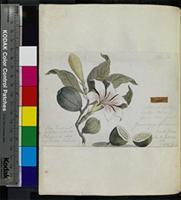
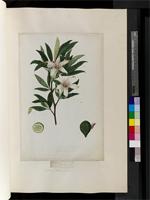
Rothmannia capensis

6 Images see all

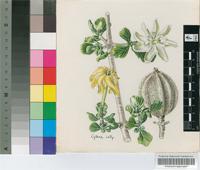
Rothmannia capensis Thunb.
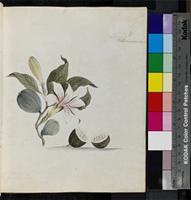
Rothmannia capensis Thunb. from South Africa
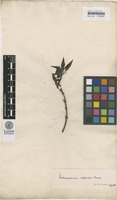
Rothmannia capensis Thunb.
Type? of Gardenia rothmannia L.f. [family RUBIACEAE]
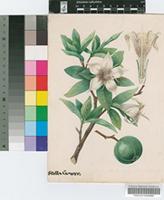
Rothmannia capensis Thunb. from South Africa
Rothmannia capensis Thunb., from South Africa
Previous
Next

Name

Identification
Rothmannia capensis Thunb. [family RUBIACEAE ]
Related name
  • Rothmannia capensis

Flora

Entry for GARDENIA Rothmannia L. fil. [family RUBIACEAE]
Herbarium
Royal Botanic Gardens, Kew (K)
Collection
Flora Capensis
Resource Type
Reference Sources
Entry From
Flora Capensis, Vol 3, page 1, (1894) Author: (By W. SONDER).
Names
GARDENIA Rothmannia L. fil. [family RUBIACEAE], suppl. p. 165—Thunb. diss. Gd. n. 6. Bot. M. t. 690. E. Z. 2288.
Rothmannia Capensis Th. [family RUBIACEAE], act. Holm. 1776, p. 65, f. 2.
Information
unarmed; branches angular, rough; leaves on very short petioles, oblong, acute, glabrous; flowers terminal, solitary, sessile; calyx cylindrical, ribbed, hairy within, 5-cleft, its segments filiform, acute; corolla with an obconical tube, a campanulate throat, and spreading acute segments; fruit ovate, fleshy, costate, 2-valved, 2-celled, many seeded. Tree; stem 15–30 feet high. Wood very hard. Leaves 3–4 inches long, 1–1 1/4 inch broad, coriaceous, veiny. Flowers white, spotted with red, sweet scented, calyx 1 inch and more, the corolla 3 inches long. Fruit nearly 1 1/2 inch in diameter.
Distribution
SOUTH AFRICA Woods, Swellendam, George, Uitenhage; Natal. Jan.-Feb. (Hb. D., Sd.)

Related Materials

  • Terms and Conditions
  • Privacy Policy
  • Cookie Policy
  • Cookie Settings
  • Accessibility
  • Help
  • Contact Us
  • Facebook
  • Twitter
ITHAKA

JSTOR is part of ITHAKA, a not-for-profit organization helping the academic community use digital technologies to preserve the scholarly record and to advance research and teaching in sustainable ways.

©2000-2026 ITHAKA. All Rights Reserved. JSTOR®, the JSTOR logo, JPASS®, Aluka®, and ITHAKA® are registered trademarks of ITHAKA.

╳