JSTOR Global Plants Home
  • Home
  • Browse
  • About
  • Access
  • Account
    • Saved Items
    • Profile
  • Log in

Global Plants

Skip to Main Content
  • JSTOR Global Plants Home
  • Global Plants

    • Browse
    • About
    • Access
    • Account
      • Saved Items
      • Profile
Log in
  • Browse
  • About
  • Access
  • Account
    • Saved Items
    • Profile
Advanced Search

Compilation
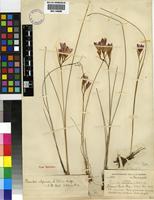
Romulea alpina

5 Images see all

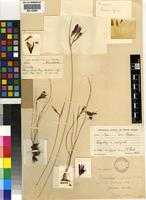
Lectotype of Romulea alpina L.Bolus [family IRIDACEAE]
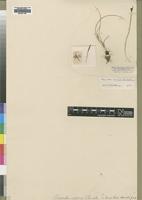
Romulea fibrosa M.P.de Vos [family IRIDACEAE]
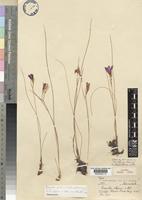
Isosyntype of Romulea alpina L.Bolus [family IRIDACEAE]
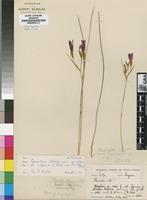
Holotype of Romulea alpina Rendle [family IRIDACEAE]
Lectotype of Romulea alpina L.Bolus [family IRIDACEAE]
Previous
Next

Name

Identification
Romulea alpina Rendle [family IRIDACEAE ] Romulea campanuloides Harms [family IRIDACEAE ] (stored under name); Verified by Hedberg,
Related name
  • Romulea alpina
  • Romulea campanuloides
  • Romulea fibrosa

Flora

Entry for ROMULEA campanuloides Harms [family IRIDACEAE]
Herbarium
Royal Botanic Gardens, Kew (K)
Collection
Flora of Tropical Africa
Resource Type
Reference Sources
Entry From
Flora of Tropical Africa, Vol 7, page 337, (1898) Author: (By J. G. BAKER.)
Names
ROMULEA campanuloides Harms [family IRIDACEAE], in Engl. Jahrb. xix. Beibl. No. 47, 28.
ROMULEA alpina Rendle [family IRIDACEAE], in Journ. Linn. Soc. xxx. 401.
ROMULEA camerooniana Baker [family IRIDACEAE], Handb. Irid. 102, partly.
Information
Bulb globose, 1/3– 1/2 in. diam., tunics brown, rigid. Leaves very slender, subterete, erect, 1 ft. or more long, channelled down the face. Peduncle slender, simple, stiffly erect, 6–9 in. long. Spathe-valve subequal, green, lanceolate, acute, about 1/2 in. long. Perianth sessile, funnel-shaped, 3/4– 7/8 in. long; segments oblanceolate, obtuse, distinctly striped with dark lilac on a paler purple ground. Stamens half as long as the perianth limb. Style not overtopping the anthers.
Distribution
German East Africa Mozamb. Dist. Kilimanjaro, 6000–10,000 ft., Thomson! Volkens, 782! Taylor.

Related Materials

  • Terms and Conditions
  • Privacy Policy
  • Cookie Policy
  • Cookie Settings
  • Accessibility
  • Help
  • Contact Us
  • Facebook
  • Twitter
ITHAKA

JSTOR is part of ITHAKA, a not-for-profit organization helping the academic community use digital technologies to preserve the scholarly record and to advance research and teaching in sustainable ways.

©2000-2026 ITHAKA. All Rights Reserved. JSTOR®, the JSTOR logo, JPASS®, Aluka®, and ITHAKA® are registered trademarks of ITHAKA.

╳