JSTOR Global Plants Home
  • Home
  • Browse
  • About
  • Access
  • Account
    • Saved Items
    • Profile
  • Log in

Global Plants

Skip to Main Content
  • JSTOR Global Plants Home
  • Global Plants

    • Browse
    • About
    • Access
    • Account
      • Saved Items
      • Profile
Log in
  • Browse
  • About
  • Access
  • Account
    • Saved Items
    • Profile
Advanced Search

Compilation
Riocreuxia aberrans

6 Images see all

Riocreuxia aberrans R.A.Dyer
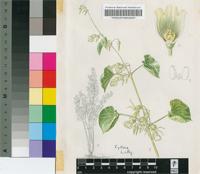
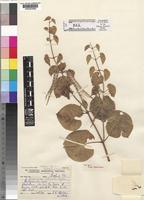
Holotype of Riocreuxia aberrans R.A.Dyer [family ASCLEPIADACEAE]
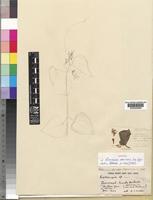
Holotype of Riocreuxia aberrans R.A.Dyer [family APOCYNACEAE]
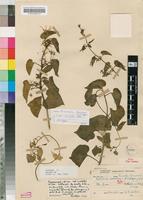
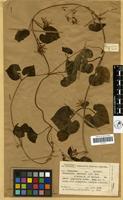
Paratype of Riocreuxia aberrans R.A.Dyer [family APOCYNACEAE]
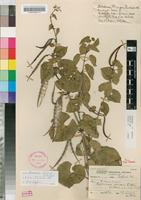
Isosyntype of Riocreuxia aberrans R.A.Dyer [family ASCLEPIADACEAE]
Filed as Riocreuxia aberrans R.A.Dyer [family ASCLEPIADACEAE]
Previous
Next

Name

Identification
Riocreuxia aberrans R.A.Dyer [family APOCYNACEAE ]
Related name
  • Riocreuxia aberrans

Flora

Entry for Riocreuxia aberrans [family ASCLEPIADACEAE]
Herbarium
South African National Biodiversity Institute, Compton Herbarium, Cape Town (SAM)
Collection
Flora of Southern Africa
Resource Type
Reference Sources
Entry From
Flora of South Africa, (2003) Author: Dr J.P. Roux
Names
Riocreuxia aberrans [family ASCLEPIADACEAE]
Common names
Ceropegia brachysiphon Huber in Mems Soc. broteriana 12: 175 (1958), not C. aberrans Schltr.
Information
Perennial herb with woody rootstock producing long, subsucculent roots. Stems tufted, erect or somewhat twining, up to 0,6 m or more high, sparsely branched, with internodes 40-50 mm long, unifariously pubescent and with long hairs at nodes. Leaves: petioles 20-40 mm long, pilose on upper surface; blade cordate-ovate, up to 50 (-70) mm long and broad, acuminate, glabrescent, ciliate on margin. Flowers many, cymose in extra-axillary racemes; pedicels filiform, 15-30 mm long. Sepals linear-lanceolate, ±4 mm long, glabrous. Corolla 18-20 mm long, glabrous; tube campanulate, 5 mm long, about 6 mm diam.; lobes linear-lanceolate, 13-15 mm long, cohering at the delicate tips which readily become free on maturity. Corona appearing uniseriate, with 5 small pockets with outer margin deeply divided, confluent laterally with base of inner lobes; inner lobes linear-oblong, erect, obtuse or emarginate, ±2 mm long, greatly excee­ding staminal column. Follicles slender, subcylindric, up to 100 mm long, slightly constricted at intervals of 6-7 mm.
Habitat
The relatively short, campanulate corolla-tube and usually free lobes make this species readily identifiable.
Use
6. Riocreuxia aberrans R. A. Dyer in Bothalia 3: 274 (1937); in Flower. PI. Afr. t.1253 (1957). Type: Transvaal, Ermelo, Walker in PRE 14397 (PRE, holo.!).
Range
In the Ermelo and Belfast districts of the eastern Transvaal, on exposed quartzite ridges; flowering mainly in November and December.

Related Materials

  • Terms and Conditions
  • Privacy Policy
  • Cookie Policy
  • Cookie Settings
  • Accessibility
  • Help
  • Contact Us
  • Facebook
  • Twitter
ITHAKA

JSTOR is part of ITHAKA, a not-for-profit organization helping the academic community use digital technologies to preserve the scholarly record and to advance research and teaching in sustainable ways.

©2000-2026 ITHAKA. All Rights Reserved. JSTOR®, the JSTOR logo, JPASS®, Aluka®, and ITHAKA® are registered trademarks of ITHAKA.

╳