JSTOR Global Plants Home
  • Home
  • Browse
  • About
  • Access
  • Account
    • Saved Items
    • Profile
  • Log in

Global Plants

Skip to Main Content
  • JSTOR Global Plants Home
  • Global Plants

    • Browse
    • About
    • Access
    • Account
      • Saved Items
      • Profile
Log in
  • Browse
  • About
  • Access
  • Account
    • Saved Items
    • Profile
Advanced Search

Compilation
Ricinodendron viticoides

8 Images see all

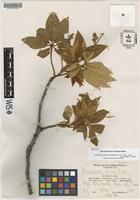
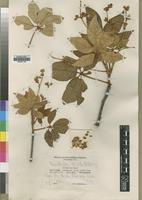
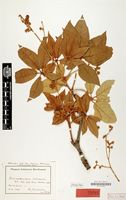
Isotype of Ricinodendron viticoides Mildbr. [family EUPHORBIACEAE]
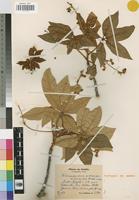
Type of Ricinodendron viticoides Mildbraed [family EUPHORBIACEAE]
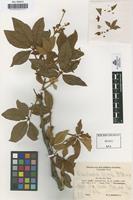
Isotype of Ricinodendron viticoides Mildbr. [family EUPHORBIACEAE]
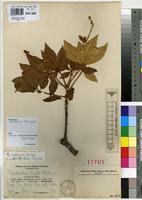
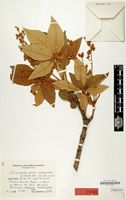
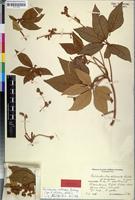
Type of Ricinodendron viticoides Mildbr. [family EUPHORBIACEAE]
Isotype of Ricinodendron viticoides Mildbr. [family EUPHORBIACEAE]
Previous
Next

Name

Identification
Ricinodendron viticoides Mildbr. [family EUPHORBIACEAE ] (stored under name); Verified by Not on sheet.,
Related name
  • Ricinodendron rautanenii
  • Ricinodendron viticoides
  • Schinziophyton rautanenii

Flora

Entry for Schinziophyton rautanenii Schinz Radcl.-Sm. [family EUPHORBIACEAE]
Herbarium
Royal Botanic Gardens, Kew (K)
Collection
Flora Zambesiaca
Resource Type
Reference Sources
Entry From
FZ, Vol 9, Part 4, (1996) Author: A. Radcliffe-Smith
Names
Ricinodendron viticoides Mildbr. [family EUPHORBIACEAE], in Notizbl. Bot. Gart. Berlin-Dahlem 12: 517 (1935). —Brenan, Check-list For. Trees Shrubs Tang. Terr.: 225 (1949). Type from Tanzania (Southern Province).
Schinziophyton rautanenii Schinz Radcl.-Sm. [family EUPHORBIACEAE], in Kew Bull. 45: 157 (1990). Syntypes from Namibia (Ovamboland).
Ricinodendron rautanenii Schinz [family EUPHORBIACEAE], in Bull. Herb. Boissier 6: 744 (1898). —Pax in Engler, Pflanzenr. IV. 147, iii] 47: 48, t. 17 (1911). —Hutchinson in F.T.A. 6, 1: 746 (1912). —Eyles in Trans. Roy. Soc. South Africa 5: 398 (1916). —Engler, Pflanzenw. Afrikas (Veg. Erde 9) 3, 2: 132 (1921). —De Wildeman, Pl. Bequaert. 3, 4: 505 (1926). —O.B. Miller, Check-list For. Trees Shrubs Bech. Prot.: 33 (1948). —Topham, Check List For. Trees Shrubs Nyasaland Prot.: 53 (1958). —J. Léonard in F.C.B. 8, 1: 119 (1962). —White, F.F.N.R.: 203 (1962). —P.G. Meyer in Merxmüller, Prodr. Fl. SW. Afrika, fam. 67: 42 (1967). —Drummond in Kirkia 10: 253 (1975). —K. Coates Palgrave, Trees Southern Africa, ed. 2, rev.: 432 (1983). —Peters in Econ. Bot. 41, 4: 494–502 (1987). —Radcliffe-Smith in F.T.E.A., Euphorb. 1: 328 (1987). Syntypes as above.
Information
A shrub, or tree up to 20 m tall, with a rounded or spreading crown, and with a trunk up to c. 1 m d.b.h.Bark pale grey, whitish or light brown, smooth at first, later becoming reticulate and flaking, and grey-green beneath.Wood white, very soft.Twigs thick, exuding white gum; twigs, petioles and inflorescence axes ferrugineous stellate-pubescent at first, later scurfily stellate-pulverulent.Leaves digitately compound, (3)5–7-foliolate.Stipules 3–5 × 2–3 mm.Petioles 6–25 cm long; glands 2–4, usually at the petiole apex, prominent, green; petiolules 0.5–1.5 cm long.Leaflets elliptic-ovate to oblanceolate, rarely 3-lobed; median leaflet 5–18 × 2–9 cm, the lateral leaflets slightly smaller; all leaflets obtuse or acute and shortly acuminate at the apex, usually somewhat asymmetrically rounded-cuneate at the base, entire or subentire, edged with marginal dark green gland dots on upper or lower surfaces, densely ferrugineous or fulvous stellate-pubescent on upper surface, later glabrescent, paler or whitish stellate-tomentose beneath; lateral nerves in 6–16 pairs. Male inflorescences 10–22 × 4–8 cm; bracts 3–10 mm long.Male flowers: pedicels 2–5 mm long; calyx lobes 5 × 2.5–3 mm, elliptic-oblong, obtuse, stellate-pubescent without and within; petals 6–7 × 2–3 mm, elliptic-oblong, emarginate-subtruncate at the apex, rounded at the base, glabrous except within at the base, pale lemon-yellow to whitish, drying dark brown; disk glands c. 1 × 1 mm; stamens c. 7 mm long, anthers 0.75 × 0.5 mm.Female inflorescences 5–6 × 2–3 cm; bracts as in the male.Female flowers: pedicels 7–10 mm, stouter than in the male flowers; calyx lobes 8–9 × 5–6 mm, broadly ovate, subacute or obtuse, indumented as in the male; petals 9 × 4 mm, glabrous, otherwise more or less as in the male; disk 4 mm in diameter; ovary 7 × 5 × 3 mm, densely stellate-pubescent; styles 5 mm long.Fruit 3–5 × 2–3.5 cm when dried, up to 7 × 5 cm when fresh, densely stellate-tomentose at first, later glabrescent, green, becoming pale yellow; exopcarp thin, mesocarp 3–4 mm thick, endocarp 4–5 mm thick.Seeds 1.8–2.5 × 1.6–2 cm, compressed-ellipsoid.
Habitat
At low to medium altitudes in sandy soil, in well developed deciduous woodland on Kalahari Sand with Baikiaea, Guibourtia Afzelia and Brachystegia, in short grassland with scattered trees of Combretum, Terminalia, Burkea and Pterocarpus, and in mopane woodland on Kalahari Sand, also in wooded hills and amongst sand dunes and sandy alluvium beside rivers, sometimes forming pure stands
Altitude range
50–1220 m.
1220
50
Distribution
Zambia S Mapanza Mission, male fl. 11.xi.1954, Robinson 946 (K).Zambia E Petauke, fr. immat. 3.xii.1958, Robson 816 (BM; K; LISC; PRE; SRGH).Zambia C Kabwe (Broken Hill), male fl. xi.1909, Rogers 8638 (K).Zambia N Mpika Distr., South Luangwa Game Reserve, near Katete-Luangwa confluence, st. 5.v.1965, B.L. Mitchell 2842 (K; SRGH).Botswana SE Orapa–Francistown, st. 30.iv.1976, Allen 391 (PRE).Mozambique N Monapo Distr., 5 km Itaculo-Régulo Chihir, male fl. 2.xii.1963, Torre & Paiva 9375 (LISC).Malawi N Rumphi Distr., south of Njakwa, st. 4.v.1952, White 2844 (FHO; K).Zimbabwe N Sebungwe Distr., Chicomba Vlei, st. 17.xii.1951, Lovemore 223 in GHS 35394 (SRGH).Zambia B Mongu, Kande Lake, male fl. 11.xi.1959, Drummond & Cookson 6358 (K; LISC; MO; PRE; SRGH).Botswana N 7 km SW of Hyaena Camp on Linyanti River, female fl. 26.x.1972, Biegel, Pope & Gibbs Russell 4077 (K; LISC; MO; PRE; SRGH).Caprivi Strip 13 km east of Nyangana Mission Station, fr. 9.i.1956, de Winter 4198 (K; PRE).Mozambique MS between Serracão Braunstein and Rio Nhamouare, fr. 22.i.1948, Mendonça 3679 (LISC).Mozambique Z 27.2 km Derre–Morrumbala, st. 12.vi.1949, Barbosa & Carvalho in Barbosa 3047 (K; SRGH).Malawi S 20 m from the main Blantyre Road between Namikango Mission and Tondwe, c. 7 m from Zomba, fr. 11.i.1982, J.D. Chapman 6087 (FHO; K; MAL; SRGH).Zimbabwe C Lower Gweru (Gwelo) Reserve, st. vi.1962, Cleghorn in GHS 147206 (K; SRGH).Zimbabwe W Hwange Distr., Victoria Falls, male fl. 24.xi.1949, Wild 3206 in GHS 26359 (K; LISC; PRE; SRGH).
Distribution (external)
Zaire (Shaba Province)
Tanzania (Eastern and Southern Provinces)
Angola (Huíla Province)
Namibia (Ovamboland and Hereroland)
South Africa (north-westernTransvaal)
Notes
The Manketti or Mongongo Nut.The seed is hard shelled, and the kernel has a high oil content and is edible.Vernacular names as recorded in specimen data include: “mgongo”, “mugongo”, “mungongo” (Barotse area); “mkanga ula” (chiYao); “mkomwa” (chiNyanja); “muhuwi” (chiTumbuka); “mukusu” (chiBwile, chiWemba); “ngoma”, “umganumapoba” (siNdebele).

Related Materials

  • Terms and Conditions
  • Privacy Policy
  • Cookie Policy
  • Cookie Settings
  • Accessibility
  • Help
  • Contact Us
  • Facebook
  • Twitter
ITHAKA

JSTOR is part of ITHAKA, a not-for-profit organization helping the academic community use digital technologies to preserve the scholarly record and to advance research and teaching in sustainable ways.

©2000-2026 ITHAKA. All Rights Reserved. JSTOR®, the JSTOR logo, JPASS®, Aluka®, and ITHAKA® are registered trademarks of ITHAKA.

╳