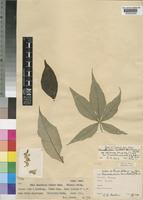
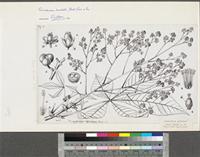
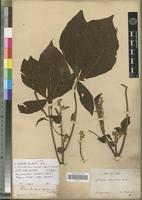
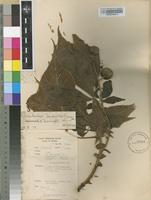
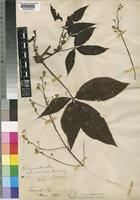
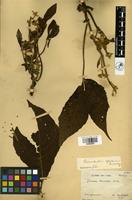
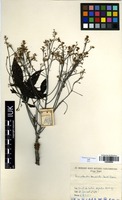
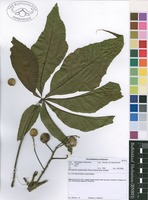
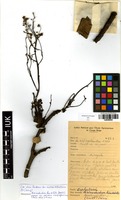
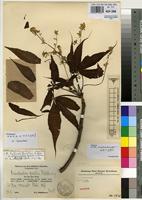
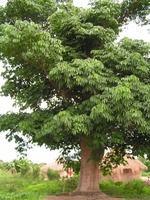
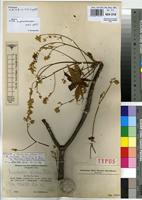
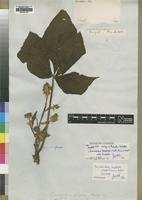
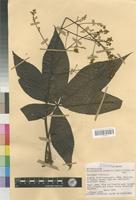
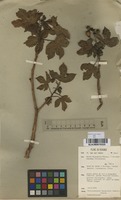
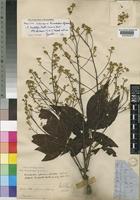
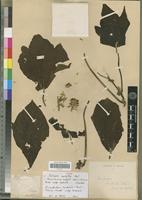
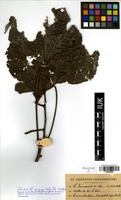
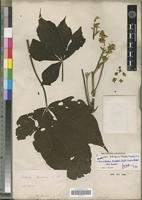
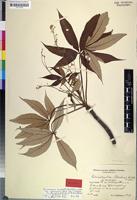
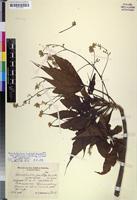
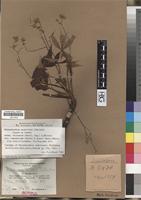
A tree about 30–70 ft. high; trunk straight, divested of branches from the base to two-thirds its height; branchlets rather stout, rusty-puberulous when young, at length glabrous. Leaves digitately 3–5-foliolate; leaflets sessile, obovate or obovate-elliptic, gradually or somewhat caudate-acuminate, usually narrowed to the base, the lateral ones often oblique and smaller, 2 1/2–8 in. long, 1–5 in. broad, glandular-denticulate, membranous, stellate-puberulous or tomentellous on both surfaces when young, soon becoming glabrous or nearly so; lateral nerves 10–16 on each side of the midrib, looped close to the margin, prominent on both surfaces; tertiary nerves parallel, slender; petiole 2 1/2–8 in. long; stipules large and conspicuous, foliaceous, persistent, suborbicular, up to 1 in. long and 1 1/4 in. broad, digitately nerved and rather deeply toothed, stellate-puberulous or tomentellous. Male panicles large and slender, about 1 ft. long; axis somewhat angular or compressed, puberulous; branches spreading, slender, up to 6 in. long, with the flowers collected towards the ends; bracts subulate or linear, up to 3 lin. long. Flowers shortly pedicellate or subsessile, yellow-tomentose. Sepals obovate, rounded at the apex, 1 3/4 lin. long, 1 lin. broad. Petals about 2 lin. long, united. Disk-glands erect, contiguous, elliptic, glabrous, 3/4 lin. long, 1/2 lin. broad. Stamens 10; filaments 3/4 lin. long, glabrous; anthers slightly exserted, 1/3 lin. long. Receptacle densely pilose. Female panicle stouter and smaller than the male. Sepals and petals similar to the male. Disk saucer-shaped, undulately lobed, glabrous. Ovary ovoid, stellate-tomentose; styles 2, rather slender, bipartite. Fruit 2-lobed, 2-celled, 3/4 in. long, 1 1/4 in. in diam., 2-seeded.