JSTOR Global Plants Home
  • Home
  • Browse
  • About
  • Access
  • Account
    • Saved Items
    • Profile
  • Log in

Global Plants

Skip to Main Content
  • JSTOR Global Plants Home
  • Global Plants

    • Browse
    • About
    • Access
    • Account
      • Saved Items
      • Profile
Log in
  • Browse
  • About
  • Access
  • Account
    • Saved Items
    • Profile
Advanced Search

Compilation
Ribes missouriense

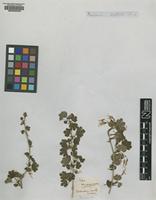
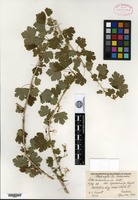
11 Images see all

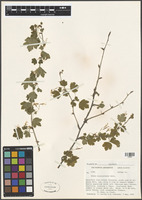
Filed as Ribes missouriense Nutt. [family GROSSULARIACEAE]
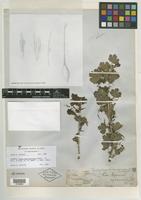
Holotype of Ribes missouriense Nutt. var. ozarkanum Fassett [family GROSSULARIACEAE]
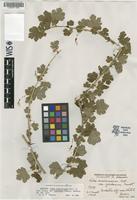
Isotype of Ribes missouriense var. ozarkanum Fassett, N.C. 1937 [family SAXIFRAGACEAE]
Type? of Ribes missouriense Nutt. ex Torr. & A.Gray [family GROSSULARIACEAE]
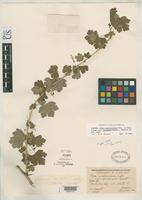
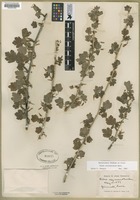
Isotype of Ribes missouriense Nutt. [family GROSSULARIACEAE]
Filed as Ribes missouriense Nutt. [family GROSSULARIACEAE]
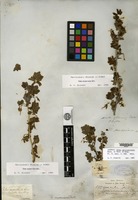
Isotype of Ribes missouriense Nuttall [family SAXIFRAGACEAE]
Filed as Ribes missouriense Nutt. [family GROSSULARIACEAE]
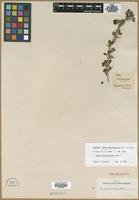
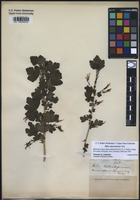
Type of Ribes missouriense Nutt. [family GROSSULARIACEAE]
Filed as Ribes missouriense Nutt. [family GROSSULARIACEAE]
Type of Ribes missouriense Nuttall var. ozarkanum Fassett [family SAXIFRAGACEAE]
Previous
Next

Name

Identification
Ribes gracile Michx. [family GROSSULARIACEAE ] (stored under name); Ribes missouriense Nutt. [family GROSSULARIACEAE ]
Related name
  • Ribes missouriense
  • Ribes gracile
Common name
  • Wild gooseberry, Flora of North America Vol. 8
  • groseillier de Missouri, Flora of North America Vol. 8

Flora

Entry for Ribes missouriense Nuttall [family GROSSULARIACEAE]
Herbarium
Flora of North America (FNA)
Collection
Flora of North America
Resource Type
Reference Sources
Entry From
Flora of North America, Vol 8,
Names
Ribes missouriense Nuttall [family GROSSULARIACEAE], in J. Torrey and A. Gray, Fl. N. Amer., 1: 548. 1840 ,
Grossularia missouriensis (Nuttall) Coville & Britton [family GROSSULARIACEAE]
Ribes missouriense var. ozarkanum Fassett [family GROSSULARIACEAE]
Information
Plants 1.3–2 m. Stems erect to sprawling, glabrous or puberulent; spines at nodes sometimes absent or 1–3, 7–18 mm; prickles on internodes absent or scattered. Leaves: petiole 0.7–2 cm, hairy, with longer and often plumose hairs and elongated glands near base, short-stipitate glands absent; blade roundish, 3-lobed, cleft nearly to midrib, 1.7–3 cm, base broadly cuneate to rounded or subcordate, sometimes truncate, surfaces not glandular, villous-tomentose abaxially, puberulent to hirsute, glabrescent adaxially, lobes straight-sided to sometimes cuneate, margins toothed, apex rounded. Inflorescences pendent, solitary flowers or 2–4-flowered corymbs, 3–5 cm, axis glabrous or sparsely lanate to pilose and puberulent, sparingly stipitate-glandular, flowers evenly spaced. Pedicels not jointed, 5–13 mm, glabrous; bracts broadly ovate, 2–2.5 mm, ciliate. Flowers: hypanthium greenish white, narrowly tubular, 1.5–2.5 mm, glabrous; sepals not overlapping, spreading to reflexed, pale green to white, linear-oblong, 5–7 mm; petals connivent, erect, pale green to nearly white, becoming pink tinged, cuneate-obovate, not conspicuously revolute or inrolled, 2–3.5 mm; nectary disc not prominent; stamens 3–5 times as long as petals; filaments linear, 15 mm, glabrous; anthers cream to pale pink, oblong-sagittate, 2 mm, apex rounded; ovary glabrous; styles connate nearly 7/8 their lengths, 10–14 mm, glabrous. Berries palatable, red to purple, globose, 7–12 mm, glabrous. 2n = 16.
Phenology
Flowering Apr–Jun
Altitude range
0–600 m
Distribution
USA Ark.USA Conn.USA Ill.USA Ind.USA IowaUSA Kans.USA Ky.USA Md.USA Minn.USA Mo.USA Nebr.USA N.J.USA N.Dak.USA OhioUSA Okla.USA Pa.USA S.Dak.USA Tenn.USA Va.USA W.Va.USA Wis.Canada Ont.
Discussion
In Ribes missouriense and some other species (e.g., R. americanum, R. cynosbati, R. oxyacanthoides), the filaments are attached in a “pocket” of the anthers; the anthers have a sagittate appearance although the bases do not spread away from the main axis (A. F. Cholewa, pers. comm.).
In the Midwest, Ribes missouriense often is an indicator of woodlands that have experienced grazing pressure (G. Yatskievych, pers. comm.). The eastern North American populations in Connecticut, Maryland, New Jersey, Pennsylvania, Virginia, and West Virginia are probably escapes from cultivation.

Related Materials

  • Terms and Conditions
  • Privacy Policy
  • Cookie Policy
  • Cookie Settings
  • Accessibility
  • Help
  • Contact Us
  • Facebook
  • Twitter
ITHAKA

JSTOR is part of ITHAKA, a not-for-profit organization helping the academic community use digital technologies to preserve the scholarly record and to advance research and teaching in sustainable ways.

©2000-2026 ITHAKA. All Rights Reserved. JSTOR®, the JSTOR logo, JPASS®, Aluka®, and ITHAKA® are registered trademarks of ITHAKA.

╳