JSTOR Global Plants Home
  • Home
  • Browse
  • About
  • Access
  • Account
    • Saved Items
    • Profile
  • Log in

Global Plants

Skip to Main Content
  • JSTOR Global Plants Home
  • Global Plants

    • Browse
    • About
    • Access
    • Account
      • Saved Items
      • Profile
Log in
  • Browse
  • About
  • Access
  • Account
    • Saved Items
    • Profile
Advanced Search

Compilation
Ribes americanum

15 Images see all

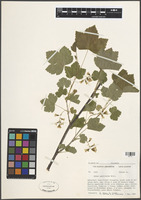
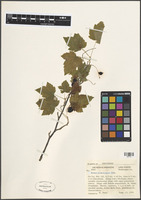
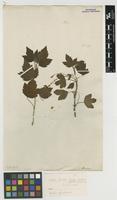
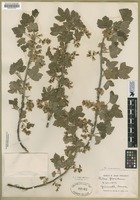
Filed as Ribes americanum Mill. [family GROSSULARIACEAE]
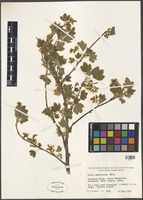
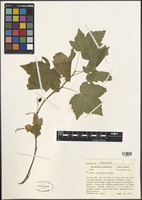
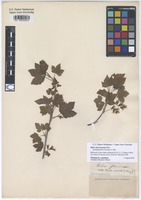
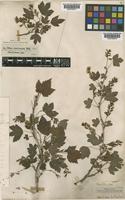
Holotype of Ribes americanum Mill. f. pauciglandulosum Fassett [family GROSSULARIACEAE]
Filed as Ribes americanum Mill. [family GROSSULARIACEAE]
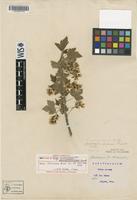
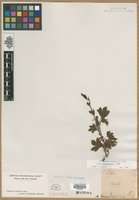
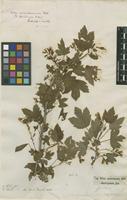
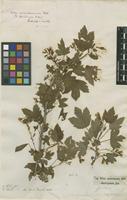
Filed as Ribes indet. [family GROSSULARIACEAE]
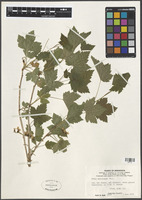
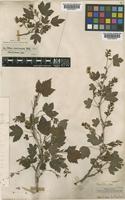
Filed as Ribes americanum Mill. [family GROSSULARIACEAE]
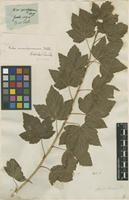
Filed as Ribes floridum L'Hér. [family GROSSULARIACEAE]
Ribes americanum Mill. [family GROSSULARIACEAE]
Filed as Ribes americanum P. Mill. [family GROSSULARIACEAE]
Ribes americanum Mill. [family GROSSULARIACEAE]
Filed as Ribes floridum L'Hér. [family GROSSULARIACEAE]
Previous
Next

Name

Identification
Ribes americanum Mill. [family GROSSULARIACEAE ] (stored under name); Ribes floridum L'Herit [family GROSSULARIACEAE ]
Related name
  • Ribes indet.
  • Ribes floridum
  • Ribes americanum
  • Ribes pensylvanicum
Common name
  • Wild black currant, Flora of North America Vol. 8
  • gadellier d’Amérique, Flora of North America Vol. 8

Flora

Entry for Ribes americanum Miller [family GROSSULARIACEAE]
Herbarium
Flora of North America (FNA)
Collection
Flora of North America
Resource Type
Reference Sources
Entry From
Flora of North America, Vol 8,
Names
Ribes americanum Miller [family GROSSULARIACEAE], Gard. Dict. ed., 8, Ribes no. 4. 1768 ,
Information
Plants 0.5–1.5 m. Stems erect to spreading, crisply puberulent to villous, glandular throughout with yellow, shiny, sessile, crystalline, round glands; spines at nodes absent; prickles on internodes absent. Leaves: petiole 1–7 cm, (equaling or shorter than blade), crisply puberulent to villous, with slender processes along proximal margins; blade pentangular, 3–5-lobed, cleft nearly 1/2 to midrib, (1.5–)2–7 cm, base broadly truncate to shallowly cordate, surfaces with amber, sessile glands, thickly villous at least abaxially or along abaxial veins, lobes broadly deltate, margins usually coarsely bicrenate-serrate, apex acute to bluntly acute. Inflorescences spreading to pendent, 6–15-flowered racemes, 1.5–5 cm, axis pubescent, flowers evenly spaced. Pedicels jointed, 0.1–2 mm, villous; bracts narrowly lanceolate, to 10 mm, villous to sparsely hairy. Flowers: hypanthium green, broadly tubular-campanulate, 3–4.5 mm, glabrous or sparsely villosulous; sepals not overlapping, usually reflexed, cream to greenish white, narrowly oblong-spatulate to nearly oblong, 4.5–5 mm; petals connivent, erect, whitish, oblong to oblong-obovate, not conspicuously revolute or inrolled, 2.5–3 mm; nectary disc not prominent; stamens nearly as long as petals; filaments expanded at base, 1 mm, glabrous; anthers cream, oval, 1 mm, apex with small-holed callus; ovary glabrous; styles connate nearly to stigmas, 6–8 mm, glabrous. Berries palatable when cooked, black, ovoid, 10 mm, glabrous, without resinous glands.
Phenology
Flowering Apr–Jun
Altitude range
50–1700 m
Distribution
introduced in Asia (n China).USA Colo.USA Conn.USA Del.USA D.C.USA Ill.USA Ind.USA IowaUSA Ky.USA MaineUSA Md.USA Mass.USA Mich.USA Minn.USA Mo.USA Mont.USA Nebr.USA N.H.USA N.J.USA N.Mex.USA N.Y.USA N.Dak.USA OhioUSA Pa.USA R.I.USA S.Dak.USA Vt.USA Va.USA W.Va.USA Wis.USA Wyo.Canada Alta.Canada Man.Canada N.B.Canada N.S.Canada Ont.Canada P.E.I.Canada Que.Canada Sask.
Discussion
Fresh material of Ribes americanum does not have the skunklike odor of R. hudsonianum and R. nigrum. The bracts are much longer than the jointed pedicels. The leaves and bracts bear fimbriate processes on the proximal margins that may be remnants of adnate stipules.

Related Materials

  • Terms and Conditions
  • Privacy Policy
  • Cookie Policy
  • Cookie Settings
  • Accessibility
  • Help
  • Contact Us
  • Facebook
  • Twitter
ITHAKA

JSTOR is part of ITHAKA, a not-for-profit organization helping the academic community use digital technologies to preserve the scholarly record and to advance research and teaching in sustainable ways.

©2000-2026 ITHAKA. All Rights Reserved. JSTOR®, the JSTOR logo, JPASS®, Aluka®, and ITHAKA® are registered trademarks of ITHAKA.

╳