JSTOR Global Plants Home
  • Home
  • Browse
  • About
  • Access
  • Account
    • Saved Items
    • Profile
  • Log in

Global Plants

Skip to Main Content
  • JSTOR Global Plants Home
  • Global Plants

    • Browse
    • About
    • Access
    • Account
      • Saved Items
      • Profile
Log in
  • Browse
  • About
  • Access
  • Account
    • Saved Items
    • Profile
Advanced Search

Compilation
Rhynchospora penniseta

10 Images see all

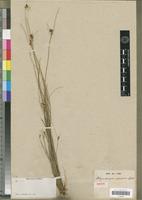
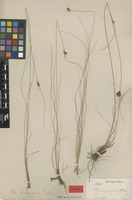
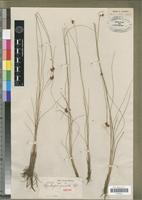
Isotype of Rhynchospora penniseta Griseb. [family CYPERACEAE]
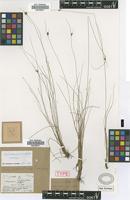
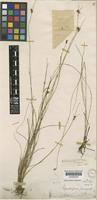
Lectotype of Rhynchospora penniseta Griseb. [family CYPERACEAE]
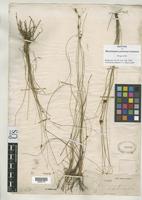
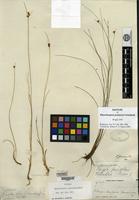
Isotype of Rhynchospora penniseta Grisebach, A.H.R. 1866 [family CYPERACEAE]
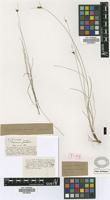
Type of Rhynchospora penniseta Griseb. [family CYPERACEAE]
Isotype of Rhynchospora penniseta Griseb. [family CYPERACEAE]
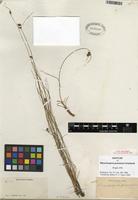
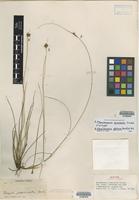
Rhynchospora plumosa Britton [family CYPERACEAE]
Isotype of Rhynchospora penniseta Griseb. [family CYPERACEAE]
Isotype of Rhynchospora penniseta Grisebach [family CYPERACEAE]
Isotype of Rhynchospora penniseta Griseb. [family CYPERACEAE]
Previous
Next

Name

Identification
Isotype of Rhynchospora penniseta Grisebach [family CYPERACEAE ] (stored under name); Verified by Griseb., 1866 Isotype of Rhynchospora penniseta Grisebach [family CYPERACEAE ] Verified by Griseb., 1866
Related name
  • Rhynchospora penniseta
  • Rhynchospora plumosa

Flora

Entry for Rhynchospora plumosa Elliott [family CYPERACEAE]
Herbarium
Flora of North America (FNA)
Collection
Flora of North America
Resource Type
Reference Sources
Entry From
Flora of North America, Vol 23,
Names
Rhynchospora plumosa Elliott [family CYPERACEAE], Sketch Bot. S. Carolina, 1: 58. 1816
Phaeocephalum plumosa (Elliott) House [family ]
Rhynchospora penniseta Grisebach [family CYPERACEAE]
Rhynchospora semiplumosa A. Gray [family CYPERACEAE]
Treatment Author(s)
Robert Kral
Information
Plants perennial, mostly densely cespitose, (10–)20–80 cm, bases pale brown to dull deep brown; rhizomes absent. Culms erect or excurved, filiform to linear. Leaves erect or excurved, shorter than scape; blades filiform to linear, to 1.5 mm wide, margins involute, apex trigonous, tapering. Inflorescences: spikelet clusters 1–several, dense or sparse, when several, either widely spaced or close together, if widely spaced then ovoid to hemispheric, if close together then lobed ellipse or cylinder; leafy bracts filiform, setaceous, overtopping each cluster. Spikelets light redbrown to deep brown, broadly fusiform to ovoid, (2.5–)3.5–4 mm, apex acute to acuminate; fertile scale broadly ovate, strongly convex, (1.5–)2–3 mm, apex acuminate to mucronate, midrib excurrent or not. Flowers: perianth bristles 6, plumose, reaching at least to fruit midbody, often to tubercle tip. Fruits 1(–2) per spikelet, (1.5–)2–2.5 mm; body redbrown or brown, tumidly obovoid or ellipsoid, sometimes obscurely lenticular, (1.2–)1.3–1.8(–2) × 1–1.5 mm; surfaces interruptedly crossrugulose; tubercle narrowly to broadly conic, mostly 0.3–0.5 mm, base flaring, round or indistinctly 2lobed.
Phenology Fruiting
spring
mar
apr
may
summer
jun
jul
aug
fall
sep
oct
nov
year
summer
spring
winter
fall
nov
apr
dec
jan
jun
oct
jul
may
feb
aug
sep
mar
Altitude range
0–300 m;
Distribution
West IndiesCentral America.USA Ala.USA Del.USA Fla.USA Ga.USA La.USA Miss.USA N.C.USA S.C.USA Tex.
Discussion
Particularly in Gulf Coastal Plain savannas, Rhynchospora plumosa appears to have two distinct morphs: one very densely cespitose with filiform leaves, filiform, arching culms, and spikelets in short, broad, dark brown clusters, and the other morph taller, stiffer, with broader leaves and culms, and longer, sharper, paler spikelets in narrow compounds of clusters. After many attempts to do what others have—namely to create two distinct species—I have had to retrench, because so many intergrades occur.

Related Materials

  • Terms and Conditions
  • Privacy Policy
  • Cookie Policy
  • Cookie Settings
  • Accessibility
  • Help
  • Contact Us
  • Facebook
  • Twitter
ITHAKA

JSTOR is part of ITHAKA, a not-for-profit organization helping the academic community use digital technologies to preserve the scholarly record and to advance research and teaching in sustainable ways.

©2000-2026 ITHAKA. All Rights Reserved. JSTOR®, the JSTOR logo, JPASS®, Aluka®, and ITHAKA® are registered trademarks of ITHAKA.

╳