JSTOR Global Plants Home
  • Home
  • Browse
  • About
  • Access
  • Account
    • Saved Items
    • Profile
  • Log in

Global Plants

Skip to Main Content
  • JSTOR Global Plants Home
  • Global Plants

    • Browse
    • About
    • Access
    • Account
      • Saved Items
      • Profile
Log in
  • Browse
  • About
  • Access
  • Account
    • Saved Items
    • Profile
Advanced Search

Compilation
Rhynchospora inundata

3 Images see all

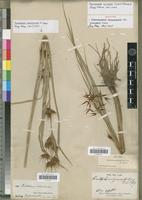
Isotype of Ceratoschoenus macrostachys A. Gray var. inundatus Oakes [family CYPERACEAE]
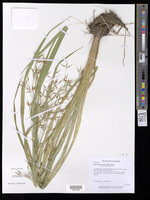
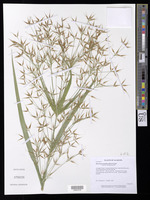
Rhynchospora inundata (Oakes) Fernald [family CYPERACEAE]
Previous
Next

Name

Identification
Rhynchospora inundata (Oakes) Fernald [family CYPERACEAE ] (stored under name); Verified by Moore, G., 2004 Rhynchospora corniculata (Lam.) Gray [family CYPERACEAE ] Verified by Not on sheet, Isotype of Ceratoschoenus macrostachys A. Gray [family CYPERACEAE ] Verified by Moore, G., 2004
Related name
  • Ceratoschoenus macrostachys
  • Rhynchospora corniculata
  • Rhynchospora inundata

Flora

Entry for Rhynchospora inundata (Oakes) Fernald [family CYPERACEAE]
Herbarium
Flora of North America (FNA)
Collection
Flora of North America
Resource Type
Reference Sources
Entry From
Flora of North America, Vol 23,
Names
Rhynchospora inundata (Oakes) Fernald [family CYPERACEAE], Rhodora, 20: 139. 1918
Ceratoschoenus macrostachyus (Torrey ex A. Gray) A. Gray var. inundatus Oakes [family ], Mag. Hort. Bot., 7: 185. 1841
Rhynchospora macrostachya Torrey ex A. Gray var. inundata (Oakes) Fernald [family CYPERACEAE]
Treatment Author(s)
Robert Kral
Information
Plants perennial, clonal, 50–100 cm; rhizomes slender, scaly, to 2 mm thick. Culms stiffly erect, leafy, triangular, multiribbed. Leaves erect, distal ones overtopping inflorescence; principal blades flat proximally, trigonous distally, 3–10 mm wide, apex attenuate. Inflorescences terminal and axillary, clusters of corymbs (1–)2–3, open, spikelet clusters loose; bracteal leaves mostly overtopping corymbs. Spikelets pale redbrown, narrowly lanceoloid, (9–)11–14 mm, apex acuminate; fertile scales lanceolate, 9–13 mm, apex acuminate, midrib shortexcurrent or not. Flowers: perianth bristles 5–6, extending at least 5 mm beyond tubercle base, antrorsely barbellate. Fruits 1–2 per spikelet, 15–20 mm; body stipitate, obovoid to oblong, compressed, 4–5 × 2–3 mm, margins thick; surfaces concave, horizontally finely striate, minutely cancellate; tubercle stoutbased, grooved, subulate, 10–15 mm, setulose.
Phenology Fruiting
summer
jun
jul
aug
fall
sep
oct
nov
Altitude range
0–100 m;
Distribution
USA Ala.USA Del.USA Fla.USA Ga.USA La.USA Md.USA Mass.USA Miss.USA N.J.USA N.Y.USA N.C.USA R.I.USA S.C.USA Va.
Discussion
Rhynchospora inundata is largely confined to lower Coastal Plain terraces, mostly along the present coast. Typical plants have narrow fruit bodies and narrow inflorescences of sparse clusters, well overtopped by leaves and erect leafy bracts. By contrast, plants of R. careyana have broader fruits, shorter perianths, and larger, broader inflorescences that overtop most or all leaves and bracts. In general, plants of R. careyana are more robust and grow in more acid sites than those of R. inundata. Southward in the Atlantic Coastal and Gulf Coastal plains are broad areas of ecotone where the two species intergrade.

Related Materials

  • Terms and Conditions
  • Privacy Policy
  • Cookie Policy
  • Cookie Settings
  • Accessibility
  • Help
  • Contact Us
  • Facebook
  • Twitter
ITHAKA

JSTOR is part of ITHAKA, a not-for-profit organization helping the academic community use digital technologies to preserve the scholarly record and to advance research and teaching in sustainable ways.

©2000-2026 ITHAKA. All Rights Reserved. JSTOR®, the JSTOR logo, JPASS®, Aluka®, and ITHAKA® are registered trademarks of ITHAKA.

╳