JSTOR Global Plants Home
  • Home
  • Browse
  • About
  • Access
  • Account
    • Saved Items
    • Profile
  • Log in

Global Plants

Skip to Main Content
  • JSTOR Global Plants Home
  • Global Plants

    • Browse
    • About
    • Access
    • Account
      • Saved Items
      • Profile
Log in
  • Browse
  • About
  • Access
  • Account
    • Saved Items
    • Profile
Advanced Search

Compilation
Rhynchosia heterophylla

5 Images see all

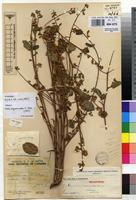
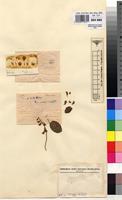
Holotype of Rhynchosia heterophylla Hauman [family FABACEAE]
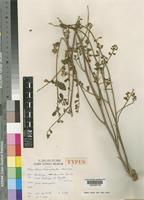
Type of Rhynchosia heterophylla Hauman [family LEGUMINOSAE-PAPILIONOIDEAE]
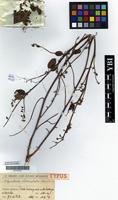
Isotype of Rhynchosia heterophylla Hauman [family LEGUMINOSAE-PAPILIONACEAE]
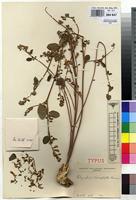
Holotype of Rhynchosia heterophylla Hauman [family FABACEAE]
Previous
Next

Name

Identification
Rhynchosia heterophylla Hauman [family FABACEAE ] (stored under name); Verified by Not on sheet,
Related name
  • Rhynchosia heterophylla

Flora

Entry for Rhynchosia heterophylla Hauman [family LEGUMINOSAE]
Herbarium
Royal Botanic Gardens, Kew (K)
Collection
Flora Zambesiaca
Resource Type
Reference Sources
Entry From
FZ, Vol 3, Part 5, (2001) Author: B. Mackinder, R. Pasquet, R. Polhill and B. Verdcourt
Names
Rhynchosia heterophylla Hauman [family LEGUMINOSAE], in Bull. Jard. Bot. État 25: 103 (1955); in F.C.B. 6: 185 (1954) sine descr. lat. —Verdcourt in F.T.E.A., Leguminosae, Pap.: 743 (1971). —Lock, Leg. Afr. Check-list: 430 (1989). Type from Dem. Rep. Congo (Katanga Prov.).
Information
Erect subshrub c. 60 cm tall, with several erect shoots from a stout woody rootstock, usually appearing after burning. Stems sticky, stout or slender, pubescent and with yellow to dark red glands. Leaves mostly 1-foliolate, less often 3-foliolate; leaflets 1.3–4.5 × 0.8–3.2 cm, elliptic, oblong-elliptic or almost round, rounded at both ends, shortly mucronulate at the apex, pubescent and covered with orange or red glands on both surfaces; venation at length reticulate beneath; petiole 3–20 mm long; petiolule not easily distinguishable; stipules deciduous, 6 × 2 mm, oblong, pubescent and glandular. Inflorescences numerous, axillary or apparently terminal at the apices of shoots where leaves have not yet developed; rhachis 2–3(7) cm long; peduncle 3–15(35) mm long; pedicels 2–3 mm long; bracts c. 3 × 1 mm, oblong, pubescent. Calyx pubescent and covered with red glands; tube 2.5–4 mm long; lobes 3–7 mm long, lanceolate, the lowest the longest, the upper pair joined only near the base. Standard yellow, veins deep purple outside, 10–17 × 8–12 mm, rounded or broadly obovate, glabrous; wings chrome-yellow; keel pale yellow. Pods yellow-brown blotched darker brown, 15–20 × 6–7 mm, oblong-elliptic, with long glandular-based hairs, gland dots and a few short hairs. Seeds dark purplish-brown, 4 × 3.5 × 2 mm, subglobose, with a small raised rim aril in the single seed examined.
Habitat
Brachystegia–Isoberlinia woodland, plateau woodland on laterite, rocky hills
Altitude range
c. 1150–1300 m.
1300
1150
Distribution
Zambia S Mumbwa Distr., Nambala to Chenobi Mission, fl. & fr. 15.ix.1947, Greenway & Brenan 8088 (EA; K).Zambia W Mwinilunga to Solwezi, km 131.2, fl. & fr. 16.ix.1952, F. White 3264 (FHO; K).
Distribution (external)
Dem. Rep. Congo (Katanga Province)
Tanzania
Notes
Fanshawe collected this species at Luanshya in Zambia (9.vii.1954, 1352 (K; NDO)), and recollected it a month later from the same place, (Fanshawe 1352A, 10.i.1955, (K; NDO)). The material of the second gathering is so different from younger material that I have given below this separate description of it. I have no reason to doubt Fanshawe’s identification of it with his 1352.Plant erect, of characteristic yellow-green colour (in life and dry); stems densely shortly pubescent. Leaflets 3, glutinous (fide collector), 6.5–8.5 × 2.5–6 cm, ovate or elliptic to ovate-lanceolate, acute at the apex, rounded or subcordate at the base, sparsely puberulous mainly on venation on both sides, closely gland-dotted beneath; venation strongly raised beneath with veins subparallel and more or less at right angles to the lateral nerves; petiole c. 20 mm long; rhachis 7–15 mm long; stipules 9 × 2 mm, lanceolate-falcate, pubescent, venose

Related Materials

  • Terms and Conditions
  • Privacy Policy
  • Cookie Policy
  • Cookie Settings
  • Accessibility
  • Help
  • Contact Us
  • Facebook
  • Twitter
ITHAKA

JSTOR is part of ITHAKA, a not-for-profit organization helping the academic community use digital technologies to preserve the scholarly record and to advance research and teaching in sustainable ways.

©2000-2026 ITHAKA. All Rights Reserved. JSTOR®, the JSTOR logo, JPASS®, Aluka®, and ITHAKA® are registered trademarks of ITHAKA.

╳