JSTOR Global Plants Home
  • Home
  • Browse
  • About
  • Access
  • Account
    • Saved Items
    • Profile
  • Log in

Global Plants

Skip to Main Content
  • JSTOR Global Plants Home
  • Global Plants

    • Browse
    • About
    • Access
    • Account
      • Saved Items
      • Profile
Log in
  • Browse
  • About
  • Access
  • Account
    • Saved Items
    • Profile
Advanced Search

Compilation
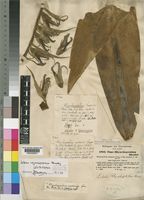
Rhynchopetalum montanum

13 Images see all

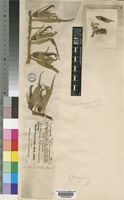
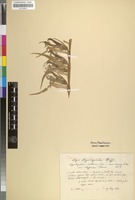
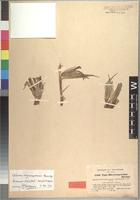
Type of Tupa rhynchopetalum Hochst. ex A.Rich. [family LOBELIACEAE]
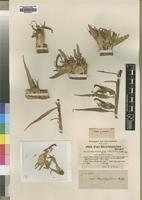
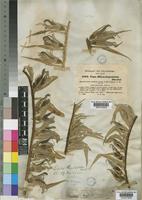
Isolectotype of Lobelia rhynchopetalum Hemsl. [family CAMPANULACEAE]
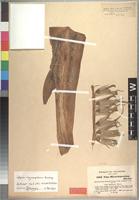
Lectotype of Lobelia rhynchopetalum Hemsl. [family CAMPANULACEAE]
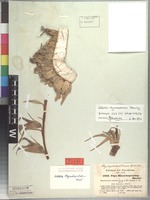
Filed as Rhynchopetalum montanum Fresen. [family CAMPANULACEAE]
Isolectotype of Lobelia rhynchopetalum Hemsl. [family CAMPANULACEAE]
Filed as Rhynchopetalum montanum Fresen. [family CAMPANULACEAE]
Type of Tupa rhynchopetalum Hochst. ex A.Rich. [family LOBELIACEAE]
Isolectotype of Lobelia rhynchopetalum Hemsl. [family CAMPANULACEAE]
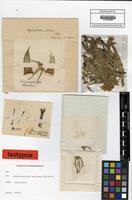
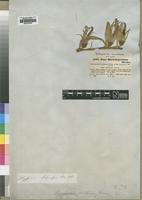
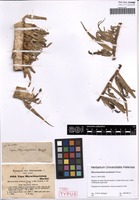
Isotype of Rhynchopetalum montanum Fresen. 1838 [family CAMPANULACEAE]
Lectotype of Lobelia rhynchopetalum Hemsl. [family CAMPANULACEAE]
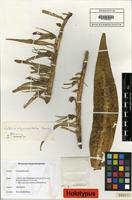
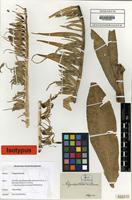
Holotype of Rhynchopetalum montanum Fresen. 1838 [family CAMPANULACEAE]
Lectotype of Lobelia rhynchopetalum Hemsl. [family CAMPANULACEAE]
Isotype of Rhynchopetalum montanum Fresen. 1838 [family CAMPANULACEAE]
Previous
Next

Name

Identification
Tupa rhynchopetalum Hochst. ex A.Rich. [family LOBELIACEAE ] Lobelia rhynchopetalum (Hochst. ex A.Rich.) Hemsl. [family LOBELIACEAE ] (stored under name); Rhynchopetalum montanum Fresen. [family LOBELIACEAE ]
Related name
  • Tupa rhynchopetalum
  • Lobelia rhynchopetalum
  • Rhynchopetalum montanum

Flora

Entry for LOBELIA Rhynchopetalum Hemsl. [family CAMPANULACEAE]
Herbarium
Royal Botanic Gardens, Kew (K)
Collection
Flora of Tropical Africa
Resource Type
Reference Sources
Entry From
Flora of Tropical Africa, Vol 1, page 463, (1877) Author: (By W. B. Hemsley.)
Names
LOBELIA Rhynchopetalum Hemsl. [family CAMPANULACEAE]
Rhynchopetalum montanum Fresen. [family ], in Bot. Zeit. 1838, p. 603, Mus. Senckenb. iii. p. 66, t. 4; DC. Prodr. vii. p. 396.
Tupa Rhynchopetalum Hochst. [family CAMPANULACEAE], Hb. Schimp. Abyss. n. 1263; Rich. Fl. Abyss. ii. p. 9.
Information
A tall woody monocarpic (?) plant with the habit of a palm, having a stout hollow unbranched stem 12–15 ft. high, naked in the lower part when in flower, densely leafy towards the top, and terminating in a long simple dense spiciform bracteate raceme of greyish violet flowers. Leaves crowded, alternate, sessile, oblong-lanceolate, acute, entire, 1–2 ft. long, clothed with a grey woolly tomentum when young, ultimately quite glabrous, almost as broad at the base as in the middle, of a papery texture, traversed by a thick fleshy midrib, gradually passing into bracts. Flowers and bracts clothed with a dense soft felt-like tomentum; bracts leafy in the lower part of the inflorescence, smaller upwards, but always much longer than the flowers. Flowers 2–3 in. long, shortly pedicellate; calyx-lobes about half as long as the corolla, which finally splits into 5 free petals. Stamens equalling the style but much shorter than the corolla; filaments free at the base, connate above the middle; anthers connate around the stigma, the two lower ones bearded. Capsule oblong-spherical, prominently 10-ribbed, crowned by the long persistent calyx-lobes.
Distribution
Abyssinia Nile Land in Mt. Backit, 11,000–13,000 ft., Schimper! Petit!
Notes
The lower leaves of this species are unknown to us, and it is possible they differ very much from the upper ones. In Hb. Kew. is a sheet with flowers of this species, and a leaf exactly like those of L. Giberroa; possibly the specimens of the two species were accidentally mixed. The name ‘montana’ being already occupied in the genus, the second name has to be adopted.

Related Materials

  • Terms and Conditions
  • Privacy Policy
  • Cookie Policy
  • Cookie Settings
  • Accessibility
  • Help
  • Contact Us
  • Facebook
  • Twitter
ITHAKA

JSTOR is part of ITHAKA, a not-for-profit organization helping the academic community use digital technologies to preserve the scholarly record and to advance research and teaching in sustainable ways.

©2000-2026 ITHAKA. All Rights Reserved. JSTOR®, the JSTOR logo, JPASS®, Aluka®, and ITHAKA® are registered trademarks of ITHAKA.

╳