JSTOR Global Plants Home
  • Home
  • Browse
  • About
  • Access
  • Account
    • Saved Items
    • Profile
  • Log in

Global Plants

Skip to Main Content
  • JSTOR Global Plants Home
  • Global Plants

    • Browse
    • About
    • Access
    • Account
      • Saved Items
      • Profile
Log in
  • Browse
  • About
  • Access
  • Account
    • Saved Items
    • Profile
Advanced Search

Compilation
Rhus spinescens

4 Images see all

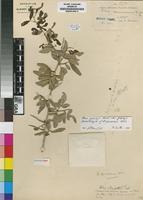
Isolectotype of Rhus spinescens Diels [family ANACARDIACEAE]
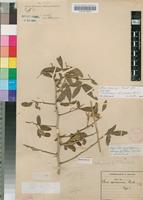
Isotype of Rhus spinescens Diels [family ANACARDIACEAE]
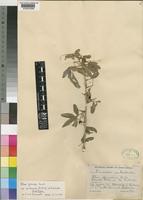
Lectotype of Rhus gueinzii Sond. var. spinescens (Diels) R.Fern. & A.Fern. [family ANACARDIACEAE]
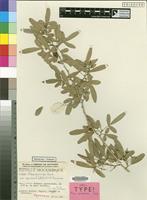
Paratype of Rhus spinescens Diels [family ANACARDIACEAE]
Previous
Next

Name

Identification
Rhus spinescens Diels [family ANACARDIACEAE ] Verified by Not on sheet, Rhus gueinzii Sond. [family ANACARDIACEAE ] (stored under name); Verified by Not on sheet,
Related name
  • Rhus spinescens
  • Rhus gueinzii

Flora

Entry for Rhus gueinzii var. spinescens Diels R. & A. Fernandes [family ANACARDIACEAE]
Herbarium
Royal Botanic Gardens, Kew (K)
Collection
Flora Zambesiaca
Resource Type
Reference Sources
Entry From
FZ, Vol 2, Part 2, page 550, (1966) Author: Rosette Fernandes and A. Fernandes
Names
Rhus gueinzii var. spinescens Diels R. & A. Fernandes [family ANACARDIACEAE], in Bol. Soc. Brot., Sér. 2, 38: 186 (1965). Type from the Transvaal (Komati Poort).
Rhus spinescens Diels [family ANACARDIACEAE], in Engl., Bot. Jahrb. 40: 87 (1907). — Schonl. in Bothalia, 3, 1: 70, fig. p. 70 (1930). — Burtt Davy, F.P.F.T. 2: 505 (1932). Type as above.
Rhus simii Schonl. [family ANACARDIACEAE], tom. cit.: 69, cum fig. (1930). Type from the Transvaal.
Rhus simii var. lydenburgensis Schonl. [family ANACARDIACEAE], tom. cit.: 70 (1930). Type from the Transvaal.
Information
Shrub or small tree up to 8 m. tall, often with spinescent branches (spine, 3·5–7·5 cm. long, usually stout, cylindric-conic), leafless or leafy; bark of the stems branches and spines pale grey with numerous and very prominent lenticels; branchlets whitish, shortly pubescent. Petiole 1–4 cm. long, slender, glabrous, dorsally convex, canaliculate above. Leaflets pale glaucous or greyish-green above, paler below, lanceolate or oblong, cuneate at the base or the lateral ones ovate to ovate-lanceolate and not so cuneate as the median, all blunt and emarginate at the apex, frequently with the margin entire or shallowly crenate-dentate, membranous or ± rigid, rarely subcoriaceous, the median one 3·5–7 × 0·6–1·3 cm., the lateral ones smaller; midrib slender, prominent on both surfaces; lateral nerves very delicate, 5–7 mm. apart, slightly conspicuous; reticulation barely or not at all visible. Panicles terminal and axillary, shorter than the leaves or the terminal ones somewhat longer, ± dense, with the branches slightly scrofulous and pilose; pedicels 1–1·5 mm. long. Male flower: calyx-segments c. 0·5 mm. long, ovate; petals yellowish, c. 1·5 mm. long, oblong; filaments c. 1 mm. long; disk 5-lobulate, lobules emarginate. Drupe shining, 3·5 mm. in diam., globose, glabrous.
Habitat
In deciduous semi-evergreen and evergreen thickets, termite mounds, Acacia-savanna, open forests, etc.
Distribution
Mozambique M Maputo, Santaca, male fl. 29.x.1948, Gomes e Sousa 3871 (COI; K; LISC; PRE; SRGH).Mozambique GI Limpopo, 10 km. from Aldeia da Barragem, near R. Limpopo, fr. 20.xi.1957, Barbosa & Lemos in Barbosa 8216 (COI; K; LISC; LMJ); Gaza, suburbs of Vila Joao Belo, male fl. 10.iii.1942, Torre 3992 (LISC).Zimbabwe S Gwanda, Tuli Circle, st. v.1959, Thompson T/40/59 (K; LISC; PRE; SRGH).
Distribution (external)
Transvaal
Notes
Distinguished from var. gueinzii by the spinescent branches and the leaflets usually entire and not so discolorous.

Related Materials

  • Terms and Conditions
  • Privacy Policy
  • Cookie Policy
  • Cookie Settings
  • Accessibility
  • Help
  • Contact Us
  • Facebook
  • Twitter
ITHAKA

JSTOR is part of ITHAKA, a not-for-profit organization helping the academic community use digital technologies to preserve the scholarly record and to advance research and teaching in sustainable ways.

©2000-2026 ITHAKA. All Rights Reserved. JSTOR®, the JSTOR logo, JPASS®, Aluka®, and ITHAKA® are registered trademarks of ITHAKA.

╳