JSTOR Global Plants Home
  • Home
  • Browse
  • About
  • Access
  • Account
    • Saved Items
    • Profile
  • Log in

Global Plants

Skip to Main Content
  • JSTOR Global Plants Home
  • Global Plants

    • Browse
    • About
    • Access
    • Account
      • Saved Items
      • Profile
Log in
  • Browse
  • About
  • Access
  • Account
    • Saved Items
    • Profile
Advanced Search

Compilation
Rhus pentheri

13 Images see all

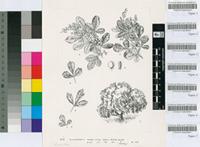
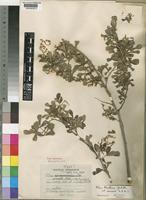
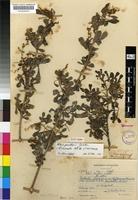
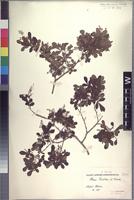
Rhus pentheri Zahlbr.
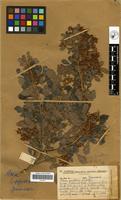
Type of Rhus cuneata N.E.Br. [family ANACARDIACEAE]
Type of Rhus pentheri Zahlbr. [family ANACARDIACEAE]
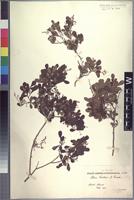
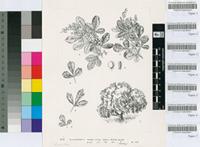
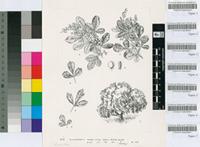
Rhus pentheri Zahlbr.
Filed as Searsia pentheri (A. Zahlbr.) Moffett [family ANACARDIACEAE]
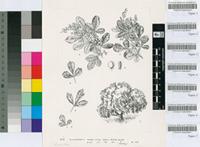
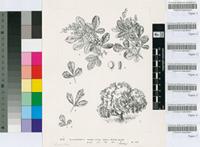
Rhus pentheri Zahlbr.
Isotype of Rhus pentheri Zahlbr. [family ANACARDIACEAE]
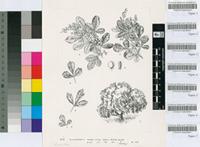
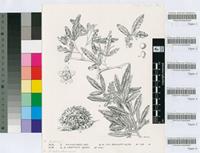
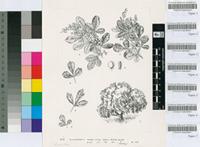
Rhus pentheri Zahlbr.
Type of Rhus pentheri Zahlbr. [family ANACARDIACEAE]
Previous
Next

Name

Identification
Rhus pentheri Zahlbr. [family ANACARDIACEAE ]
Related name
  • Rhus pentheri

Flora

Entry for Rhus pentheri [family ANACARDIACEAE]
Herbarium
South African National Biodiversity Institute, Compton Herbarium, Cape Town (SAM)
Collection
Flora of Southern Africa
Resource Type
Reference Sources
Entry From
Flora of South Africa, (2003) Author: Dr J.P. Roux
Names
Rhus pentheri [family ANACARDIACEAE]
Common names
R. cuneata N.E. Br.: 17 (1906). Type: Natal, Ladysmith, Wood 5706 (K, holo.!; BOL!, GRA!, NH!, iso.).
Information
Unarmed, multistemmed shrub or small, spreading tree becoming 5 m high and 6 m wide. Bark dark, rough, segmented; branches grey, minutely striate, branchlets villous, greyish white. Leaves trifoliolate, petiolate; petiole slender, subterete, slightly canaliculate above, sparsely hairy, (6-)12(-20) mm long; leaflets sessile, membranous, discolorous, dark green above, olive-green below, hypostomatous, glabrous when mature; lamina obovate to obtrullate, base cuneate, lateral leaflets less so, apex retuse, rounded, obtuse or subacute; margin slightly revolute, entire or irregularly bluntly toothed near apex; venation kladodromous, midrib prominent above, slightly prominent below, secondary nerves impressed, dull yellow above, grey below; terminal leaflets (18-)28(-43) x (8-)12(-24) mm, lateral leaflets (10-)18(-30) x (5-)9(-17) mm. Panicles mostly within foliage, much-branched, pubescent, flowers crowded, axillary and terminal, latter up to 45 mm long. Flowers normal, calyx lobes sparsely pubescent. Drupe circular to oblate, ellipsoid to lenticular,
Habitat
Rhus pentheri is recognized by its rough, blocky bark, membranous leaflets with grey abaxial veins, whitish villous branchlets and an abundance of relatively small lenticular drupes.
Use
34. Rhus pentheri Zahlbr. in Annalen des Naturhistorischen Museums in Wien 15,1: 52 (1900); Schonl.: 237 (1911); Schonl.: 48, t. p. 48 (1930); Burn Davy: 503 (1932); R. & A. Fer-nandes: 598 (1966); Compton: 332 (1976). Type: Natal, Colossa, 27.2.1895, Krook sub Penther 2290 (W, holo.!; GRA! fragment, iso.).
Range
Ranges from the Blaauwberg and Soutpansberg Mountains of the northern Transvaal through the eastern Transvaal, Swaziland, Natal and as far south as Kentani in Transkei. Rare in the eastern Orange Free State. Also occurs in Mozambique. Flowering recorded in February and March. Map 29.

Related Materials

  • Terms and Conditions
  • Privacy Policy
  • Cookie Policy
  • Cookie Settings
  • Accessibility
  • Help
  • Contact Us
  • Facebook
  • Twitter
ITHAKA

JSTOR is part of ITHAKA, a not-for-profit organization helping the academic community use digital technologies to preserve the scholarly record and to advance research and teaching in sustainable ways.

©2000-2026 ITHAKA. All Rights Reserved. JSTOR®, the JSTOR logo, JPASS®, Aluka®, and ITHAKA® are registered trademarks of ITHAKA.

╳