JSTOR Global Plants Home
  • Home
  • Browse
  • About
  • Access
  • Account
    • Saved Items
    • Profile
  • Log in

Global Plants

Skip to Main Content
  • JSTOR Global Plants Home
  • Global Plants

    • Browse
    • About
    • Access
    • Account
      • Saved Items
      • Profile
Log in
  • Browse
  • About
  • Access
  • Account
    • Saved Items
    • Profile
Advanced Search

Compilation
Rhus chirindensis

11 Images see all

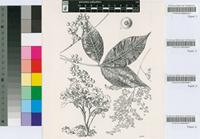
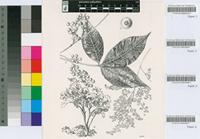
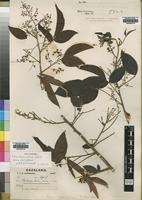
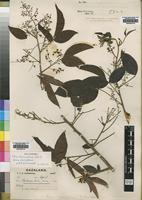
Rhus chirindensis Baker f.
Rhus chirindensis
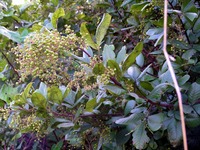
Rhus chirindensis Baker f.
Filed as Rhus chirindensis Bak. f. [family ANACARDIACEAE]
Rhus chirindensis
Rhus chirindensis Baker f.
Rhus chirindensis Baker f. [family ANACARDIACEAE]
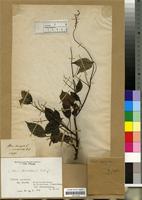
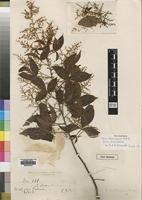
Type of Rhus chirindensis Baker f. f. chirindensis [family ANACARDIACEAE]
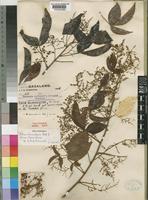
Type of Rhus chirindensis Baker f. [family ANACARDIACEAE]
Type? of Rhus chirindensis Baker f. [family ANACARDIACEAE]
Rhus chirindensis Baker f.
Previous
Next

Name

Identification
Rhus chirindensis Baker f. [family ANACARDIACEAE ]
Related name
  • Rhus chirindensis

Flora

Entry for Rhus chirindensis [family ANACARDIACEAE]
Herbarium
South African National Biodiversity Institute, Compton Herbarium, Cape Town (SAM)
Collection
Flora of Southern Africa
Resource Type
Reference Sources
Entry From
Flora of South Africa, (2003) Author: Dr J.P. Roux
Names
Rhus chirindensis [family ANACARDIACEAE]
Common names
R. legatii Schonl.: 51, t. p. 52 (1930); Burtt Davy: 502 (1932). R. laevigata sensu Thunb.: 52 (1794) non L.; Sond.: 514 (1860); Pappe: 12 (1862); Engl.: 443 (1883); Diels: 589, 639 (1898); Sim: 195, t. 45 (1907). R. chirindensis Bak. f. forma legatii (Schonl.) R. & A. Fernandes: 700, t. 14 (1965c). Searsia legatii (Schonl.) F.A. Barkley: 54 (1965). Type: Cape of Good Hope, Thunberg in herb. Thunberg 7345 0 (UPS, lecto.! here designated). R. acuminata E. Mey. nom. nud. Vide Schonl.: 51 (1930) (Drege 3452, P!).
Information
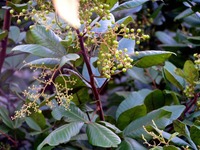
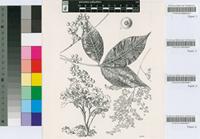
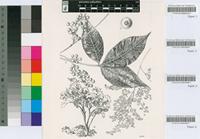
A shrub or small to sometimes large single-stemmed semi-evergreen tree reaching 23 m in South Africa. Bark smooth, older branches often spinous. Leaves trifoliolate; petiole glabrous, rarely pubescent, shallowly canaliculate above, (8—)41(—91) mm long; leaflets petiolulate, mem­branous, glabrous, concolorous, dark green sometimes turning red before falling, hypostoma-tous; lamina ovate to ovate-lanceolate, base cuneate to attenuate, apex acuminate, rarely cirrhose; margin entire, undulate, often minutely serrulate; venation simple craspedodromous, midrib prominent below, impressed above, secondaries slightly prominent below; terminal leaflets (30-)85(-130) x (13-)28(-54) mm, lateral leaflets (U-)55(-103) x (6-)22(-46) mm. Panicles much branched, multiflorous, males chiefly terminal, up to 200 mm long, females shorter, chiefly axillary. Flowers normal. Drupe circular, globoid, shiny, dark reddish brown, 2,9 x 2,8 to 7,0 x 6,3 mm. Fig. 6.
Habitat
The South African specimens of R. chirindensis are the largest trees in the subgenus and possibly in the genus. They root from truncheons and have horticultural potential and also provide a rich red heartwood for furniture.
Use
2. Rhus chirindensis Bak. f. in Botanical Journal of the Linnean Society 40: 49 (1911); Eyles: 402 (1916); R. & A. Fernandes: 605 (1966); Compton: 329 (1976). Type: Zimbabwe, near Chirinda, 1200 m, 1906, Swynnerton 168 (BM, holo.!; SRGH!, iso.).
Range
Widely distributed in the moister parts of the subcontinent from the northern Transvaal Soutpansberg through eastern Transvaal, Swaziland, Natal, Transkei, eastern Cape and southern Cape as far west as Swellendam. An unusual disjunction is Van Vuuren 158 (PRE) from the Magaliesberg near Brits. It is also found in Zimbabwe and Mozambique and probably extends into Central Africa. Flowering record­ed from November to March. Map 3.

Related Materials

  • Terms and Conditions
  • Privacy Policy
  • Cookie Policy
  • Cookie Settings
  • Accessibility
  • Help
  • Contact Us
  • Facebook
  • Twitter
ITHAKA

JSTOR is part of ITHAKA, a not-for-profit organization helping the academic community use digital technologies to preserve the scholarly record and to advance research and teaching in sustainable ways.

©2000-2026 ITHAKA. All Rights Reserved. JSTOR®, the JSTOR logo, JPASS®, Aluka®, and ITHAKA® are registered trademarks of ITHAKA.

╳