JSTOR Global Plants Home
  • Home
  • Browse
  • About
  • Access
  • Account
    • Saved Items
    • Profile
  • Log in

Global Plants

Skip to Main Content
  • JSTOR Global Plants Home
  • Global Plants

    • Browse
    • About
    • Access
    • Account
      • Saved Items
      • Profile
Log in
  • Browse
  • About
  • Access
  • Account
    • Saved Items
    • Profile
Advanced Search

Compilation
Rhamnus pauciflorus

3 Images see all

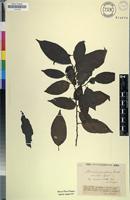
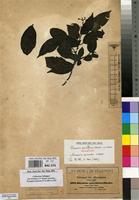
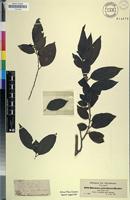
Isosyntype of Rhamnus pauciflorus Hochst. ex A.Rich. [family RHAMNACEAE]
Previous
Next

Name

Identification
Rhamnus pauciflorus Hochst. ex A.Rich. [family RHAMNACEAE ] Verified by Not on sheet, Rhamnus prinoides L'Herit. [family RHAMNACEAE ] (stored under name); Verified by Not on sheet,
Related name
  • Rhamnus pauciflorus
  • Rhamnus prinoides

Flora

Entry for RHAMNUS prinoides L'Hérit. [family RHAMNACEAE]
Herbarium
Royal Botanic Gardens, Kew (K)
Collection
Flora of Tropical Africa
Resource Type
Reference Sources
Entry From
Flora of Tropical Africa, Vol 1, page 377, (1868) Author: (by Mr. W. B. Hemsley).
Names
RHAMNUS prinoides L'Hérit. [family RHAMNACEAE], DC. Prod. ii. 24. —Sert. Angl. 6. t. 9.
RHAMNUS pauciflorus Hochst. [family RHAMNACEAE], Rich. Fl. Abyss. i. 137.
Information
A shrub or small tree, glabrous or young branches slightly puberulous. Leaves alternate, petiolate, varying from elliptical to ovate lanceolate or oblong, acutely acuminate, obtuse or narrowed to the base, serrate, 2–4 in. long, coriaceous, shining above. Flowers 5-merous, 2–4 together in the axils of the leaves; pedicels 4–6 lines long. Berry globular, 2–3 lines in diam., with 3 or 4 1-seeded pyrenes.
Range
Confined to E. and S. Africa, and very abundant in extratropical S. Africa, but we have seen no specimens from the intermediate country.
Distribution
Abyssinia Nile Land Schimper! and others.

Related Materials

  • Terms and Conditions
  • Privacy Policy
  • Cookie Policy
  • Cookie Settings
  • Accessibility
  • Help
  • Contact Us
  • Facebook
  • Twitter
ITHAKA

JSTOR is part of ITHAKA, a not-for-profit organization helping the academic community use digital technologies to preserve the scholarly record and to advance research and teaching in sustainable ways.

©2000-2026 ITHAKA. All Rights Reserved. JSTOR®, the JSTOR logo, JPASS®, Aluka®, and ITHAKA® are registered trademarks of ITHAKA.

╳