JSTOR Global Plants Home
  • Home
  • Browse
  • About
  • Access
  • Account
    • Saved Items
    • Profile
  • Log in

Global Plants

Skip to Main Content
  • JSTOR Global Plants Home
  • Global Plants

    • Browse
    • About
    • Access
    • Account
      • Saved Items
      • Profile
Log in
  • Browse
  • About
  • Access
  • Account
    • Saved Items
    • Profile
Advanced Search

Compilation
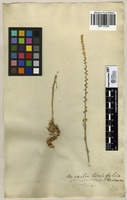
Reseda linifolia

9 Images see all

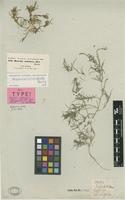
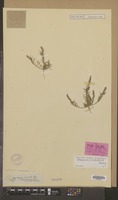
Type of Reseda schimperi C. Presl [family RESEDACEAE]
Holotype of Reseda schimperi C.Presl [family RESEDACEAE]
Ochradenus baccatus Delile [family RESEDACEAE]
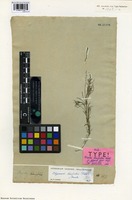
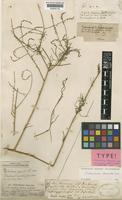
Type of Oligomeris subulata unrecorded subsp. delileana Gay [family RESEDACEAE]
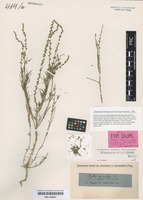
Type? of Oligomeris linifolia (Vahl ex Hornem.) J.F. Macbr [family RESEDACEAE]
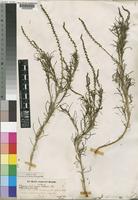
Filed as Reseda linifolia Hornem. [family RESEDACEAE]
Holotype of Reseda schimperi C.Presl [family RESEDACEAE]
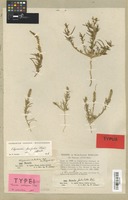
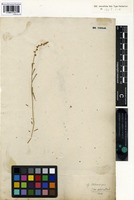
Holotype of Reseda glauca Sieber ex C. Presl [family RESEDACEAE]
Holotype of Oligomeris linifolia (Vahl ex Hornem.) J.F. Macbr [family RESEDACEAE]
Previous
Next

Name

Identification
Ochradenus baccatus Delile [family RESEDACEAE ] (stored under name); Verified by Abdallah, M., Ochradenus baccatus Del. [family RESEDACEAE ] Verified by Abdallah, M., Ochradenus gracilis N. [family RESEDACEAE ] Reseda linifolia Hornem. [family RESEDACEAE ]
Related name
  • Ochradenus gracilis
  • Ochradenus baccatus
  • Reseda linifolia
Common name
  • Flaxleaf-whitepuff, Flora of North America Vol. 7
  • desert-spike, Flora of North America Vol. 7

Flora

Entry for Oligomeris linifolia (Vahl) J. F. Macbride [family RESEDACEAE]
Herbarium
Flora of North America (FNA)
Collection
Flora of North America
Resource Type
Reference Sources
Entry From
Flora of North America, Vol 7,
Names
Oligomeris linifolia (Vahl) J. F. Macbride [family RESEDACEAE], Contr. Gray Herb., 53: 13. 1918
Reseda linifolia Vahl [family RESEDACEAE], in J. W. Hornemann, Hort. Bot. Hafn., 2: 501. 1815
Information
Plants usually annual, rarely perennial, 8–40 cm. Leaves: blade linear to oblanceolate, 0.8–5 × 0.05–0.2 cm, sometimes with hyaline basal teeth 0.2–0.4 mm, apex obtuse or acute, surfaces glabrous or scabrid. Inflorescences 2–12(–25) cm; bracts persistent, linear to lanceolate, 1–1.5 mm. Flowers: sepals lanceolate to deltate, 0.7–1.5(–2) mm; petals whitish, ovate, slightly shorter than sepals, 0.7–1(–1.7) mm, usually distinct, sometimes barely connate basally; filaments 1.5(–2) mm, barely connate basally; anthers 0.3–0.5 mm. Capsules sessile or subsessile, compressed-subglobose, 1.7–3 × 2–3.4 mm, apically 4-toothed, teeth acute, 0.5–0.7 mm. Seeds black or brown, 0.5–0.7 mm. 2n = 30.
Phenology
dec-feb (winter), mar-may (spring), jun-jul (summer)
Altitude range
-60–1200(–1400) m;
Distribution
n Mexico (Baja California)n Mexico (Baja California Sur)n Mexico (Chihuahua)n Mexico (Coahuila)n Mexico (Durango)n Mexico (Nuevo León)n Mexico (Sonora)n Mexico (Zacatecas)swc Asian African Atlantic Islands.USA Ariz.USA Calif.USA Nev.USA N.Mex.USA Tex.USA Utah
Discussion
The native status of Oligomeris linifolia in North America has long been controversial; its presence represents the most remarkable disjunction in the family. Recent molecular research (S. Martín-Bravo et al. 2009) strongly suggests that it is native here.
Oligomeris linifolia has been reported to be toxic to cattle. Occurrence of this species in Utah is based on the following collection: “southern Utah,” 1877, E. Palmer 47 (US, WIS). “Cambess” has appeared in literature as a common name for O. linifolia, apparently resulting from confusion with an abbreviation of the author Cambessèdes. “Lineleaf whitepuff” has also appeared as a common name for this species; the epithet linifolia should be translated as “flax-leaved.”
SELECTED REFERENCE Martín-Bravo, S. et al. 2009. Is Oligomeris (Resedaceae) indigenous to Noth America: Molecular evidence for a natural colonization from the Old World. Amer. J. Bot. 96: 507–518.

Related Materials

  • Terms and Conditions
  • Privacy Policy
  • Cookie Policy
  • Cookie Settings
  • Accessibility
  • Help
  • Contact Us
  • Facebook
  • Twitter
ITHAKA

JSTOR is part of ITHAKA, a not-for-profit organization helping the academic community use digital technologies to preserve the scholarly record and to advance research and teaching in sustainable ways.

©2000-2026 ITHAKA. All Rights Reserved. JSTOR®, the JSTOR logo, JPASS®, Aluka®, and ITHAKA® are registered trademarks of ITHAKA.

╳