JSTOR Global Plants Home
  • Home
  • Browse
  • About
  • Access
  • Account
    • Saved Items
    • Profile
  • Log in

Global Plants

Skip to Main Content
  • JSTOR Global Plants Home
  • Global Plants

    • Browse
    • About
    • Access
    • Account
      • Saved Items
      • Profile
Log in
  • Browse
  • About
  • Access
  • Account
    • Saved Items
    • Profile
Advanced Search

Compilation
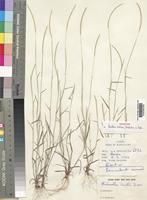
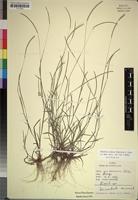
Rendlia annua

2 Images see all

Holotype of Rendlia annua Kupicha & Cope [family POACEAE]
Isotype of Rendlia annua F.K.Kupicha & T.A.Cope [family GRAMINEAE]
Previous
Next

Name

Identification
Rendlia annua Kupicha & Cope [family POACEAE ] Verified by unknown, Microchloa kunthii Desv. [family POACEAE ] (stored under name); Verified by Robinson, E. A.,
Related name
  • Microchloa annua
  • Rendlia annua
  • Microchloa kunthii

Flora

Entry for Microchloa annua Kupicha & Cope Cope [family GRAMINEAE]
Herbarium
Royal Botanic Gardens, Kew (K)
Collection
Flora Zambesiaca
Resource Type
Reference Sources
Entry From
FZ, Vol 10, Part 2, (1999) Author: T. Cope
Names
Microchloa annua Kupicha & Cope Cope [family GRAMINEAE], comb. nov. Type: Zambia, Mongu, 6.ii.1966, E.A. Robinson 6832 (K, holotype; SRGH).
Rendlia annua Kupicha & Cope [family GRAMINEAE], in Kew Bull. 40: 90 (1985).
Information
Caespitose annual; culms up to 35 cm tall, leafy throughout; leaf sheaths keeled, lanate, remaining intact; leaf laminas 0.5–3.5 cm × up to 3 mm, usually flat, with thickened whitish margins.Racemes terminal and axillary, 3.5–5.5 cm long, straight or gently falcate, sparsely to densely lanate at the base.Spikelets 2-flowered, 2.4–2.5 mm long; fertile lemma 1.6–1.8 mm long; anthers 1.1–1.2 mm long.Caryopsis not seen.
Habitat
In floodplain grassland on Kalahari Sand at the edge of woodland, and on roadsides
Range
Endemic to the Mongu area
Altitude range
c. 980 m.
980
980
Distribution
Zambia B Namushakende Forest Nursery, c. 980 m, 8.ii.1955, Hinds 296 (K; SRGH).

Related Materials

  • Terms and Conditions
  • Privacy Policy
  • Cookie Policy
  • Cookie Settings
  • Accessibility
  • Help
  • Contact Us
  • Facebook
  • Twitter
ITHAKA

JSTOR is part of ITHAKA, a not-for-profit organization helping the academic community use digital technologies to preserve the scholarly record and to advance research and teaching in sustainable ways.

©2000-2026 ITHAKA. All Rights Reserved. JSTOR®, the JSTOR logo, JPASS®, Aluka®, and ITHAKA® are registered trademarks of ITHAKA.

╳