Global Plants
Skip to Main Content
Global Plants
Browse
About
Access
Account
Saved Items
Profile
Log in
Browse
About
Access
Account
Saved Items
Profile
Filter search by
Names
Names with Synonyms
Places
People
Free Text
Search
Search
Advanced Search
Compilation
Ranunculus rhomboideus
6 Images
see all
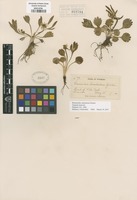
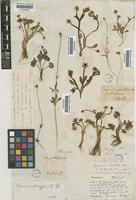
Original material of Ranunculus inamoenus Greene [family RANUNCULACEAE]
Filed as Ranunculus rhomboideus Goldie [family RANUNCULACEAE]
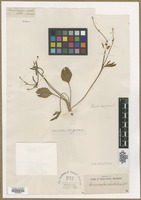
Ranunculus rhomboideus Goldie [family RANUNCULACEAE]
Ranunculus rhomboideus Goldie [family RANUNCULACEAE]
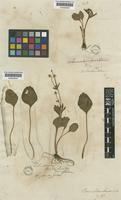
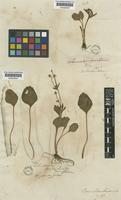
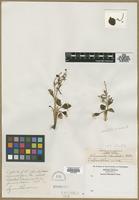
Ranunculus affinis R.Br. [family RANUNCULACEAE]
Filed as Ranunculus sp. [family RANUNCULACEAE]
Previous
Next
Name
Identification
Ranunculus affinis
R.Br.
[family
RANUNCULACEAE
] (stored under name);
Ranunculus rhomboideus
Goldie
[family
RANUNCULACEAE
] Verified by Simmons,H.G.,
Related name
Ranunculus rhomboideus
Ranunculus affinis
Ranunculus sp.
Flora
Entry for Ranunculus rhomboideus Goldie [family RANUNCULACEAE]
Herbarium
Flora of North America (FNA)
Collection
Flora of North America
Resource Type
Reference Sources
Entry From
Flora of North America, Vol 3,
Names
Ranunculus rhomboideus
Goldie
[family
RANUNCULACEAE
], Edinburgh J. Sci., 6: 329. 1822
Information
Stems erect, 5-22 cm, pilose or occasionally glabrous, each with 3-12 flowers. Roots slender, 0.8-1.8 mm thick. Basal leaves persistent, blades ovate to rhombic, undivided or rarely innermost 3-parted, 1.1-5.3 × 0.9-3.6 cm, base obtuse, margins crenate with 5 crenae, apex rounded. Flowers: pedicels pilose; receptacle pilose; sepals 4-6 × 1.5-3 mm, abaxially pilose, hairs colorless; petals 5, 6-8 × 2-4 mm; nectary scale glabrous. Heads of achenes depressed-globose, 4-6 × 5-7 mm; achenes 1.8-2.2 × 1.2-1.8 mm, glabrous; beak slender, curved, 0.2-0.3 mm. 2n = 16.
Phenology
Flowering spring (Apr-Jun)
Altitude range
0-900 m
Distribution
USA Ill.USA IowaUSA Mich.USA Minn.USA Mont.USA Nebr.USA N.Dak.USA S.Dak.USA Wis.Canada Alta.Canada B.C.Canada Man.Canada N.W.T.Canada Ont.Canada Sask.
Discussion
In addition to the range given above, L. D. Benson (1948) cited nineteenth-century specimens from Quebec, New York, Massachusetts, and Rhode Island. No modern specimens have been seen from those areas.
Related Materials
╳