JSTOR Global Plants Home
  • Home
  • Browse
  • About
  • Access
  • Account
    • Saved Items
    • Profile
  • Log in

Global Plants

Skip to Main Content
  • JSTOR Global Plants Home
  • Global Plants

    • Browse
    • About
    • Access
    • Account
      • Saved Items
      • Profile
Log in
  • Browse
  • About
  • Access
  • Account
    • Saved Items
    • Profile
Advanced Search

Compilation
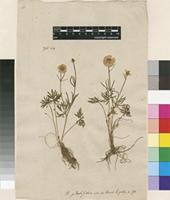
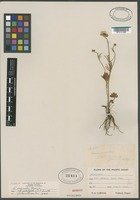
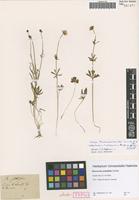
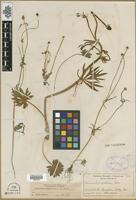
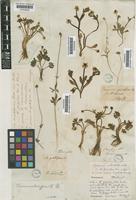
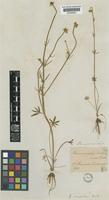
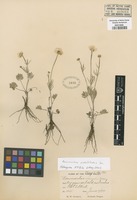
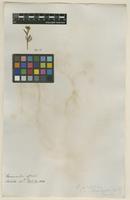
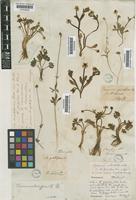
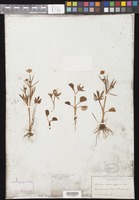
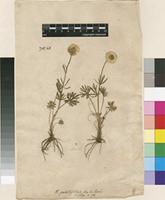
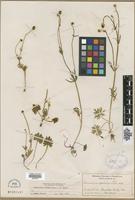
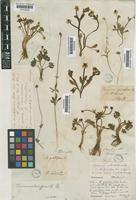
Ranunculus pedatifidus

13 Images see all

Filed as Ranunculus indet. [family RANUNCULACEAE]
Isotype of Ranunculus vicinalis Greene [family RANUNCULACEAE]
Lectotype of Ranunculus pedatifidus Schltdl. [family RANUNCULACEAE]
Type of Ranunculus apetalus Farr [family RANUNCULACEAE]
Ranunculus affinis R.Br. [family RANUNCULACEAE]
Ranunculus pedatifidus Hook. [family RANUNCULACEAE]
Original material of Ranunculus vicinalis Greene [family RANUNCULACEAE]
Filed as Ranunculus pedatifidus Sm. in Rees [family RANUNCULACEAE]
Ranunculus affinis R.Br. [family RANUNCULACEAE]
Ranunculus pedatifidus Sm. [family RANUNCULACEAE]
Filed as Ranunculus indet. [family RANUNCULACEAE]
Type? of Ranunculus apetalus Farr [family RANUNCULACEAE]
Ranunculus affinis R.Br. [family RANUNCULACEAE]
Previous
Next

Name

Identification
Ranunculus pedatifidus Schltdl. [family RANUNCULACEAE ] (stored under name); Verified by M.H. Hoffmann (HAL), 1998
Related name
  • Ranunculus dahuricus
  • Ranunculus affinis
  • Ranunculus pedatifidus
  • Ranunculus indet.
  • Ranunculus eschscholtzii
  • Ranunculus caespitosus
  • Ranunculus frigidus
  • Ranunculus gelidus
  • Ranunculus apetalus
Common name
  • Renoncule pédatifide, Flora of North America Vol. 3

Flora

Entry for Ranunculus cardiophyllus Hooker [family RANUNCULACEAE]
Herbarium
Flora of North America (FNA)
Collection
Flora of North America
Resource Type
Reference Sources
Entry From
Flora of North America, Vol 3,
Names
Ranunculus cardiophyllus Hooker [family RANUNCULACEAE], Fl. Bor.-Amer., 1: 14. 1829
Ranunculus cardiophyllus var. coloradensis L. D. Benson [family RANUNCULACEAE]
Ranunculus cardiophyllus var. subsagittatus (A. Gray) L. D. Benson [family RANUNCULACEAE]
Ranunculus pedatifidus J. E. Smith var. cardiophyllus (Hooker) Britton [family RANUNCULACEAE]
Information
Stems erect, 11-53 cm, pilose or glabrous, each with 1-5 flowers. Roots cylindric, 1.3-2 mm thick. Basal leaves persistent, blades ovate or elliptic, undivided or innermost 3-5-parted, 2.2-6.9 × 1.8-4.5 cm, base cordate to broadly obtuse, margins crenate with more than 5 crenae, apex rounded to broadly acute. Flowers: pedicels pilose; receptacle canescent; sepals 5-8 × 3-7 mm, abaxially pilose, hairs colorless; petals (0-)5-10, 6-13 × 4-13 mm; nectary scale ciliate or sometimes glabrous. Heads of achenes ovoid or cylindric, 5-16 × 5-9 mm; achenes 1.8-2.2 × 1.5-2 mm, finely canescent; beak subulate, curved or straight, 0.6-1.2 mm. 2n = 32.
Phenology
Flowering spring-summer (May-Sep)
Altitude range
600-3400 m
Distribution
USA Ariz.USA Colo.USA Mont.USA N.Mex.USA N.Dak.USA S.Dak.USA UtahUSA Wash.USA Wyo.Canada Alta.Canada B.C.Canada Sask.
Discussion
Ranunculus cardiophyllus is quite variable. Through most of its range, leaves always have rounded marginal crenae and cordate or truncate bases, stems are often densely pilose (but may be sparsely pilose or glabrous), and achene beaks are curved. In plants from Arizona and New Mexico, however, leaves may have obtuse marginal crenae or broadly obtuse bases, stems are never densely pilose, and achene beaks are sometimes straight. Forms showing some or all of these charactersistics are often separated as R. cardiophyllus var. subsagittatus. The characteristics are poorly correlated, however, and taxonomic recognition is not warranted.
Most specimens of Ranunculus cardiophyllus have all of the basal leaves unlobed, but plants with the innermost basal leaf 3-5-lobed are common. A few specimens, mostly from the northern part of its range, have all of the basal leaves 5-parted or -divided. Those plants approach R. pedatifidus in their morphology, and R. cardiophyllus has sometimes been considered a variety of that species.

Related Materials

  • Terms and Conditions
  • Privacy Policy
  • Cookie Policy
  • Cookie Settings
  • Accessibility
  • Help
  • Contact Us
  • Facebook
  • Twitter
ITHAKA

JSTOR is part of ITHAKA, a not-for-profit organization helping the academic community use digital technologies to preserve the scholarly record and to advance research and teaching in sustainable ways.

©2000-2026 ITHAKA. All Rights Reserved. JSTOR®, the JSTOR logo, JPASS®, Aluka®, and ITHAKA® are registered trademarks of ITHAKA.

╳