JSTOR Global Plants Home
  • Home
  • Browse
  • About
  • Access
  • Account
    • Saved Items
    • Profile
  • Log in

Global Plants

Skip to Main Content
  • JSTOR Global Plants Home
  • Global Plants

    • Browse
    • About
    • Access
    • Account
      • Saved Items
      • Profile
Log in
  • Browse
  • About
  • Access
  • Account
    • Saved Items
    • Profile
Advanced Search

Compilation
Quercus velutina

12 Images see all

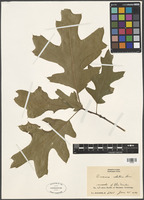
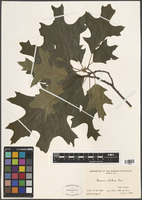
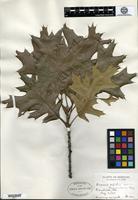
Quercus velutina Lam. [family FAGACEAE]
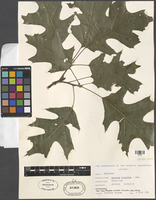
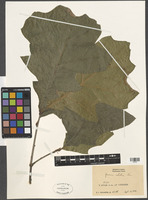
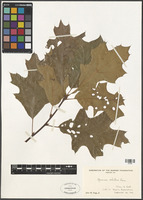
Quercus velutina Wall. [family FAGACEAE]
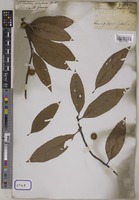
Quercus velutina Lam. [family FAGACEAE]
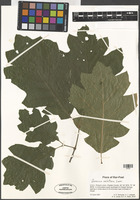
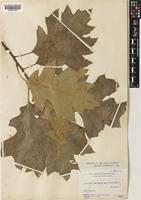
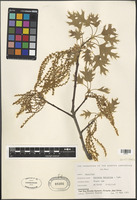
Type? of Quercus velutina Lamarck var. missouriensis Sargent [family FAGACEAE]
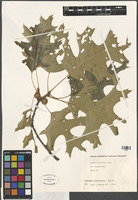
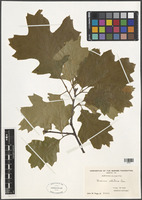
Quercus velutina Lam. [family FAGACEAE]
Previous
Next

Name

Identification
Quercus velutina Lamarck [family FAGACEAE ] (stored under name); Verified by Sarg., 1905
Related name
  • Quercus velutina
Common name
  • Black oak, Flora of North America Vol. 3

Flora

Entry for Quercus velutina Lamarck [family FAGACEAE]
Herbarium
Flora of North America (FNA)
Collection
Flora of North America
Resource Type
Reference Sources
Entry From
Flora of North America, Vol 3,
Names
Quercus velutina Lamarck [family FAGACEAE], in J. Lamarck et al., Encycl., 1: 721. 1785
Quercus tinctoria W. Bartram [family FAGACEAE]
Information
Trees, deciduous, to 25 m. Bark dark brown to black, deeply furrowed, ridges often broken into irregular blocks, inner bark yellow or orange. Twigs dark reddish brown, (1.5-)2.5-4.5(-5) mm diam., glabrous or sparsely pubescent. Terminal buds ovoid or ellipsoid to subconic, 6-12 mm, noticeably 5-angled in cross section, tawny- or gray-pubescent. Leaves: petiole 25-70 mm, glabrous to sparsely pubescent. Leaf blade ovate to obovate, (80-)100-300 × 80-150 mm, base obtuse to truncate, inequilateral, margins with 5-9 lobes and 15-50 awns, lobes oblong or distally expanded, separated by deep sinuses, apex acute to obtuse; surfaces abaxially pale green, glabrous except for small axillary tufts of tomentum or with scattered pubescence, especially along veins, adaxially glossy, dark green, glabrous, secondary veins raised on both surfaces. Acorns biennial; cup cup-shaped or turbinate, 7-14 mm high × 12-22 mm wide, covering 1/2 nut, cup margins not involute, outer surface puberulent, inner surface pubescent, scale tips loose, especially at margin of cup, acute to acuminate; nut subglobose to ovoid, 10-20 × 10-18 mm, glabrate, scar diam. 5.5-12 mm. n = 12 ± 1; 2n = 24.
Phenology
Flowering spring
Altitude range
0-1500 m
Distribution
USA Ala.USA Ark.USA Conn.USA Del.USA D.C.USA Fla.USA Ga.USA Ill.USA Ind.USA IowaUSA Kans.USA Ky.USA La.USA MaineUSA Md.USA Mass.USA Mich.USA Minn.USA Miss.USA Mo.USA Nebr.USA N.H.USA N.J.USA N.Y.USA N.C.USA OhioUSA Okla.USA Pa.USA R.I.USA S.C.USA Tenn.USA Tex.USA Vt.USA Va.USA W.Va.USA Wis.Canada Ont.
Discussion
The bark of this species (quercitron) is rich in tannins and was once an important source of these chemicals used for tanning leather. (The yellow dye obtained from the bark is also called quercitron.)
Native Americans used Quercus velutina medicinally for indigestion, chronic dysentery, mouth sores, chills and fevers, chapped skin, hoarseness, milky urine, lung trouble, sore eyes, and as a tonic, an antiseptic, and an emetic (D. E. Moerman 1986).
Quercus velutina reportedly hybridizes with Q. coccinea, Q. ellipsoidalis (= Q. ×paleolithicola Trelease), Q. falcata [= Q. ×willdenowiana (Dippel) Zabel] (= Q. ×pinetorum Moldenke)], Q. ilicifolia (= Q. ×rehderi Trelease), Q. imbricaria (= Q. ×leana Nuttall), Q. incana, Q. laevis, and Q. laurifolia (= Q. ×cocksii Sargent, although E. J. Palmer [1948] challenged the validity of this claim), Q. marilandica, Q. nigra, Q. palustris (= Q. ×vaga E. J. Palmer & Steyermark), Q. phellos (= Q. ×filialis Little), Q. rubra, Q. shumardii, and possibly Q. arkansana (D. M. Hunt 1989).

Related Materials

  • Terms and Conditions
  • Privacy Policy
  • Cookie Policy
  • Cookie Settings
  • Accessibility
  • Help
  • Contact Us
  • Facebook
  • Twitter
ITHAKA

JSTOR is part of ITHAKA, a not-for-profit organization helping the academic community use digital technologies to preserve the scholarly record and to advance research and teaching in sustainable ways.

©2000-2026 ITHAKA. All Rights Reserved. JSTOR®, the JSTOR logo, JPASS®, Aluka®, and ITHAKA® are registered trademarks of ITHAKA.

╳