JSTOR Global Plants Home
  • Home
  • Browse
  • About
  • Access
  • Account
    • Saved Items
    • Profile
  • Log in

Global Plants

Skip to Main Content
  • JSTOR Global Plants Home
  • Global Plants

    • Browse
    • About
    • Access
    • Account
      • Saved Items
      • Profile
Log in
  • Browse
  • About
  • Access
  • Account
    • Saved Items
    • Profile
Advanced Search

Compilation
Quercus prinoides

19 Images see all

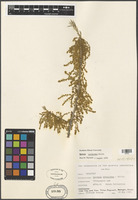
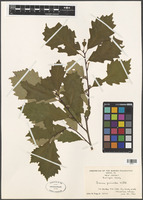
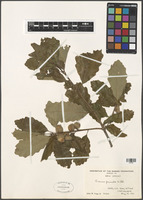
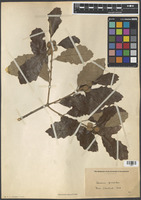
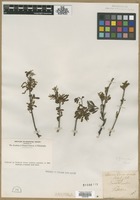
Quercus prinoides Willd. [family FAGACEAE]
Filed as Quercus prinoides Willd. [family FAGACEAE]
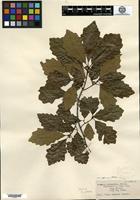
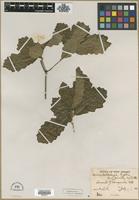
Quercus prinoides Willd. [family FAGACEAE]
Filed as Quercus prinoides Willd. [family FAGACEAE]
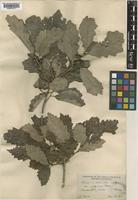
Quercus prinoides Willd. [family FAGACEAE]
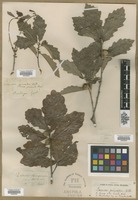
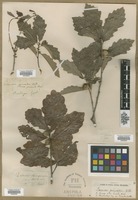
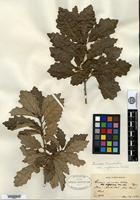
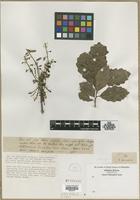
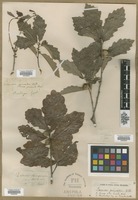
Syntype of Quercus prinoides Willdenow var. rufescens Rehder [family FAGACEAE]
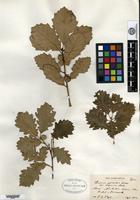
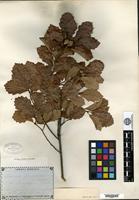
Type of Quercus prinoides Willdenow var. rufescens Rehder [family FAGACEAE]
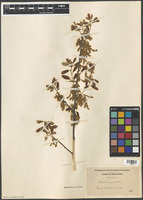
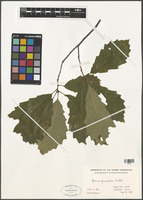
Quercus prinoides Willd. [family FAGACEAE]
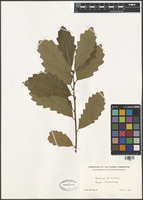
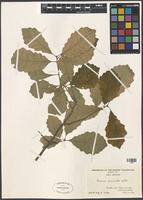
Filed as Quercus sp. [family FAGACEAE]
Quercus prinoides Willd. [family FAGACEAE]
Syntype of Quercus prinoides Willdenow var. rufescens Rehder [family FAGACEAE]
Quercus prinoides Willd. [family FAGACEAE]
Syntype of Quercus prinoides Willdenow var. rufescens Rehder [family FAGACEAE]
Filed as Quercus prinoides Willd. [family FAGACEAE]
Quercus prinoides Willd. [family FAGACEAE]
Filed as Quercus prinus L. var. pumila Michx. [family FAGACEAE]
Type? of Quercus muhlenbergii var. humilis [family FAGACEAE]
Quercus prinoides Willd. [family FAGACEAE]
Previous
Next

Name

Identification
Quercus prinoides Willdenow [family FAGACEAE ] (stored under name); Verified by Rehder, 1907
Related name
  • Quercus sp.
  • Quercus muhlenbergii
  • Quercus prinoides
Common name
  • scrub chestnut oak, Flora of North America Vol. 3
  • Dwarf chinkapin oak, Flora of North America Vol. 3

Flora

Entry for Quercus prinoides Willdenow [family FAGACEAE]
Herbarium
Flora of North America (FNA)
Collection
Flora of North America
Resource Type
Reference Sources
Entry From
Flora of North America, Vol 3,
Names
Quercus prinoides Willdenow [family FAGACEAE], in G. H. E. Muhlenberg, Ges. Naturf. Freunde Berlin Neue Schriften, 3: 397. 1801
Quercus prinoides var. rufescens Rehder [family FAGACEAE]
Information
Shrubs, deciduous, (0.5-)1-3(-5, 10?) m, sometimes spreading-rhizomatous. Bark gray, thin, flaky to papery. Twigs brownish, 1.5-3(-4) mm diam., sparsely fine-pubescent, soon becoming glabrate, graying in 2d year. Buds brown to red-brown, subrotund to broadly ovoid, 1-3 mm, apex rounded, very sparsely pubescent. Leaves: petiole (7-)8-15(-25) mm. Leaf blade lanceolate to oblanceolate or usually obovate, 40-140 × 20-60(-80) mm, leathery, base truncate to cuneate, margins regularly undulate, toothed or shallow-lobed, teeth usually acute, sometimes rounded, or acute-acuminate, often strongly antrorse, secondary veins usually 5-8(-9) on each side, ± parallel, apex short-acute to acuminate; surfaces abaxially glaucous or light green, appearing glabrate, with scattered or crowded minute, appressed, symmetric, 6-10-rayed, stellate hairs, adaxially lustrous dark green, glabrate. Acorns solitary or paired, subsessile or on axillary peduncle to 3-8 mm; cup deeply or shallowly cup-shaped, 9-12 mm deep × 13-17(-22) mm wide, enclosing 1/4-1/3 nut, base rounded, margin usually thin, scales rather tightly appressed, moderately tuberculate, uniformly short gray-pubescent; nut light brown, oblong to ovoid, (13-)15-20 × l0-13 mm. Cotyledons distinct.
Phenology
Flowering in spring
Altitude range
0-500 m
Distribution
USA Ala.USA Ark.USA Conn.USA Ga.USA Ill.USA Ind.USA IowaUSA Ky.USA Mass.USA Mich.USA Mo.USA N.H.USA N.J.USA N.Y.USA N.C.USA OhioUSA Okla.USA Pa.USA R.I.USA S.C.USA Tenn.USA Vt.USA Va.USA W.Va.Canada Ont.
Discussion
Some reports of Quercus prinoides growing in calcareous soils are probably referable to shrub forms of Q. muhlenbergii.
The debate over whether Quercus prinoides is distinct from Q. muhlenbergii has continued for most of the last century. Little doubt can exist that strong genetic differences, as expressed by characteristics of habit, leaf form, and habitat preference, separate the two taxa; the question is merely whether they are best treated as subspecies or varieties or as separate species. Over most of the eastern United States, the two taxa occur sympatrically over broad areas with little immediate contact (syntopy), because Q. muhlenbergii is found on calcareous soils and Q. prinoides occurs on sands (often acidic) and dry shales. Seedlings of Q. prinoides can flower and produce acorns in as few as 3-5 years from planting, when only 20-50 cm, and maintain their dwarf, clonal habit in cultivation. Quercus muhlenbergii begins fruiting as a small tree of 3 m or more in height. Because of these differences, and interdigitating geographic distributions, the two taxa seem to be similar in pattern of variation and interaction to other closely related oak species of eastern North America, and dissimilar in pattern to infraspecific taxa such as we see in Q. sinuata var. sinuata and Q. sinuata var. breviloba. The populations that are difficult to determine are usually small scrubby trees, probably mostly Q. muhlenbergii, stunted because of less than favorable moisture conditions, with or without indications of introgression from Q. prinoides.
Material of Quercus prinoides from Long Island, coastal Massachusetts, Nantucket Island, and Martha's Vineyard has been segregated as Q. prinoides Willdenow var. rufescens Rehder on the basis of vestiture and minor differences in leaf form. These populations have appressed-stellate leaf pubescence abaxially, as throughout the range of the species; in addition they have reddish, erect, fasiculate hairs similar to those found in Q. michauxii. The hairs make the abaxial leaf surface somewhat felty to the touch. Variability in this characteristic and lack of other consistently correlated features preclude taxonomic recognition of Q. prinoides var. rufescens, but this problem is worthy of further investigation.

Related Materials

  • Terms and Conditions
  • Privacy Policy
  • Cookie Policy
  • Cookie Settings
  • Accessibility
  • Help
  • Contact Us
  • Facebook
  • Twitter
ITHAKA

JSTOR is part of ITHAKA, a not-for-profit organization helping the academic community use digital technologies to preserve the scholarly record and to advance research and teaching in sustainable ways.

©2000-2026 ITHAKA. All Rights Reserved. JSTOR®, the JSTOR logo, JPASS®, Aluka®, and ITHAKA® are registered trademarks of ITHAKA.

╳