JSTOR Global Plants Home
  • Home
  • Browse
  • About
  • Access
  • Account
    • Saved Items
    • Profile
  • Log in

Global Plants

Skip to Main Content
  • JSTOR Global Plants Home
  • Global Plants

    • Browse
    • About
    • Access
    • Account
      • Saved Items
      • Profile
Log in
  • Browse
  • About
  • Access
  • Account
    • Saved Items
    • Profile
Advanced Search

Compilation
Quercus muhlenbergii

6 Images see all

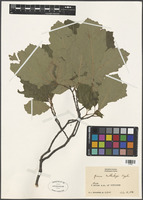
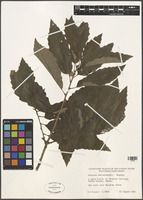
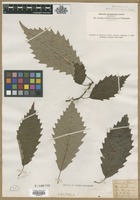
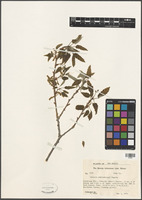
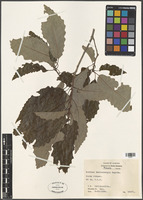
Quercus muhlenbergii Engelm. [family FAGACEAE]
Filed as Quercus muhlenbergii [family FAGACEAE]
Quercus muhlenbergii Engelm. [family FAGACEAE]
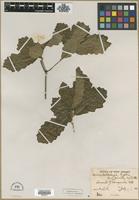
Type? of Quercus muhlenbergii var. humilis [family FAGACEAE]
Previous
Next

Name

Identification
Quercus muhlenbergii Engelm. [family FAGACEAE ] (stored under name); Verified by Not on Sheet, Quercus muhlenbergii Not on Sheet [family FAGACEAE ] Verified by Not on Sheet, Quercus prinoides Not on Sheet [family FAGACEAE ] Verified by Not on Sheet,
Related name
  • Quercus muhlenbergii
  • Quercus prinoides
Common name
  • yellow chestnut oak, Flora of North America Vol. 3
  • chinquapin oak, Flora of North America Vol. 3
  • Chinkapin oak, Flora of North America Vol. 3

Flora

Entry for Quercus muhlenbergii Engelmann [family FAGACEAE]
Herbarium
Flora of North America (FNA)
Collection
Flora of North America
Resource Type
Reference Sources
Entry From
Flora of North America, Vol 3,
Names
Quercus muhlenbergii Engelmann [family FAGACEAE], Trans. Acad. Sci. St. Louis, 3: 391. 1887
Quercus acuminata (Michaux) Sargent [family FAGACEAE]
Quercus brayi Small [family FAGACEAE]
Quercus prinus Linnaeus var. acuminata Michaux [family FAGACEAE]
Information
Trees, deciduous, moderate to large, to 30 m, occasionally large shrubs (ca. 3 m) on drier sites. Bark gray, thin, flaky to papery. Twigs brownish, 1.5-3(-4) mm diam., sparsely fine-pubescent, soon becoming glabrate, graying in 2d year. Buds brown to red-brown, subrotund to broadly ovoid, 20-40 × (10-)15-25 mm, apex rounded, very sparsely pubescent. Leaves: petiole (7-)10-30(-37) mm. Leaf blade usually obovate, sometimes lanceolate to oblanceolate, (32-)50-150(-210) × (10-)40-80(-106) mm, leathery, base truncate to cuneate, margins regularly undulate, toothed or shallow-lobed, teeth or lobes rounded, or acute-acuminate, often strongly antrorse, secondary veins usually (9-)10-14(-16) on each side, ± parallel, apex short-acute to acuminate or apiculate; surfaces abaxially glaucous or light green, appearing glabrate but with scattered or crowded minute, appressed, symmetric, 6-10-rayed stellate hairs, adaxially lustrous dark green, glabrate. Acorns 1-2, subsessile or on axillary peduncle to 8 mm; cup hemispheric or shallowly cupped, 4-12 mm deep × 8-22 mm wide, enclosing 1/4-1/2 nut, base rounded, margin usually thin, scales closely appressed, moderately to prominently tuberculate, uniformly short gray-pubescent; nut light brown, oblong to ovoid, (13-)15-20(-28) × l0-13(-16) mm. Cotyledons distinct. 2n = 24.
Phenology
Flowering late winter-spring
Altitude range
0-2300 m
Distribution
Mexico (Coahuila, Nuevo León, Hidalgo, and Tamaulipas).USA Ala.USA Ark.USA Conn.USA Fla.USA Ga.USA Ill.USA Ind.USA IowaUSA Kans.USA Ky.USA La.USA Md.USA Mass.USA Mich.USA Minn.USA Miss.USA Mo.USA Nebr.USA N.J.USA N.Mex.USA N.Y.USA N.C.USA OhioUSA Okla.USA Pa.USA S.C.USA Tenn.USA Tex.USA Vt.USA Va.USA W.Va.USA Wis.Canada Ont.
Discussion
Shrubby forms of Quercus muhlenbergii are difficult to distinguish from Quercus prinoides, but Q. muhlenbergii does not spread clonally or produce acorns on small shrubs as does Q. prinoides. The edaphic preferences of these two species are distinctive, with Q. muhlenbergii never far from limestone substrates and Q. prinoides occurring mostly on dry shales and deep sands. Populations of Q. muhlenbergii from the southwest part of its range, on the Edwards Plateau of Texas and westward, sometimes are segregated as Q. brayi Small, but the variation appears to be clinal with inconsistent differences. Distributed from Hidalgo, Mexico to Maine, Q. muhlenbergii is one of the most widespread species of temperate North American trees.
The Delaware-Ontario prepared infusions from the bark of Quercus muhlenbergii to stop vomiting (D. E. Moerman 1986).

Related Materials

  • Terms and Conditions
  • Privacy Policy
  • Cookie Policy
  • Cookie Settings
  • Accessibility
  • Help
  • Contact Us
  • Facebook
  • Twitter
ITHAKA

JSTOR is part of ITHAKA, a not-for-profit organization helping the academic community use digital technologies to preserve the scholarly record and to advance research and teaching in sustainable ways.

©2000-2026 ITHAKA. All Rights Reserved. JSTOR®, the JSTOR logo, JPASS®, Aluka®, and ITHAKA® are registered trademarks of ITHAKA.

╳