JSTOR Global Plants Home
  • Home
  • Browse
  • About
  • Access
  • Account
    • Saved Items
    • Profile
  • Log in

Global Plants

Skip to Main Content
  • JSTOR Global Plants Home
  • Global Plants

    • Browse
    • About
    • Access
    • Account
      • Saved Items
      • Profile
Log in
  • Browse
  • About
  • Access
  • Account
    • Saved Items
    • Profile
Advanced Search

Compilation
Quercus marshii

10 Images see all

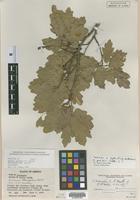
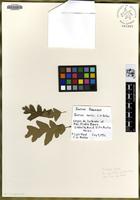
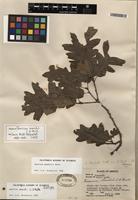
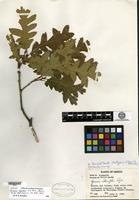
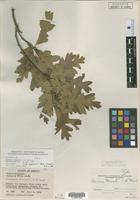
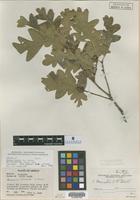
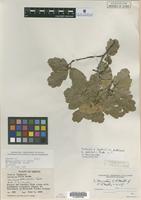
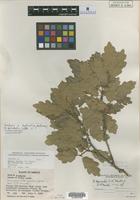
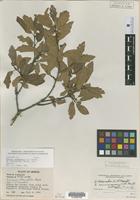
Paratype of Quercus marshii C. H. Mull. [family FAGACEAE]
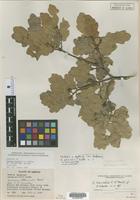
Isotype of Quercus marshii C. H. Mull. [family FAGACEAE]
Isotype of Quercus gambelii Nutt. [family FAGACEAE]
Isotype of Quercus marshii C. H. Müller [family FAGACEAE]
Holotype of Quercus marshii C. H. Mull. [family FAGACEAE]
Isotype of Quercus marshii C. H. Mull. [family FAGACEAE]
Paratype of Quercus marshii C. H. Mull. [family FAGACEAE]
Lectotype of Quercus carmenensis C. H. Mull. [family FAGACEAE]
Paratype of Quercus marshii C. H. Mull. [family FAGACEAE]
Previous
Next

Name

Identification
Isotype of Quercus marshii C. H. Müller [family FAGACEAE ] (stored under name); Verified by C. H. Müll., 1937
Related name
  • Quercus carmenensis
  • Quercus obtusifolia
  • Quercus marshii
  • Quercus gambelii
Common name
  • Gambel oak, Flora of North America Vol. 3

Flora

Entry for Quercus gambelii Nuttall [family FAGACEAE]
Herbarium
Flora of North America (FNA)
Collection
Flora of North America
Resource Type
Reference Sources
Entry From
Flora of North America, Vol 3,
Names
Quercus gambelii Nuttall [family FAGACEAE], J. Acad. Nat. Sci. Philadelphia, 1(2): 179. 1848
Quercus douglasii Hooker & Arnott var. gambelii (Nuttall) A. de Candolle [family FAGACEAE]
Quercus gambelii var. gunnisonii Wenzig [family FAGACEAE]
Quercus lesueuri C. H. Muller [family FAGACEAE]
Quercus marshii C. H. Muller [family FAGACEAE]
Quercus novomexicana Rydberg [family FAGACEAE]
Quercus undulata Torrey var. gambelii (Nuttall) Engelmann [family FAGACEAE]
Quercus utahensis Rydberg [family FAGACEAE]
Information
Shrubs or trees, deciduous, shrubs sometimes clumped and spreading, trees small or moderately large. Bark gray or brown, scaly. Twigs brown or reddish brown with few, inconspicuous lenticels, 1.5-2.5 mm diam., glabrous or stellate-pubescent. Buds brown, ovoid, ca. 3 mm, apex acute or obtuse, sparsely pubescent, becoming glabrate. Leaves: petiole l0-20 mm. Leaf blade elliptic to obovate or oblong, deeply to shallowly 4-6-lobed, (40-)80-120(-160) × (25-)40-60(-100) mm, membranous, base truncate to cuneate, margins entire or coarsely toothed, lobes oblong, rounded or subacute, sinuses acute or narrowly rounded at base, reaching more than 1/2 distance to midrib, secondary veins 4-6 on each side, each passing into lobe, branched, apex broadly rounded; surfaces abaxially dull green, sometimes glaucous, densely velvety with erect 4-6-rayed hairs, sometimes glabrate or persistently villous only near midribs, secondary veins prominent, adaxially lustrous dark green, appearing glabrate, microscopically pubescent, secondary veins slightly raised. Acorns solitary or paired, subsessile or on peduncle to 10(-30) mm; cup deeply cup-shaped, 5-8(-17) mm deep × 7-l5(-25) mm wide, enclosing 1/4-1/2 nut, base round, margin thin, scales closely appressed, ovate, markedly tuberculate, proximally gray-tomentulose; nut light brown, ovoid to ellipsoid, (8-)12-15(-33) × 7-12(-18) mm. Cotyledons distinct.
Phenology
Flowering mid-late spring
Altitude range
1000-3030 m
Distribution
Mexico (Chihuahua, Coahuila, and Sonora).USA Ariz.USA Colo.USA Nev.USA N.Mex.USA Okla.USA Tex.USA UtahUSA Wyo.
Discussion
Numerous hybrids of Quercus gambelii with various scrub oaks have been reported, including Q. grisea and Q. turbinella. Such hybrids in general have shallowly lobed or dentate, semipersistent leaves and intermediate characteristics of pubescence and fruit between parental types. Such hybrids are usually referred to as the Quercus ×undulata complex because of widespread application of the latter name to various populations.
One population from San Juan County, Utah, with larger fruit but otherwise not differing from typical Quercus gambelii, has been recognized as Q. gambelii var. bonina Welsh. Unless other characters are found to support this segregation, the plants are best not treated as a formal taxon, particularly considering the extensive variation and hybridization associated with Q. gambelii throughout its range.
Numerous putative hybrid swarms occur throughout the range of Quercus gambelii that involve a number of suspected parental species. Most of these populations have, at one time or another, been referred to Quercus undulata Torrey. The putative hybrids have serrate or shallowly lobed leaves and considerable variation in habit, leaf pubescence, and acorn morphology. J. M. Tucker (1961, 1969, 1971) and J. M. Tucker et al. (1961) have identified the major components of the Q. undulata complex as Q. turbinella (western Utah and northwestern Arizona, and central Colorado), Q. grisea (New Mexico and southern Colorado), Q. havardii (southeastern Utah and northwestern Arizona), Q. mohriana (northeastern and southern New Mexico), Q. arizonica (central Arizona), and Q. muhlenbergii (eastern and central New Mexico). Quercus macrocarpa has been implicated as a parent of variable populations in New Mexico (J. M. Tucker and J. R. Maze 1966). Because of the complex variability in these populations, no effort has been made to treat them separately here; indeed, it would be impossible to produce usable keys if these were included as formal taxa.
Hybrids derived from Quercus gambelii and an evergreen species are often semideciduous, retaining a variable portion of green or brownish leaves over the winter.
Quercus gambelii was used medicinally by the Navaho-Ramah to alleviate postpartum pain, as a cathartic, as a ceremonial emetic, and as a life medicine (D. E. Moerman 1986).

Related Materials

  • Terms and Conditions
  • Privacy Policy
  • Cookie Policy
  • Cookie Settings
  • Accessibility
  • Help
  • Contact Us
  • Facebook
  • Twitter
ITHAKA

JSTOR is part of ITHAKA, a not-for-profit organization helping the academic community use digital technologies to preserve the scholarly record and to advance research and teaching in sustainable ways.

©2000-2026 ITHAKA. All Rights Reserved. JSTOR®, the JSTOR logo, JPASS®, Aluka®, and ITHAKA® are registered trademarks of ITHAKA.

╳