JSTOR Global Plants Home
  • Home
  • Browse
  • About
  • Access
  • Account
    • Saved Items
    • Profile
  • Log in

Global Plants

Skip to Main Content
  • JSTOR Global Plants Home
  • Global Plants

    • Browse
    • About
    • Access
    • Account
      • Saved Items
      • Profile
Log in
  • Browse
  • About
  • Access
  • Account
    • Saved Items
    • Profile
Advanced Search

Compilation
Quercus havardii

12 Images see all

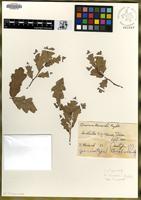
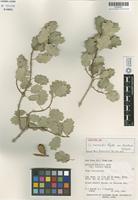
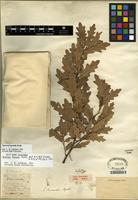
Isotype of Quercus havardii Rydb. [family FAGACEAE]
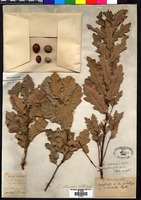
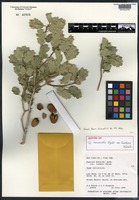
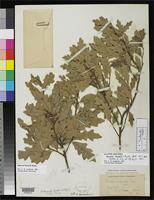
Type of Quercus havardii Rydb. [family FAGACEAE]
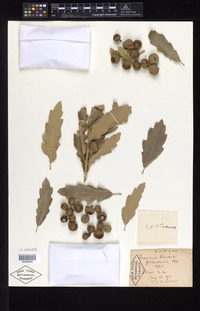
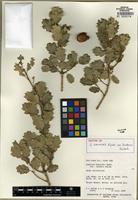
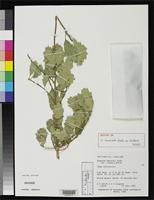
Type of Quercus havardii var. pecoensis Cockerell [family FAGACEAE]
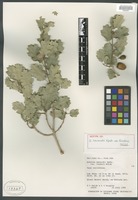
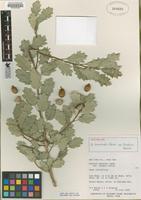
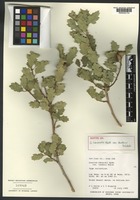
Isotype of Quercus havardii Rydb. var. tuckeri Welsh [family FAGACEAE]
Isotype of Quercus havardii Rydb. var. tuckeri S. L. Welsh [family FAGACEAE]
Isotype of Quercus havardii Rydb. var. tuckeri Welsh [family FAGACEAE]
Isotype of Quercus havardii var. tuckeri S.L. Welsh [family FAGACEAE]
Isotype of Quercus havardii Rydb. var. tuckeri Welsh [family FAGACEAE]
Holotype of Quercus havardii Rydb. [family FAGACEAE]
Isotype of Quercus havardii Rydberg, P.A. 1901 [family FAGACEAE]
Isotype of Quercus havardii var. tuckeri Welsh, S.L. 1986 [family FAGACEAE]
Isotype of Quercus havardii Rydb. var. tuckeri Welsh [family FAGACEAE]
Previous
Next

Name

Identification
Isotype of Quercus havardii Rydb. [family FAGACEAE ] (stored under name); Verified by Not on sheet,
Related name
  • Quercus havardii
Common name
  • Havard oak, Flora of North America Vol. 3

Flora

Entry for Quercus havardii Rydberg [family FAGACEAE]
Herbarium
Flora of North America (FNA)
Collection
Flora of North America
Resource Type
Reference Sources
Entry From
Flora of North America, Vol 3,
Names
Quercus havardii Rydberg [family FAGACEAE], Bull. New York Bot. Gard., 2: 213. 1901
Information
Shrubs, deciduous, low, forming clones 0.3-1.5 × 10 m, rhizomatous. Bark light gray, scaly-papery. Twigs brown or grayish, 1-2.5 mm diam., glabrous or densely short grayish or yellowish tomentulose, glabrate in age. Buds dark red-brown, subglobose, ca. 2 mm, sparsely pubescent. Leaves: petiole to 7 mm. Leaf blade green, often turning brownish with age, polymorphic, oblong or elliptic or sometimes lanceolate to oblanceolate or ovate to obovate, (30-)50-100 × (10-)20-50 mm, rather thick and hard, base rounded to cuneate, margins flat to revolute, at least some undulate, 2-3 rounded teeth on each side, secondary veins 5-8 on each side, much branched, apex broadly rounded, rarely acute; surfaces abaxially densely grayish or yellowish tomentulose or stellate-pubescent, sometimes only sparsely pubescent, secondary veins quite prominent, adaxially lustrous, very sparsely stellate-pubescent or glabrate, secondary veins very slightly if at all raised. Acorns solitary or paired, subsessile or on peduncle to 10(-18) mm; cup from deeply cup-shaped to goblet-shaped, 10-12 mm deep × 15-25 mm wide, enclosing 1/3-1/2 nut, base rounded or slightly constricted, margin very thin and smooth, scales reddish brown, triangular-ovate to long-acute, proximally moderately to markedly tuberculate, pubescent, often canescent, tips loosely appressed; nut brown, ovoid, 12-25 × 14-18 mm. Cotyledons distinct.
Phenology
Flowering spring
Altitude range
500-1500 m
Distribution
USA N.Mex.USA Okla.USA Tex.
Discussion
Individual clones emerging to heights of 2-3 m from thickets occur sporadically across the Texas range of Quercus havardii and express some characteristics of Q. stellata, such as more deeply lobed leaves and smaller acorns. Such putative hybrids increase in frequency in the eastern part of the range of the species.
Material of Quercus havardii from the Navajo Basin of Utah and adjacent Arizona has been treated as Q. havardii var. tuckeri Welsh. Welsh followed J. M. Tucker (1970) and interpreted these intermediate populations as putative hybrids between Q. havardii and both Q. turbinella and Q. gambelii. Giving varietal rank, instead of nothospecies status, to such populations seems arbitrary, and it certainly is inconsistent with their putative hybrid origins.

Related Materials

  • Terms and Conditions
  • Privacy Policy
  • Cookie Policy
  • Cookie Settings
  • Accessibility
  • Help
  • Contact Us
  • Facebook
  • Twitter
ITHAKA

JSTOR is part of ITHAKA, a not-for-profit organization helping the academic community use digital technologies to preserve the scholarly record and to advance research and teaching in sustainable ways.

©2000-2026 ITHAKA. All Rights Reserved. JSTOR®, the JSTOR logo, JPASS®, Aluka®, and ITHAKA® are registered trademarks of ITHAKA.

╳