JSTOR Global Plants Home
  • Home
  • Browse
  • About
  • Access
  • Account
    • Saved Items
    • Profile
  • Log in

Global Plants

Skip to Main Content
  • JSTOR Global Plants Home
  • Global Plants

    • Browse
    • About
    • Access
    • Account
      • Saved Items
      • Profile
Log in
  • Browse
  • About
  • Access
  • Account
    • Saved Items
    • Profile
Advanced Search

Compilation
Quercus buckleyi

2 Images see all

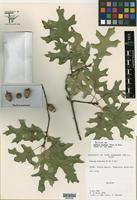
Holotype of Quercus buckleyi Nixon & Dorr [family FAGACEAE]
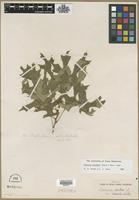
Type? of Quercus buckleyi Nixon & Dorr [family FAGACEAE]
Previous
Next

Name

Identification
Quercus buckleyi Nixon & Dorr [family FAGACEAE ] (stored under name); Verified by Not on Sheet, Quercus rubra L. [family FAGACEAE ] Verified by Not on Sheet, Quercus buckleyi Nixon & Dorr [family FAGACEAE ] Verified by Nixon, K.C., 1983
Related name
  • Quercus rubra
  • Quercus buckleyi
Common name
  • Buckley's oak, Flora of North America Vol. 3

Flora

Entry for Quercus buckleyi Nixon & Dorr [family FAGACEAE]
Herbarium
Flora of North America (FNA)
Collection
Flora of North America
Resource Type
Reference Sources
Entry From
Flora of North America, Vol 3,
Names
Quercus buckleyi Nixon & Dorr [family FAGACEAE], Taxon, 34: 225. 1985
Information
Trees, deciduous, to 15 m. Bark gray and smooth or black and furrowed. Twigs grayish brown to red-brown, rarely somewhat yellowish or gray, 1.5-3 mm diam., glabrous. Terminal buds grayish brown to reddish brown, ovoid to subfusiform, (2.5-)3-7 mm, scales on apical 1/2 distinctly ciliate. Leaves: petiole 20-45 mm, glabrous. Leaf blade circular or broadly elliptic to obovate, 55-100 × 51-112 mm, base cuneate to truncate, often inequilateral, margins with 7-9 lobes and 12-35 awns, lobes oblong to distally expanded, apex acute to acuminate; surfaces abaxially light green or coppery green, glabrous or with small, axillary tufts of tomentum, adaxially shiny or glossy, glabrous, veins raised on both surfaces. Acorns biennial; cup goblet- to cup-shaped, rarely saucer-shaped, 5-11.5 mm high × 10-18 mm wide, covering 1/3-1/2 nut, outer surface glabrous to sparsely puberulent, inner surface glabrous except for a few hairs around scar, scales acute, less than 4 mm, occasionally tuberculate, especially at base of cup, tips appressed; nut broadly ovoid to broadly ellipsoid, rarely oblong, 12-18.5 × 8-14 mm, occasionally with faint rings of pits at apex, glabrous or sparsely puberulent, scar diam. 3.5-8 mm.
Phenology
Flowering spring
Altitude range
150-500 m
Distribution
USA Okla.USA Tex.
Discussion
For many years the names Quercus texana, Q. rubra var. texana, and Q. shumardii var. texana were erroneously used for Q. buckleyi (L. J. Dorr and K. C. Nixon 1985).
Quercus texana reportedly hybridizes with Q. marilandica (= Q. ×hastingsii Sargent). Quercus ×hastingsii may be derived from Q. marilandica var. ashei (D. M. Hunt 1989). Hybridization with Q. shumardii may also occur (L. J. Dorr and K. C. Nixon 1985).

Related Materials

  • Terms and Conditions
  • Privacy Policy
  • Cookie Policy
  • Cookie Settings
  • Accessibility
  • Help
  • Contact Us
  • Facebook
  • Twitter
ITHAKA

JSTOR is part of ITHAKA, a not-for-profit organization helping the academic community use digital technologies to preserve the scholarly record and to advance research and teaching in sustainable ways.

©2000-2026 ITHAKA. All Rights Reserved. JSTOR®, the JSTOR logo, JPASS®, Aluka®, and ITHAKA® are registered trademarks of ITHAKA.

╳