JSTOR Global Plants Home
  • Home
  • Browse
  • About
  • Access
  • Account
    • Saved Items
    • Profile
  • Log in

Global Plants

Skip to Main Content
  • JSTOR Global Plants Home
  • Global Plants

    • Browse
    • About
    • Access
    • Account
      • Saved Items
      • Profile
Log in
  • Browse
  • About
  • Access
  • Account
    • Saved Items
    • Profile
Advanced Search

Compilation
Pycnostachys purpurascens

3 Images see all

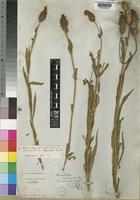
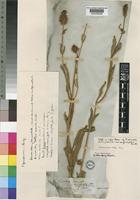
Pycnostachys reticulata (E.Mey.) Benth. var. angustifolia Benth. [family LABIATAE]
Type of Pycnostachys reticulata (E.Mey.) Benth. var. angustifolia Benth. [family LABIATAE]
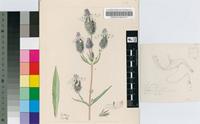
Pycnostachys purpurascens Briq.
Previous
Next

Name

Identification
Pycnostachys purpurascens Briq. [family LAMIACEAE ]
Related name
  • Pycnostachys purpurascens

Flora

Entry for PYCNOSTACHYS purpurascens Briq. [family LABIATAE]
Herbarium
Royal Botanic Gardens, Kew (K)
Collection
Flora Capensis
Resource Type
Reference Sources
Entry From
Flora Capensis, Vol 5, page 226, (1912) Author: By N. E. BROWN, T. COOKE and S. A. SKAN.
Names
PYCNOSTACHYS purpurascens Briq. [family LABIATAE], in Bull. Herb. Boiss. 2 me sér. iii. 998
PYCNOSTACHYS Schlechteri Briq. [family LABIATAE], l.c. 999.
PYCNOSTACHYS holophylla Briq. [family LABIATAE], l.c. 1000.
PYCNOSTACHYS reticulata Benth. var. angustifolia [family LABIATAE], in DC. Prodr. xii. 83, as to description and Burke's specimen.
Information
a herb 2–3 ft. (or more?) high; stem simple and with only 1 flower-spike or paniculately branched with 3 to several spikes, obtusely 4-angled or terete, with 6–8 ribs, thinly to densely adpressed-puberulous with very minute reflexed hairs; leaves opposite or 3 in a whorl, ascending or spreading, 2–5 in. long, 1/6–1 1/6 in. broad, linear-lanceolate or narrowly lanceolate, acute, tapering from below the middle to the sessile base, serrate, some of the upper leaves nearly entire, glabrous or thinly sprinkled with microscopic hairs on both sides and more densely on the veins beneath; secondary veins obliquely ascending (not horizontal); flower-spike 1–3 3/4 in. long and including the corollas 1–1 1/4 in. in diam. when dried; bracts deflexed, 3–5 lin. long, linear-lanceolate and acuminate or linear-subulate, ciliolate; calyx-tube 1/2 lin. long and cup-like when in flower, elongating to 2 lin. long and gibbous on the lower side at the base in fruit; teeth 2–3 lin. long, spine-like, puberulous, with small membranous lobules between them, closing the mouth of the tube whilst the seeds are maturing, spreading outwards when they ripen; corolla abruptly bent at about the middle of the tube, thinly or thickly puberulous outside on the upper part, pale pink or rosy-purple (Tyson); tube 4–5 lin. long when measured along the bend, very slender at the basal half, abruptly dilating to 1 1/4 lin. in vertical diam. at the upper part; upper lip 1 lin. long, 3-toothed; lower lip 2–2 1/2 lin. long, boat-shaped, curved; nutlets 1/2– 2/3 lin. long, oblong or elliptic-oblong, flattened on the back, keeled down the inner face, smooth, at first pale brown, finally dark brown. null
Distribution
EASTERN REGION Griqualand East; by mountain streams near Clydesdale, Tyson, 2753! and in MacOwan & Bolus, Herb. Norm., 859! near Mount Frere, Schlechter, 6406!KALAHARI REGION Orange River Colony, Cooper, 1070! Transvaal; Magaliesberg Range, Burke, 111; Pilgrims Rest, Roe in Herb. Bolus, 2647! Aapies Poort and River, near Pretoria, Rehmann, 4111! Miss Leendertz, 1108! Woodbush mountains, Nelson, 438! near Johannesburg, E.S.C.A. Herb. 347 (or 847?)! near Barberton, Galpin, 1318! Thorncroft, 4344! Elandspruit Mountains, Schlechter, 3884! Witwatersrand, Mrs. Hutton, 878! near Lydenburg, Wilms, 1122! Spitzkop Goldmine, Wilms, 1122b!
Notes
The three specimens which Briquet has described as three distinct species have been examined and dissected and found to be identical. Of the five characters mentioned as distinguishing them—the purple colour is the result of sun-exposure; the closed or open mouth of the calyx and colour of the nutlets are conditions varying with the maturing of the seeds, both forms of calyx and colours of nutlets may be found on the same spike; the size of the corolla, &c., is variable according to the vigour of the specimen and other causes, as in most Labiatæ, and the toothing and pubescence of the leaves is nearly the same in all. P. purpurascens is very closely allied to P. reticulata, but is readily distinguished by its narrower and more glabrous leaves, whilst the flowers are stated to be different in colour.

Related Materials

  • Terms and Conditions
  • Privacy Policy
  • Cookie Policy
  • Cookie Settings
  • Accessibility
  • Help
  • Contact Us
  • Facebook
  • Twitter
ITHAKA

JSTOR is part of ITHAKA, a not-for-profit organization helping the academic community use digital technologies to preserve the scholarly record and to advance research and teaching in sustainable ways.

©2000-2026 ITHAKA. All Rights Reserved. JSTOR®, the JSTOR logo, JPASS®, Aluka®, and ITHAKA® are registered trademarks of ITHAKA.

╳