JSTOR Global Plants Home
  • Home
  • Browse
  • About
  • Access
  • Account
    • Saved Items
    • Profile
  • Log in

Global Plants

Skip to Main Content
  • JSTOR Global Plants Home
  • Global Plants

    • Browse
    • About
    • Access
    • Account
      • Saved Items
      • Profile
Log in
  • Browse
  • About
  • Access
  • Account
    • Saved Items
    • Profile
Advanced Search

Compilation
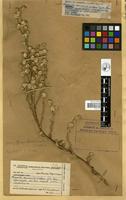
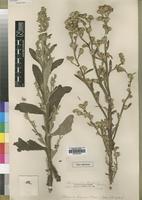
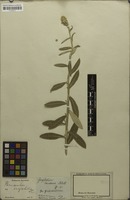
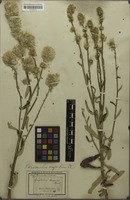
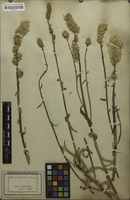
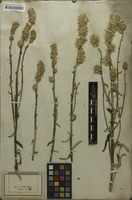
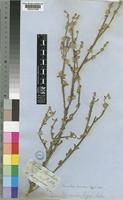
Pterocaulon decurrens

7 Images see all

Filed as Neojeffreya decurrens (L.) Cabrera [family COMPOSITAE]
Type of Pterocaulon decurrens S.Moore [family ASTERACEAE]
Original material of Gnaphalium decurrens Schrank [family ASTERACEAE]
Filed as Pterocaulon virgatum (L.) DC. [family ASTERACEAE]
Neojeffreya decurrens (L.) Cabrera [family COMPOSITAE]
Previous
Next

Name

Identification
Pterocaulon decurrens S.Moore [family ASTERACEAE ] (stored under name);
Related name
  • Neojeffreya decurrens
  • Pterocaulon decurrens
  • Pluchea pteroclada
  • Monenteles pterocaulon
  • Pterocaulon bojeri

Flora

Entry for NEOJEFFREYA decurrens (L.) Cabrera [family COMPOSITAE]
Herbarium
Royal Botanic Gardens, Kew (K)
Collection
Flora of Tropical East Africa
Resource Type
Reference Sources
Entry From
Flora of Tropical East Africa, page 315, (2002) Author: H.J. BEENTJE
Names
NEOJEFFREYA decurrens (L.) Cabrera [family COMPOSITAE], in Hickenia 1(30): 160 (1978); Lisowski in F.A.C. Compositae, Inuleae: 37, t. 6 (1989). Type: “habitat in India” (see Note), probably Madagascar, Herb. Linn. 993-31 (LINN, holo., microfiche!)
Conyza decurrens L. [family COMPOSITAE], Sp. Pl. ed. 2: 1206 (1763)
Monenteles pterocaulon DC. [family COMPOSITAE], Prodr. 5: 455 (1836). Type: Madagascar, near Antananarivo, Bojer 1833 (G, holo., P!, iso.)
Pterocaulon bojeri Baker [family COMPOSITAE], Fl. Maurit.: 164 (1877), nom. illeg. Type as for Monenteles pterocaulon DC.
Pterocaulon decurrens (L.) S. Moore [family COMPOSITAE], in J. B. 52: 151 (1914); Humbert, Fl. Madag. 189: 372, fig. 71/35-44 (1962); Wild in Kirkia 12: 37 (1980)
Jeffreya decurrens (L.) Cabrera [family COMPOSITAE], in Hickenia 1 (23): 125 (1978)
Information
Annual or biennial herb, becoming slightly woody at the base, erect, simple or branched, 0.2–1 m high; taproot straight and slender; stems and branches tomentellous, winged with entire pubescent wings 0.5–2 mm wide. Leaves grey-green, oblong to spatulate, sessile, 1–4.5 cm long, 0.2–0.9 cm wide (to 7 by 1.8 cm for basal leaves in Madagascar), base decurrent into stem wings, margin entire or irregularly denticulate, apex obtuse or rounded, pubescent and sometimes scabridulous. Capitula 2–5 mm long, grouped 5–12 in dense glomerules of 8–10 mm across, axillary and sessile to distal leaves or terminal and sessile, the whole forming a lax leafy panicle; receptacle subglobose, with aristate and plumose paleae 2.5–3 mm long; phyllaries pale green, 2–3-seriate, lanceolate, the innermost longer and more linear, to 2–3.2 mm long, ciliate and pubescent. Outer florets white, many, female, filiform, 1.6–2 mm long, minutely 2–3-dentate distally; style shortly bifid, 1.8–2.5 mm long; inner florets dull dark red or dull purple, 2–4, narrowly infundibuliform, tube 1.7–1.9 mm long, glabrous, lobes 0.2–0.4 mm long, pilose and glandular beneath; anthers 1–1.2 mm long, briefly sagittate and with short distal appendages; style 2.3–2.7 mm long with ?connate arms. Achenes cylindrical, often compressed, 0.8–1 mm long, slightly 4-ribbed, but often sterile and stipe-like in inner florets, puberulous; pappus of white barbellate bristles, ± 2.5 mm long. Fig. 81 (page 392).
Range
DISTR. T 6, 8
Altitude range
100–1000 m
Distribution
TANZANIA Rufiji District Utete, Dec. 1955, Milne-Redhead & Taylor 7465!;TANZANIA Songea District 12 km E of Songea, Nonganonga Stream, Dec. 1955, Milne-Redhead & Taylor 7777!;TANZANIA Lindi District Nachingwea, Oct. 1952, Anderson 802!
Distribution (external)
; Congo (Kinshasa)
Malawi
Mozambique
Zimbabwe
South Africa
Comoro Is
Madagascar
Mauritius
Notes
The type is probably labelled wrongly, as it states “India”. Both Moore and Cabrera believe it came from Madagascar. Wild (1980) states this species has probably been introduced to Africa from Madagascar.

Related Materials

  • Terms and Conditions
  • Privacy Policy
  • Cookie Policy
  • Cookie Settings
  • Accessibility
  • Help
  • Contact Us
  • Facebook
  • Twitter
ITHAKA

JSTOR is part of ITHAKA, a not-for-profit organization helping the academic community use digital technologies to preserve the scholarly record and to advance research and teaching in sustainable ways.

©2000-2026 ITHAKA. All Rights Reserved. JSTOR®, the JSTOR logo, JPASS®, Aluka®, and ITHAKA® are registered trademarks of ITHAKA.

╳