JSTOR Global Plants Home
  • Home
  • Browse
  • About
  • Access
  • Account
    • Saved Items
    • Profile
  • Log in

Global Plants

Skip to Main Content
  • JSTOR Global Plants Home
  • Global Plants

    • Browse
    • About
    • Access
    • Account
      • Saved Items
      • Profile
Log in
  • Browse
  • About
  • Access
  • Account
    • Saved Items
    • Profile
Advanced Search

Compilation
Pterocarpus bussei

4 Images see all

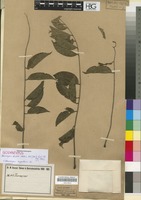
Isosyntype of Pterocarpus bussei Harms [family LEGUMINOSAE/FABACEAE]
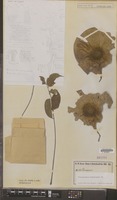
Isolectotype of Pterocarpus bussei Harms [family LEGUMINOSAE-PAP.]
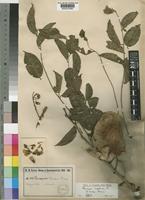
Pterocarpus angolensis DC. [family LEGUMINOSAE-PAPILIONOIDEAE]
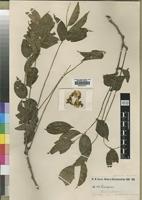
Lectotype of Pterocarpus bussei Harms [family LEGUMINOSAE]
Previous
Next

Name

Identification
Pterocarpus bussei Harms [family LEGUMINOSAE ] Pterocarpus angolensis DC. [family LEGUMINOSAE ] (stored under name);
Related name
  • Pterocarpus bussei
  • Pterocarpus angolensis

Flora

Entry for PTEROCARPUS angolensis DC. [family LEGUMINOSAE-PAPILIONOIDEAE]
Herbarium
Royal Botanic Gardens, Kew (K)
Collection
Flora of Tropical East Africa
Resource Type
Reference Sources
Entry From
Flora of Tropical East Africa, page 1, (1971) Author: J. B. GILLETT, R. M. POLHILL & B. VERDCOURT
Names
PTEROCARPUS angolensis DC. [family LEGUMINOSAE-PAPILIONOIDEAE], Prodr. 2: 419 (1825); Harms in V.E. 3 (1): 637 (1915); L.T.A.: 544 (1929); T.T.C.L.: 436 (1949); Hauman in F.C.B. 6: 25 (1954); Coates Palgrave, Trees of Centr. Afr.: 329, t. and photo. (1957); F.F.N.R.: 162 (1962); E. P. Sousa in C.F.A. 3: 357 (1966); Boaler, M.O.D. Overseas Res. Publ. 12 (1966); Rojo in Phanerogam. Monogr. 6: 30 (1971). Type: Angola, probably a specimen collected in Huila by J. J. Silva (P, nolo.)
PTEROCARPUS erinaceus [family LEGUMINOSAE-PAPILIONOIDEAE], [sensu Taub. in P.O.A. C: 218 (1895), non Poir.]
PTEROCARPUS bussei Harms [family LEGUMINOSAE-PAPILIONOIDEAE], in E.J. 33: 171 (1902); L.T.A.: 544 (1929). Type: Tanganyika, Uluguru Mts., Kikundi, Busse 144 (BM, K, iso. !)
Information
Deciduous tree, 5–20(–30) m. tall, with an open spreading crown, rarely (and not in East Africa) a shrub 3–4 m. tall; bark reticulately fissured, rough, greyish-brown to dark grey; slash exuding red sap. Branchlets brownish or silvery-grey pubescent to floccose-tomentose, tardily glabrescent. Leaves up to 22–35(–45) cm. long; stipules linear-lanceolate to oblong-elliptic, attenuate, (0.6–)1–2 cm. long, caducous; lateral leaflets (5–)6–9 on either side, broadly lanceolate to elliptic, elliptic-oblong or elliptic-obovate, up to 5–10 cm. long and 3.5–5.5 cm. wide, narrowed to the variously developed but generally short mucronate acumen, rounded to slightly cordate at base, usually hairy on both surfaces but generally soon glabrescent above and sometimes beneath as well, with ± 10–14 fine fairly closely spaced primary lateral nerves and a similar number of well-developed secondary lateral nerves giving a striate appearance; reticulate venation prominulous on both surfaces. Racemes, or (fide F.C.B.) rarely sparsely branched panicles, precocious or in the axils of young leaves, 6–12 cm. long; axes densely hairy; bracts lanceolate to elliptic-oblong, 5–8 mm. long, caducous; bracteoles near top of the 8–15 mm. long pedicel, linear to linear-lanceolate, 3–8 mm. long, caducous. Calyx 8–10 mm. long, densely appressed pubescent to tomentose outside but practically glabrous on the lobes inside. Corolla golden-yellow to orange, 16–20 mm. long; blade of standard suborbicular to oblate with the sides soon folded back in open flowers, marginally crimped; wings broad, exceeding the keel and nearly as long as the standard. Fruit suborbicular, (8–)10–15 cm. long, with a 1–2.5 cm. long stipe and a broad undulate wing bearing the style basally or basi-laterally, pubescent, also with a mass of long rigid plumose bristles over the central thickened seed-bearing part and smaller ones peripherally, inconspicuously venose. Fig. 17, p. 90.
Range
DISTR. T1–8 widespread in southern Africa from Tanganyika and the southern Congo to Angola, South West Africa, the Transvaal and Swaziland
Altitude range
300–1650 m.
Distribution
TANGANYIKA Handeni District Korogwe-Handeni, 14 Feb. 1948, Bally 5800!TANGANYIKA Mpanda District 8 km. N. of Mpanda, Kabungu [Kabangu], 9 Sept. 1961, Boaler 325!TANGANYIKA Tunduru District about 1.5 km. E. of Muhuwese [Mawese], 19 Dec. 1955, Milne-Redhead & Taylor 7712 !
Notes
VARIATION. There is a general tendency for trees from the Central Plateau region to have relatively few leaflets and longer more conspicuous and persistent indumentum, whereas those from areas nearer the coast (including the type of P. bussei) and also along the north-east side of Lake Tanganyika have leaflets nearing the upper limits of the range in number and a rather short appressed indumentum, usually soon disappearing at least from the branchlets and upper surface of the leaflets. The timber of this tree, known as muninga or sometimes in the east as muhagata, is one of the most valuable in Tanganyika and extensive Forest Reserves have been established to control exploitation. Description of the wood and uses are given by Chalk, Burtt Davy and Desch, Some E. Afr. Coniferae & Leguminosae: 56–62, fig., photo. (1932). The autecology of the species is admirably reported by Boaler, “The Ecology of Pterocarpus angolensis DC. in Tanzania”, M.O.D. Overseas Research Publication 12 (H.M.S.O., 1966).

Related Materials

  • Terms and Conditions
  • Privacy Policy
  • Cookie Policy
  • Cookie Settings
  • Accessibility
  • Help
  • Contact Us
  • Facebook
  • Twitter
ITHAKA

JSTOR is part of ITHAKA, a not-for-profit organization helping the academic community use digital technologies to preserve the scholarly record and to advance research and teaching in sustainable ways.

©2000-2026 ITHAKA. All Rights Reserved. JSTOR®, the JSTOR logo, JPASS®, Aluka®, and ITHAKA® are registered trademarks of ITHAKA.

╳