JSTOR Global Plants Home
  • Home
  • Browse
  • About
  • Access
  • Account
    • Saved Items
    • Profile
  • Log in

Global Plants

Skip to Main Content
  • JSTOR Global Plants Home
  • Global Plants

    • Browse
    • About
    • Access
    • Account
      • Saved Items
      • Profile
Log in
  • Browse
  • About
  • Access
  • Account
    • Saved Items
    • Profile
Advanced Search

Compilation
Pteris serrulata

10 Images see all

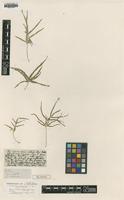
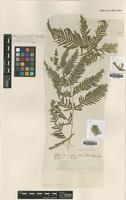
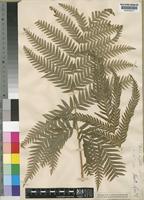
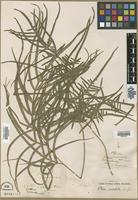
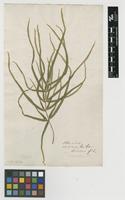
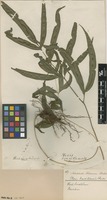
Type of Pteris serrulata Forssk. var. minor [family PTERIDACEAE]
Filed as Pteris dentata Forssk. [family PTERIDACEAE]
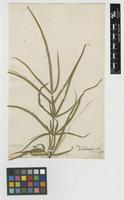
Pteris serrulata unrecorded [family PTERIDACEAE]
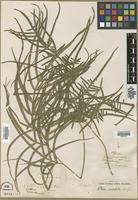
Lectotype of Pteris serrulata Forssk. [family PTERIDACEAE]
Filed as Pteris indet. [family PTERIDACEAE]
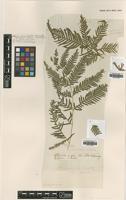
Type? of Pteris serrulata L.f. [family PTERIDACEAE]
Filed as Pteris serrulata L.f. [family PTERIDACEAE]
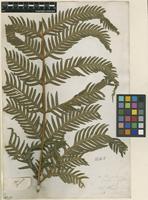
Filed as Pteris multifida Poir. [family PTERIDACEAE]
Filed as Pteris brasiliensis Raddi [family PTERIDACEAE]
Filed as Pteris multifida Poir. [family PTERIDACEAE]
Previous
Next

Name

Identification
Pteris multifida Poir. [family PTERIDACEAE ] (stored under name); Pteris serrulata Forssk. [family PTERIDACEAE ]
Related name
  • Pteris multifida
  • Lonchitis pedatum
  • Pteris arguta
  • Pteris indet.
  • Pteris dentata
  • Pteris serrulata
  • Pteris cretica

Flora

Entry for PTERIS dentata Forssk. [family ]
Herbarium
Royal Botanic Gardens, Kew (K)
Collection
Flora of Tropical East Africa
Resource Type
Reference Sources
Entry From
Flora of Tropical East Africa, page 1, (2002) Author: BERNARD VERDCOURT
Names
PTERIS dentata Forssk. [family ], Fl. Aegypt.-Arab.: 186 (1775); Sim, Ferns S Afr. ed. 2: 255, t. 129 (1915); Swartz, Fl. Trop. Arab. [Mitt. Inst. Bot. Hamburg 10]: 20 (1939); Tardieu, Fl. Madag. 5 (1): 91, fig. 14/5–6 (1958); Alston, Ferns W.T.A.: 42 (1959); Runemark in Bot. Not. 115: 189, fig. 1c, 2c–d, 5 (1962); Schelpe, Contrib. Bolus Herb. 1: 64 (1969) & Expl. Hydrobiol. Bassin L. Bangweolo & Luapula 8 (3) Ptérid.: 57 (1973) & C.F.A. Pterid.: 94 (1977); Schelpe & M.A. Diniz, Fl. Moçamb., Pterid.: 118 (1979); W. Jacobsen, Ferns S Afr.: 239, fig. 171 (1983); Schelpe & N.C. Anthony, F.S.A., Pterid.: 109, fig. 33/1 (1986); J.E. Burrows, S Afr. Ferns: 160, t. 26.2, fig. 39, 161 (1990); Faden in U.K.W.F. ed. 2: 20 (1994); Miller & Cope, Fl. Arab. Pen. 1: 57, fig. 6, map 39 (1996). Type: Yemen, Menacha, Schweinfurth 1402 (C, neo., K!, isoneo.) (see note)
PTERIS serrulata Forssk. [family ], Fl. Aegypt-Arab.: 187 (1775); Decne. in Arch. Mus. Hist. Nat. Paris 2: 188 (1841); J.R.I. Wood, Handb. Yemen Fl.: 58 (1997) (see note). Type: Yemen, Hadie, Forsskål (no material at C, BM!, lecto.) (see note), non serrulata L.f., 1782
PTERIS arguta Ait. [family ], Hort. Kew 3: 458 (1789). Type: based on P. serrulata Forssk .; nom. illegit. (see note)
PTERIS flabellata Thunb. [family ], Prodr. Pl. Cap.: 172 (1800); Hieron. in P.O.A. C: 80 (1895). Type: South Africa, Cape Province, between Taffelberg & Leuwekopp, Thunberg s.n. (UPS, lecto.) (chosen by Runemark)
PTERIS arguta (Thunb.) Kuhn var. flabellata [family ], Fil. Afr.: 76 (1868); Hieron. in V.E. 2: 46, fig. 38/c–e (1908); F.D.-O.A.: 48 (1929) (see note)
PTERIS arguta var. typica [family ], ; F.D.-O.A.: 47 (1929), nom. illegit .
PTERIS dentata (Thunb.) Runemark subsp. flabellata [family ], in Bot. Not. 115: 190, fig. 1f–g, 2/e–f, 6 (1962); Schelpe in F.Z. Pterid.: 112 (1970); Schippers in Fern Gaz. 14: 185 (1993)
Information
Terrestrial or rarely epiphytic (truly ?); rhizome erect or creeping with blackish chestnut shining linear-lanceolate scales 5 mm long. Fronds mostly tufted, 0.15–2.1 m tall. Stipe straw-coloured, usually dark purplish brown at the base or all purplish, 0.07–1.2 m tall, glabrous. Lamina pale green, lanceolate to broadly ovate, 0.14–1 m long, 8–40(–70) cm wide, pinnate, the lowest pinnae deeply bipinnatifid, the rest deeply pinnatifid, in 3–10(–13) pairs; pinnae narrowly oblong in outline, 5–24 cm long, 1.5–7.5 cm wide, with 11–24 pairs of ultimate segments; segments oblong-triangular, often falcate, decurrent, 0.3–5.5(–8) cm long, 0.25–6(–8.5) mm wide, the sterile margins crenate to distinctly dentate, the teeth often numerous; costae of pinnae channelled above and with spinules at junctions with costulae; veins free. Sori variable in length from 1/3 to 9/10 the length of the lobes; false indusium erose or ± entire. Fig. 2/6, lobes (p. 7).
Range
DISTR. U 2–4; K 1, 3–7; T 1–4, 6–8
Altitude range
1000–2700(–2950) m
Distribution
KENYA Northern Frontier Province Uaraguess, 2 Dec. 1958, Newbould 3059!;KENYA Kiambu District Kerita Forest Station, 29 Jan. 1962, Verdcourt 3266!;KENYA Masai District Nasampolai [Enesambulai] Valley, 2 June 1969, Greenway & Kanuri 13635!TANZANIA Kilimanjaro, Marangu, 18 Dec. 1963, Archbold 374!;TANZANIA Ufipa District Nsanga Forest, 6 Aug. 1960, Richards 12980!;TANZANIA Songea District Matengo Hills, Lupembe Hill, 10 Jan. 1956, Milne-Redhead & Taylor 8100!UGANDA Toro District Ruwenzori, Mihunga, 11 Jan. 1939, Loveridge 342!;UGANDA Kigezi District Kirwa, Dec. 1938, Chandler & Hancock 2525!;UGANDA Mengo District Kampala, Aug. 1938, Chandler 2446!
Distribution (external)
; Cape Verde Is
Ghana
Bioko
E. Congo (Kinshasa)
Rwanda
Burundi
Ethiopia
Sudan
Angola
Zambia
Malawi
Zimbabwe
South Africa
Madagascar
Mascarene Is
Ascension I
St Helena
Greece (Ikaria)
Crete
Arabia
Notes
The types of several of Forsskål’s species of ferns are missing from C including those of P. dentata and P. serrulata; Forsskål’s ferns were borrowed by Kaulfuss in 1819 but the material was lost on its way back to Copenhagen in 1826. Since Kaulfuss does not mention P. dentata nor P. serrulata in Enumeratio Filicum (1824) it is almost certain they were not in the consignment and were never present at C. Forsskål’s original description of P. dentata hardly fits the species as now accepted referring to ‘frons sesquipoll.’ – perhaps an error. Runemark chose a neotype for P. dentata (as above) but it is not typical of the species as a whole having 35 pairs of ultimate segments up to 9 cm long. Nearly everyone seems to have overlooked that there is some Forsskål material in the BM (it is not mentioned in Hepper & Friis, Pl. Forssk. Fl. Aegyp.-Arab., 1994). One sheet bears two specimens, one from S Africa collected by Thunberg and one from Yemen collected by Forsskål but without an original label but a “ serrata ” crossed out and arguta substituted probably by Solander. C.V. Morton has selected this as a lectotype of P. serrulata Forssk. (see Bull. Soc. Bot. Fr. 116: 247–248 (1969)). The other sheet bears a very poor inadequate specimen with a label decursiva Forssk. in Robert Brown’s hand and said to be dentata in another but nothing authentic. This specimen is presumably related to a cover with a “Type specimen of dentata existed at BM in 1939 – see MS list by A. Gepp of sheets extracted for evacuation” but had then been mislaid. It turned up later having been laid in the wrong place. Hepper & Friis (1994) include decursiva under Cheilanthes farinosa (Forssk.) Kaulf. but the BM fragment is nothing like that species of which there seems to be no material at Kew from Arabia. Morton appears to have accepted this as type material of P. dentata but in view of the lack of authentic label I am not prepared to upset Runemarck’s selection of neotype.Runemarck divided P. dentata into two subspecies dentata and flabellata using the type of serration of the sterile margins and the size and sculpture of the spores but even in Arabia the serration varies and I have not followed this. The tropical African material certainly agrees exactly with Thunberg’s flabellata .Since P. dentata Forssk. and P. serrulata Forssk. are of equal date it is the author who first unequivocally synonymises them whose choice must be followed. Miller and Cope (1996) did this and chose P. dentata. Swartz (1939) also did so but attributed serrulata to Decne. Wood (1997) whose work had actually been written long before but delayed, chose P. serrulata. The name P. serrulata has been used for three different ferns, the confusion starting with Aiton who chose to rename P. serrulata Forssk. rather than the later P. serrulata L.f.; but the fern he actually had was from Madeira introduced by Francis Masson and not the same species as the Arabian fern, although there has been persistent confusion with the names P. arguta and P. serrulata being applied to the species growing in the Atlantic Isles and introduced into Portugal. Moreton (1969) showed that P. palustris Poir. based on a Portuguese type applied to this species but the earliest name is P. incompleta Cav. based on cultivated material from Tenerife and Tangier. Finally the correct name for P. serrulata L.f. non Forssk. is P. multifida Poir.

Related Materials

  • Terms and Conditions
  • Privacy Policy
  • Cookie Policy
  • Cookie Settings
  • Accessibility
  • Help
  • Contact Us
  • Facebook
  • Twitter
ITHAKA

JSTOR is part of ITHAKA, a not-for-profit organization helping the academic community use digital technologies to preserve the scholarly record and to advance research and teaching in sustainable ways.

©2000-2026 ITHAKA. All Rights Reserved. JSTOR®, the JSTOR logo, JPASS®, Aluka®, and ITHAKA® are registered trademarks of ITHAKA.

╳