JSTOR Global Plants Home
  • Home
  • Browse
  • About
  • Access
  • Account
    • Saved Items
    • Profile
  • Log in

Global Plants

Skip to Main Content
  • JSTOR Global Plants Home
  • Global Plants

    • Browse
    • About
    • Access
    • Account
      • Saved Items
      • Profile
Log in
  • Browse
  • About
  • Access
  • Account
    • Saved Items
    • Profile
Advanced Search

Compilation
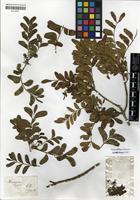
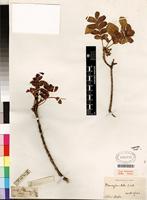
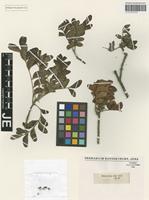
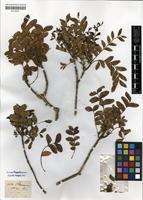
Ptaeroxylon utile

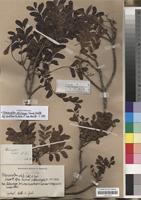
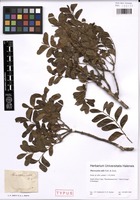
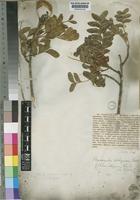
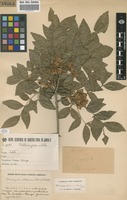
16 Images see all

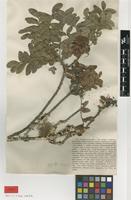
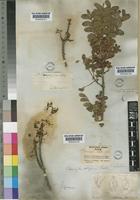
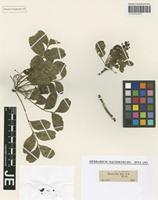
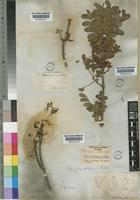
Type of Ptaeroxylon utile Eckl. & Zeyh. [family RUTACEAE]
Filed as Ptaeroxylon obliquum (Thunb.) Radlk. [family PTAEROXYLACEAE]
Filed as Ptaeroxylon utile Eckl. & Zeyh. [family PTAEROXYLACEAE]
Filed as Ptaeroxylon obliquum (Thunb.) Radlk. [family SAPINDACEAE]
Filed as Ptaeroxylon obliquum (Thunb.) Radlk. [family PTAEROXYLACEAE]
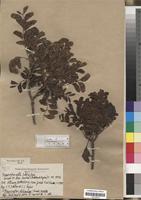
Syntype of Ptaeroxylon utile Eckl. & Zeyh. [family PTAEROXYLACEAE]
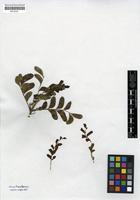
Isotype of Ptaeroxylon utile Eckl. & Zeyh. [family PTAEROXYLACEAE]
Filed as Ptaeroxylon obliquum (Thunb.) Radlk. [family SAPINDACEAE]
Filed as Ptaeroxylon utile Eckl. & Zeyh. [family PTAEROXYLACEAE]
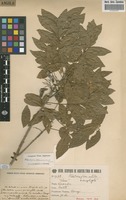
Type of Ptaeroxylon utile Eckl.&Zeyh. [family MELIACEAE]
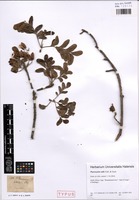
Type? of Ptaeroxylon utile Eckl. & Zeyh. [family PTAEROXYLACEAE]
Isotype of Ptaeroxylon utile Eckl. & Zeyh. [family PTAEROXYLACEAE]
Ptaeroxylon obliquum (Thunb.) Radlk. [family PTAEROXYLACEAE]
Type? of Ptaeroxylon utile Eckl. & Zeyh. [family PTAEROXYLACEAE]
Syntype of Ptaeroxylon utile Eckl. & Zeyh. [family PTAEROXYLACEAE]
Ptaeroxylon obliquum (Thunb.) Radlk. [family PTAEROXYLACEAE]
Previous
Next

Name

Identification
Ptaeroxylon obliquum (Thunb.) Radlk. [family PTAEROXYLACEAE ] (stored under name); Verified by HBG-formal name change, 2010 Ptaeroxylon utile Eckl. & Zeyh. [family PTAEROXYLACEAE ] Verified by Not on sheet,
Related name
  • Ptaeroxylon utile
  • Rhus obliquum
  • Ptaeroxylon obliquum

Flora

Entry for PTAEROXYLON obliquum (Thunb.) Radlk. [family PTAEROXYLACEAE]
Herbarium
Royal Botanic Gardens, Kew (K)
Collection
Flora of Tropical East Africa
Resource Type
Reference Sources
Entry From
Flora of Tropical East Africa, page 1, (1996) Author: B. VERDCOURT & F.G. DAVIES
Names
PTAEROXYLON obliquum (Thunb.) Radlk. [family PTAEROXYLACEAE], in Sitz.-Ber. Bayer. Akad. 20: 165 (1890); Gürke in P.O.A. C: 232 (1895); Siebenl., Forstw. Deutsch-Ostafr.: 98 (1914); V.E. 3(1): 800, t. 376 (1915); Chalk & Burtt Davy, For. Trees & Timbers Brit. Emp. 3: 56, fig. 8, t. 11 (1935); Harms in E. & P. Pf., ed. 2, 19b1: 48 (1940); T.T.C.L.: 318 (1949); Gomes e Sousa, Dendrol. Moçamb. 2: 114 (1949) & Dendrol. Moçamb. 1: 196, photo. & fig. (1951); Exell & Mendonça, C.F.A. 1: 306 (1951); F. White & Styles in F.Z. 2: 548, t. 118 (1966); Palmer & Pitman, Trees Southern Afr. 2: 1373, photos. (1973); F. White & Styles in F.S.A. 18(3): 35, fig. 9, map 34 (1986); Iversen in Symb. Bot. Upsal. 29(3): 203 (1991). Type: South Africa, no material originally cited but specimen, Thunberg (UPS-THUN)
Rhus obliqua Thunb. [family ANACARDIACEAE], Fl. Cap. 2: 224 (1818); DC., Prodr. 2: 68 (1825)
Ptaeroxylon utile Eckl. & Zeyh. [family PTAEROXYLACEAE], Enum. Pl. Afr. Austr.: 54 (1834); Harv., Thes. Cap. 1: 11, t. 17 (1859); Sond. in Fl. Cap. 1: 243 (1860); Sim, For. & For. Fl. Col. Cape Good Hope: 166, t. 31 (1907). Type: S. Africa, in forests by the Bushman’s R., and in the districts of Addo and Coega (Uitenhage), Ecklon (K, OXF, isosyn.!)
Information
Shrub or small tree to 16 m. tall, mostly deciduous and usually flowering with undeveloped leaves; bole ± 30 cm. diameter at breast height; bark grey or whitish grey, at first smooth, later rough and fissured longitudinally. Leaves densely puberulous, glabrescent but hairs ± persistent on petiole and rhachis, which together attain 12 cm. and are flattened and slightly winged; rhachis mostly ending in short mucro; leaflets in 3–8 pairs; lamina very asymmetrically oblong-lanceolate to ovate-oblong, 1.8–6 cm. long, 0.5–3 cm. wide, obtuse, emarginate or acuminate at the apex, very obliquely cuneate at the base, ± closely nerved, the venation prominent above. Inflorescences axillary or in axils of fallen leaves, up to 5 cm. long; calyx ± 1 mm. long, sparsely puberulous; lobes acute; petals pale yellow, 5 mm. long, 1.5 mm. wide, glabrous save for ciliolate margin. Male: stamens 3.5 mm. long; pistillode minute, embedded in disk, sometimes with 2 vestigial styles and loculi. Female: ovary 1.75 mm. long; style ± 1.25 mm. long; staminodes ± 2 mm. long, with minute antherodes. Capsule chestnut-brown, 1.8 cm. long, 1.2 cm. wide, emarginate at apex, conspicuously venose, dehiscing into 2 valves. Seed 1.6 cm. long, 6 mm. wide. Fig. 1.
Range
DISTR. T 3
Altitude range
1500–2000 m.
Distribution
TANZANIA Lushoto District W. Usambara Mts., Sunga–Manolo road, 26 May 1953, Drummond & Hemsley 2774! & Langwi, 20 Dec. 1929, Ross 593! & Kwambugu area, Holst & without exact locality, D.F.O. Lushoto A23/65!
Distribution (external)
; Mozambique
Zimbabwe
Botswana
Angola
Swaziland
Namibia
South Africa (Transvaal, Natal & Cape Province)
Notes
The wood is incredibly durable and outlasts metal when used for machine bearings. It was once of great importance in South Africa being strong, handsome, capable of a fine polish and resembling mahogany but difficult to work. It was formerly much used for house-building, fencing poles and telegraph poles. How much it was used in East Africa is not known; Siebenlist deals with the species in his book on forestry in Tanzania and the Kishambaa name ‘Mwandara’ was widely known. Engler (V.E. 3(1): 800 (1915)) stated that it was desirable this useful tree was cultivated by forestry departments.

Related Materials

  • Terms and Conditions
  • Privacy Policy
  • Cookie Policy
  • Cookie Settings
  • Accessibility
  • Help
  • Contact Us
  • Facebook
  • Twitter
ITHAKA

JSTOR is part of ITHAKA, a not-for-profit organization helping the academic community use digital technologies to preserve the scholarly record and to advance research and teaching in sustainable ways.

©2000-2026 ITHAKA. All Rights Reserved. JSTOR®, the JSTOR logo, JPASS®, Aluka®, and ITHAKA® are registered trademarks of ITHAKA.

╳