JSTOR Global Plants Home
  • Home
  • Browse
  • About
  • Access
  • Account
    • Saved Items
    • Profile
  • Log in

Global Plants

Skip to Main Content
  • JSTOR Global Plants Home
  • Global Plants

    • Browse
    • About
    • Access
    • Account
      • Saved Items
      • Profile
Log in
  • Browse
  • About
  • Access
  • Account
    • Saved Items
    • Profile
Advanced Search

Compilation
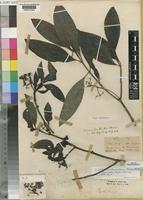
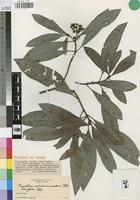
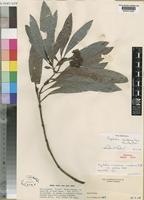
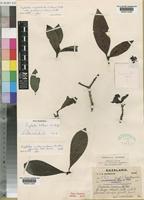
Psychotria zombamontana

8 Images see all

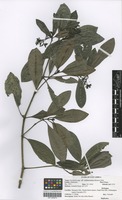
Filed as Psychotria zombamontana (Kuntze) E. M. A. Petit [family RUBIACEAE]
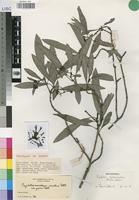
Paratype of Psychotria meridiano-montana Petit var. glabra Petit [family RUBIACEAE]
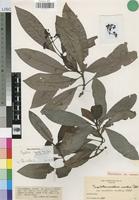
Paratype of Psychotria meridiano-montana Petit var. meridiano-montana Petit [family RUBIACEAE]
Isotype of Psychotria zombamontana (Kuntze) E.M.A.Petit [family RUBIACEAE]
Psychotria zombamontana (Kuntze) E.M.A.Petit [family RUBIACEAE]
Paratype of Psychotria meridiano-montana Petit var. glabra Petit [family RUBIACEAE]
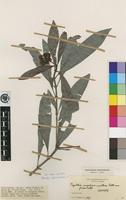
Holotype of Psychotria meridianomontana E.M.A.Petit var. glabra E.M.A.Petit [family RUBIACEAE]
Type of Psychotria zombamontana (Kuntze) E.M.A.Petit [family RUBIACEAE]
Previous
Next

Name

Identification
Psychotria mahonii C.H.Wright [family RUBIACEAE ] (stored under name); Verified by Verdcourt, B., Psychotria zombamontana (Kuntze) E.M.A.Petit [family RUBIACEAE ] Verified by Petit, E., Grumilea punicea S.Moore [family RUBIACEAE ] Grumilea kirkii Hiern [family RUBIACEAE ] Verified by Petit, E.,
Related name
  • Grumilea punicea
  • Psychotria meridianomontana
  • Psychotria mahonii
  • Grumilea kirkii
  • Psychotria meridiano-montana
  • Psychotria zombamontana

Flora

Entry for Psychotria zombamontana Kuntze Petit [family RUBIACEAE]
Herbarium
Royal Botanic Gardens, Kew (K)
Collection
Flora Zambesiaca
Resource Type
Reference Sources
Entry From
FZ, Vol 5, Part 1, (1989) Author: B. Verdcourt
Names
Psychotria zombamontana Kuntze Petit [family RUBIACEAE], in Bull. Jard. Bot. Brux. 34: 86 photo. 2/F (1964). —Palgrave, Trees S. Afr.: 900 (1977). Type: Malawi, Mt. Zomba, Kirk (K, holotype).
Grumilea kirkii Hiern [family RUBIACEAE], in F.T.A. 3: 216 (1877).—K. Schum. in Engl., Pflanzenw. Ost-Afr. C: 391 (1895). -De Wild. in Bull. Jard. Bot. Brux. 9: 40 (1923).—Krause in R.E. & T.C.E. Fries in Notizbl. Bot. Gart. Berl. 10: 607 (1929).—Goodier & Phipps in Kirkia 1:64 (1961) non Psychotria kirkii. Type as for P. zombamontana.
Uragoga zombamontana Kuntze [family RUBIACEAE], Rev. Gen. Pl. 2: 958 (1891). Type as above
Psychotria meridiano-montana Petit [family RUBIACEAE], in Bull. Jard. Bot. Brux. 34: 88 photo 2/G (1964); in Dist. Pl. Afr. 4, map 116 (1972).—Verdc. in F.T.E.A., Rubiaceae 1: 47 (1976). Type from S. Tanzania.
Psychotria meridiano-montana var. angustifolia Petit [family RUBIACEAE], in Bull. Jard. Bot. Brux. 34: 89 (1964). —Verdc. in F.T.E.A, Rubiaceae 1: 47 (1976). Type from S. Tanzania.
Psychotria meridiano-montana var. glabra Petit [family RUBIACEAE], in Bull. Jard. Bot. Brux. 34: 90 (1964). Type: Zambia, Nyika Plateau, 8.8 km. SW. of Rest House, Robson 347 (BM; K, holotype).
Psychotria goetzei var. meridiana Petit [family RUBIACEAE], in Bull. Jard. Bot. Brux. 34: 84 (1964) quoad Buchanan 948 ?non Petit sensu stricto (see note).
Information
Shrub or tree 1.5–9 m. tall with glabrous branches and smooth grey bark. Leaves 3.5–16.5 x 1–8 cm., elliptic to elliptic-oblanceolate, oblanceolate or very narrowly oblong-elliptic, acute to acuminate at the apex, sometimes the actual apex narrowly rounded, narrowly cuneate at the base, usually glabrous but sometimes with scattered ± bristly hairs on midrib beneath, rather thin to thinly coriaceous; domatia lacking or inconspicuous; petiole 2–2.5 cm. long; stipules 0.5–1.7 cm. long, ovate, acuminate, acute or obtuse, glabrous or ciliate, soon falling. Inflorescences much-branched, 3–12 x 4.5–12 cm.; lower bracts up to 2 mm. long; peduncle 3.5–9.5 cm. long, glabrous; pedicels obsolete or up to 1 mm. long, up to 9 mm. in fruit; inflorescence-axes glabrous or shortly pubescent. Calyx tube 0.8 mm. long, obconic; limb 0.5–0.75 mm. long, cupuliform, subtruncate or with short broad teeth. Corolla pale yellow or white; tube 2.5–4 mm. long; lobes 1–1.5 x 0.8 mm. triangular. Filaments 0.4 mm. long in short-styled flowers, the anthers just exserted, included in long-styled flowers; style 0.6–1.5 mm. long in short-styled flowers, exserted about 1 mm. in long-styled flowers; stigmatic lobes 0.3–0.6 mm. long. Fruits yellow to orange (immature?) to crimson-red, subglobose, 5–6 mm. long, drying very ribbed; pyrenes semi-globose with 4–5 ribs on convex face, the other face flat Seeds similar, the albumen conspicuously ruminate.
Habitat
Evergreen forest including montane forest, ravine-forest also on forested rocky kloofs, sometimes at edges and other derived situations
Altitude range
990–2500 (2900)m.
2500
990
Distribution
Mozambique MS Macequece, Mt. Vengo, fl. 23.xi.1943, Torre 6241 (LISC).Mozambique Z Gúruè Mts., Estaçao Pecuaria, buds 27.vii.1979, de Koning 7393 (LMU).Malawi S Mt. Zomba, fl. xii.1896, Whyte (K).Malawi C E. side of Dedza Mt., fl. 12.xii.1954, Adlard 204 (FHO; K).Zambia E Lundazi Distr., Nyika Plateau, upper slopes of Kangampande Mt., fl. 6.v.1952, White 2733 (FHO; K).Mozambique N Serra de Ribáuè, Mepalué, fr. 25.i.1964, Torre & Paiva 10230 (LD; LISC; LMU; MO; WAG).Malawi N Nkhata Bay Distr., Viphya Plateau, 40 km. SW. of Mzuzu, fl. & fr. 23.ii.1975, Pawek 9107 (K; MAL; MO; SRGH; UC).Zimbabwe E Mutare Distr., Vumba Mts., fl. 28.xii.1956, Chase 6281 (K; SRGH).Zambia N Isoka Distr., Mafingi Mts., W. of Chisenga Rest House, bud 21.xi.1952, White 3733 (FHO; K).
Distribution (external)
Tanzania
S. Africa (Transvaal)
Notes
An abundance of material from Malawi and elsewhere shows that Psychotria meridiano-montana cannot be retained although I maintained it in F.T.E.A. Some variants of Psychotria goetzei are also very similar. Material with hairy midribs is now known from Malawi. Some specimens with long pedicels are distinctive but there is much seemingly uncorrelated variation.

Related Materials

  • Terms and Conditions
  • Privacy Policy
  • Cookie Policy
  • Cookie Settings
  • Accessibility
  • Help
  • Contact Us
  • Facebook
  • Twitter
ITHAKA

JSTOR is part of ITHAKA, a not-for-profit organization helping the academic community use digital technologies to preserve the scholarly record and to advance research and teaching in sustainable ways.

©2000-2026 ITHAKA. All Rights Reserved. JSTOR®, the JSTOR logo, JPASS®, Aluka®, and ITHAKA® are registered trademarks of ITHAKA.

╳