JSTOR Global Plants Home
  • Home
  • Browse
  • About
  • Access
  • Account
    • Saved Items
    • Profile
  • Log in

Global Plants

Skip to Main Content
  • JSTOR Global Plants Home
  • Global Plants

    • Browse
    • About
    • Access
    • Account
      • Saved Items
      • Profile
Log in
  • Browse
  • About
  • Access
  • Account
    • Saved Items
    • Profile
Advanced Search

Compilation
Psychotria pseudoplatyphylla

14 Images see all

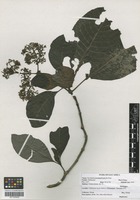
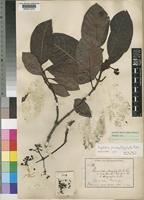
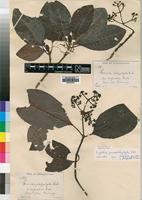
Filed as Psychotria pseudoplatyphylla E. M. A. Petit [family RUBIACEAE]
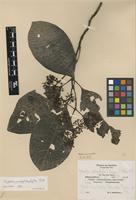
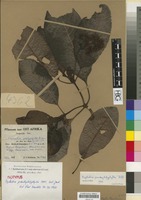
Isotype of Psychotria pseudoplatyphylla E.M.A.Petit [family RUBIACEAE]
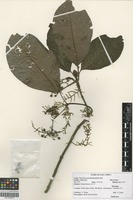
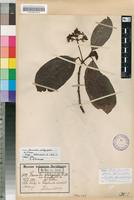
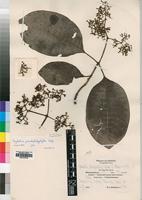
Filed as Psychotria pseudoplatyphylla E. M. A. Petit [family RUBIACEAE]
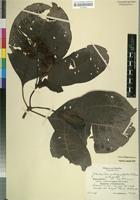
Isotype of Psychotria pseudoplatyphylla Petit [family RUBIACEAE]
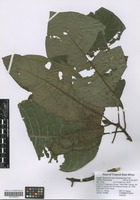
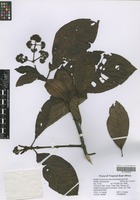
Psychotria pseudoplatyphylla E.M.A.Petit [family RUBIACEAE]
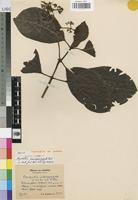
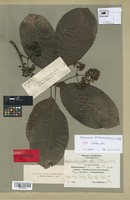
Isosyntype of Grumilea platyphylla K.Schum. [family RUBIACEAE]
Filed as Psychotria pseudoplatyphylla E. M. A. Petit [family RUBIACEAE]
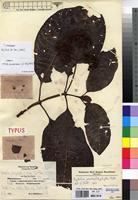
Type of Psychotria pseudoplatyphylla E. M. A. Petit [family RUBIACEAE]
Isotype of Psychotria pseudoplatyphylla Petit [family RUBIACEAE]
Holotype of Psychotria pseudoplatyphylla E.A.M.Petit [family RUBIACEAE]
Filed as Psychotria pseudoplatyphylla E. M. A. Petit [family RUBIACEAE]
Isotype of Psychotria pseudoplatyphylla Petit [family RUBIACEAE]
Syntype of Grumilea platyphylla K.Schum [family RUBIACEAE]
Isotype of Psychotria pseudoplatyphylla E.M.A.Petit [family RUBIACEAE]
Previous
Next

Name

Identification
Isotype of Psychotria pseudoplatyphylla E.M.A.Petit [family RUBIACEAE ] (stored under name); Verified by Petit,E.,
Related name
  • Grumilea platyphylla
  • Psychotria pseudoplatyphylla

Flora

Entry for PSYCHOTRIA pseudoplatyphylla Petit [family RUBIACEAE]
Herbarium
Royal Botanic Gardens, Kew (K)
Collection
Flora of Tropical East Africa
Resource Type
Reference Sources
Entry From
Flora of Tropical East Africa, page 1, (1976) Author: B. VERDCOURT
Names
PSYCHOTRIA pseudoplatyphylla Petit [family RUBIACEAE], in B.J.B.B. 34: 90 (1964) & in B.J.B.B. 42:
Grumilea platyphylla [family RUBIACEAE], [sensu K. Schum. in P.O.A.C: 392 (1895), pro parte; De Wild. in B.J.B.B. 9: 43 (1923), pro parte; T.T.C.L.: 499 (1949), pro parte, quoad syn. Volkens 1119 (Tanzania, Kilimanjaro, Marangu, B, syn., BM, K, isosyn.!), non K. Schum. sensu stricto]
Information
356 (1972) & in Distr. Pl. Afr. 4, map 117 (1972). Type: Tanzania, SE. side of Kilimanjaro, Schlieben 4362 (BR, holo., BM!, HBG, P, S, iso.)Shrub or tree 3–4 m. tall; stems glabrous or with sparse ferruginous hairs at extreme apex. Leaf-blades broadly elliptic or with a tendency to be slightly obovate, 6–22 cm. long, 3–11.5 cm. wide, obtuse to shortly acuminate at the apex, cuneate at the base, glabrous above, sparsely to densely ferruginous pubescent on the main and lateral nerves beneath, rarely glabrous, thin; nodules absent, domatia sometimes present; petiole 1–6 cm. long, sparsely to densely pubescent; stipules elliptic, 1.7–3.5 cm. long, obtuse and entire at the apex, ciliate, glabrous or pubescent all over or hairy only at the base. Flowers heterostylous, 5-merous, in much-branched panicles 10–15 cm. long; peduncle 4–10.5 cm. long, ± glabrous to ferruginous pubescent; branches 0.5–2.5 cm. long, ferruginous pubescent; pedicels up to 2 mm. long or obsolete; lower bracts clasping the stem, 5 mm. long; others and bracteoles minute. Calyx-tube conic, 0.5 mm. long; limb cupuliform, 0.6 mm. long, glabrous or ± pubescent; lobes triangular, 0.5 mm. long. Corolla greenish yellow, greenish white or white, glabrous outside; tube 4.5–5 mm. long; lobes ovate, 2–2.5 mm. long, 1.5 mm. wide. Stamens with filaments 0.5 mm. long in short-styled flowers, exserted ± 1.5 mm. Style 2–2.5 mm. long in short-styled flowers; stigma-lobes ± 0.5 mm. long. Drupes red, with 2 pyrenes, ellipsoid or subglobose, ± 4.5–10 mm. in diameter, glabrous, strongly grooved; pyrenes ellipsoid, up to 9 mm. long, 6.5 mm. wide, 3 mm. thick, ventral surface longitudinally acutely 5-grooved. Seeds similar in size and shape, ventral surface plane, dorsal surface 6-ribbed; albumen ventrally deeply grooved and dorsally 5-sulcate.
Range
DISTR. K7; T2, 3 not known elsewhere
Altitude range
1450–2150 m.
Distribution
KENYA Teita District Teita Hills, 8 km. NNE. of Ngerenyi, Ngangao, 15 Sept. 1953, Drummond & Hemsley 4334! & same locality, July 1937, Dale in F.D. 3816! & Mbololo Hill, Mraru Ridge, 9 Apr. 1971, Faden et al. 71/233!TANZANIA Arusha District E. slopes of Mt. Meru, Nasolo R., 2 Apr. 1968, Greenway & Kanuri 13293!TANZANIA Moshi District Kilimanjaro, near Mandara [Bismarck] Hut, on the way from Marangu, 20 Jan. 1955, Verdcourt 1246! & Marangu, Kilimanjaro Forest Reserve, Nov. 1960, Steele 139!
Notes
Petit has chosen the lectotype of G. platyphylla so that the name is now applied to a variety of P. goetzei (see p. 45). K. Schumann had written up Volkens 1119 as G. platyphylla var. angustior, a name apparently never published, but sufficient evidence to show which syntype should be considered the lectotype. The indumentum on the leaf-blades and inflorescences of the Uluguru specimen cited above is dense and ± velvety; the specimen is only in young bud and more confirmatory material is required. The Kenya specimens have more condensed inflorescences and hairier flowers. Some Mau specimens of P. orophila are almost identical and the two may need combining. Field studies of stipule variation are needed. Peter 8930 (Tanzania, S. Pare Mts., Tona, 14 Feb. 1915) has narrow leaves, very condensed inflorescences with capitate components (very immature) and small stipules 6–7 mm. long. Whether this represents a distinct species must await a range of mature material. Peter 8996 (Tanzania, S. Pare Mts., Shengena [Schengena], 16 Feb. 1915) has very strongly ribbed fruits 9 × 6 mm. and is clearly conspecific with Peter 9006 determined by Petit as P. pseudoplatyphylla.

Related Materials

  • Terms and Conditions
  • Privacy Policy
  • Cookie Policy
  • Cookie Settings
  • Accessibility
  • Help
  • Contact Us
  • Facebook
  • Twitter
ITHAKA

JSTOR is part of ITHAKA, a not-for-profit organization helping the academic community use digital technologies to preserve the scholarly record and to advance research and teaching in sustainable ways.

©2000-2026 ITHAKA. All Rights Reserved. JSTOR®, the JSTOR logo, JPASS®, Aluka®, and ITHAKA® are registered trademarks of ITHAKA.

╳