JSTOR Global Plants Home
  • Home
  • Browse
  • About
  • Access
  • Account
    • Saved Items
    • Profile
  • Log in

Global Plants

Skip to Main Content
  • JSTOR Global Plants Home
  • Global Plants

    • Browse
    • About
    • Access
    • Account
      • Saved Items
      • Profile
Log in
  • Browse
  • About
  • Access
  • Account
    • Saved Items
    • Profile
Advanced Search

Compilation
Psychotria fractinervata

11 Images see all

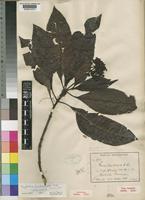
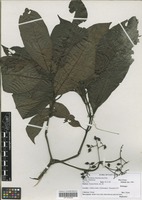
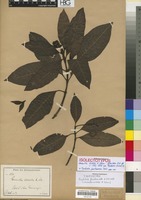
Lectotype of Psychotria fractinervata E.M.A.Petit [family RUBIACEAE]
Filed as Psychotria fractinervata E. M. A. Petit [family RUBIACEAE]
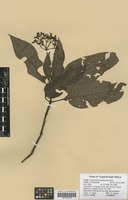
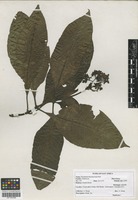
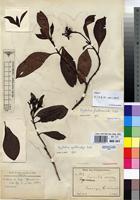
Isolectotype of Grumilea exserta K.Schum. Non DC. [family RUBIACEAE]
Filed as Psychotria fractinervata E. M. A. Petit [family RUBIACEAE]
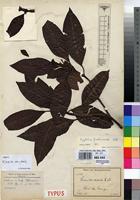
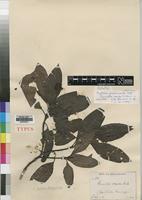
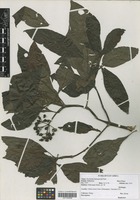
Type of Grumilea exserta K.Schum. [family RUBIACEAE]
Filed as Psychotria fractinervata E. M. A. Petit [family RUBIACEAE]
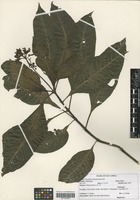
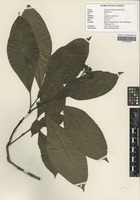
Isolectotype of Psychotria fractinervata Petit [family RUBIACEAE]
Isosyntype of Grumilea exserta K.Schum. Non DC. [family RUBIACEAE]
Filed as Psychotria fractinervata E. M. A. Petit [family RUBIACEAE]
Previous
Next

Name

Identification
Psychotria fractinervata E.M.A.Petit [family RUBIACEAE ] (stored under name); Grumilea exserta K.Schum. [family RUBIACEAE ]
Related name
  • Grumilea exserta
  • Psychotria fractinervata

Flora

Entry for PSYCHOTRIA fractinervata Petit [family RUBIACEAE]
Herbarium
Royal Botanic Gardens, Kew (K)
Collection
Flora of Tropical East Africa
Resource Type
Reference Sources
Entry From
Flora of Tropical East Africa, page 1, (1976) Author: B. VERDCOURT
Names
PSYCHOTRIA fractinervata Petit [family RUBIACEAE], in B.J.B.B. 34: 127 (1964) & in B.J.B.B. 42: 357 (1972) & in Distr. Pl. Afr. 5, map 137 (1973). Type: Tanzania, Kilimanjaro, Marangu, Volkens 1120 (K, lecto.!, BM!, BR, isolecto.)
Grumilea exserta K. Schum. [family RUBIACEAE], in P.O.A. C: 392 (1895); De Wild. in B.J.B.B. 9: 34 (1923); K. Krause in R.E. & T.C.E. Fries in N.B.G.B. 10: 607 (1929); T.T.C.L.: 497 (1949); K.T.S.: 444 (1961), non Psychotria exserta DC.
Information
Shrub or small tree 2–6(–7.5) m. tall, with glabrous or pubescent stems, often with quite dense ferruginous hairs when young. Leaf-blades narrowly elliptic to elliptic or oblong-elliptic, (3–)6–20 cm. long, (1–)2–7.3 cm. wide, acute to acuminate at the apex, cuneate at the base, glabrous above but usually with ferruginous hairs on the main and lateral nerves beneath, less often ± glabrous, thin, usually drying brownish, ± bullate above in life; lateral nerves usually quite distinctly zigzag and tertiary venation usually ± conspicuous; nodules absent, domatia usually present and often on lateral nerves; petiole 1–2.5 cm. long, glabrous or pubescent; stipules obovate, 1–2 cm. long, bilobed at the apex, the lobes 2–6 mm. long, glabrous or pubescent, particularly at the base, deciduous. Flowers heterostylous, 4–5-merous, slightly scented, in much-branched panicles 5–15 cm. long; peduncles 3–10 cm. long, glabrescent or pubescent; secondary branches 0.7–2.5 cm. long, mostly ferruginous pubescent; pedicels obsolete or up to 2.5 mm. long, pubescent; main bracts ± 5 mm. long, clasping the branches, hairy, others small. Calyx-tube ± hemispherical, 1–2 mm. long, glabrous or pubescent; limb cupuliform, 2–3 mm. long, glabrous or pubescent; lobes irregularly triangular, 0.5–1 mm. long, pubescent at least on the margins. Corolla white or cream; tube 4.5–7 mm. long, glabrous or pubescent outside; lobes oblong, 3–6 mm. long, 1.8 mm. wide, thickened and horned at the apex, densely finely papillate inside, glabrous outside, rugulose. Stamens with filaments 3–3.5 mm. long in short-styled flowers, 0.5 mm. long in long-styled flowers. Style 3.5–5 mm. long in short-styled flowers, 6–7 mm. long in long-styled flowers; stigma-lobes 0.5–1 mm. long. Drupes red, slightly but distinctly grooved when dry, with 2 pyrenes, ellipsoid or globose, 5–7 mm. long, 4–5.5 mm. wide, conspicuously crowned by the funnel-shaped calyx remains, 2–2.5 mm. long; pyrenes semi-elliptic or hemispherical, ± 5.5 mm. long, ± 4.5 mm. wide, 2.2 mm. thick, with dorsal face 5-grooved. Seeds similar, 4 mm. long and wide, 2 mm. thick, ventral face plane, dorsal face 5-grooved; albumen sulcate.
Range
DISTR. U3; K3, 4, 6; T2 not known elsewhere
Altitude range
(1500–)1800–2600 m. (see note)
Distribution
KENYA Naivasha District S. Kinangop, Sasumua Dam pipe-line road, 11 Dec. 1960, Verdcourt, Polhill & Lucas 3038!KENYA Kiambu District Lari, May 1930, Dale in F.D. 2361!KENYA Meru District Mt. Kenya, Marimba Forest, 14 Oct. 1960, Verdcourt & Polhill 2985! & 2990!TANZANIA Arusha District Mt. Meru, Dec. 1927, Haarer 940!TANZANIA Moshi District S. slopes of Kilimanjaro, N. of Moshi, 23 Feb. 1953, Drummond & Hemsley 1288! & Kilimanjaro, Marangu, 2 Jan. 1955, Verdcourt 1245!UGANDA Mbale District Mt. Elgon, Bugisu, 23 Apr. 1951, G. Wood 113b! (see note)
Notes
This is very similar to P. orophila, but the leaf-blades usually have domatia often on the lateral nerves and are hairier beneath; the flowers are mostly larger and the fruits are crowned with much longer more funnel-shaped calyx remnants; apart from this the lateral nerves have a curious tendency to be zigzag rather than straight. I have seen both in the field and had d that in the Meru District of Kenya P. fractinervata had the stipules much more obviously bifid, the leaf-blades more bullate above and more hairy beneath. On Mt. Meru in Tanzania collectors state that it grows at altitudes of 1500–1800 m., but elsewhere it is usually 2100–2400 m. The figures 1000–2000 m. and 3000 m. appear on several specimens collected by Grote on Kilimanjaro but both limits need confirmation. Petit’s maximum figure of 10 cm. for leaf-blade width is I think derived from a specimen (Wilson 768A) from Mt. Debasien which he annotated as P. fractinervata but did not cite; I have referred this specimen to P. orophila.

Related Materials

  • Terms and Conditions
  • Privacy Policy
  • Cookie Policy
  • Cookie Settings
  • Accessibility
  • Help
  • Contact Us
  • Facebook
  • Twitter
ITHAKA

JSTOR is part of ITHAKA, a not-for-profit organization helping the academic community use digital technologies to preserve the scholarly record and to advance research and teaching in sustainable ways.

©2000-2026 ITHAKA. All Rights Reserved. JSTOR®, the JSTOR logo, JPASS®, Aluka®, and ITHAKA® are registered trademarks of ITHAKA.

╳