JSTOR Global Plants Home
  • Home
  • Browse
  • About
  • Access
  • Account
    • Saved Items
    • Profile
  • Log in

Global Plants

Skip to Main Content
  • JSTOR Global Plants Home
  • Global Plants

    • Browse
    • About
    • Access
    • Account
      • Saved Items
      • Profile
Log in
  • Browse
  • About
  • Access
  • Account
    • Saved Items
    • Profile
Advanced Search

Compilation
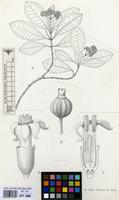
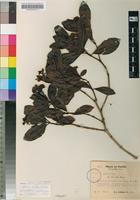
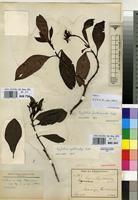
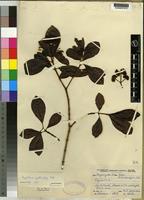
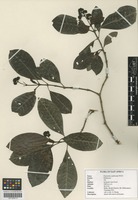
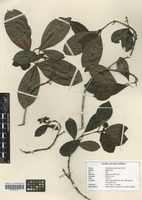
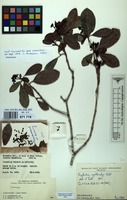
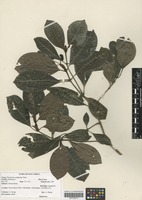
Psychotria cyathicalyx

19 Images see all

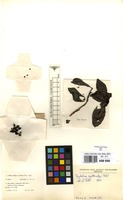
Filed as Psychotria cyathicalyx E.M.A.Petit [family RUBIACEAE]
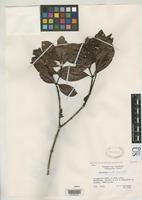
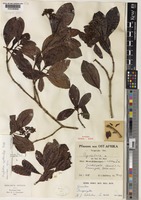
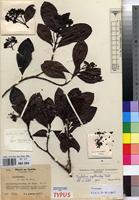
Isotype of Psychotria cyathicalyx Petit, F. 1964 [family RUBIACEAE]
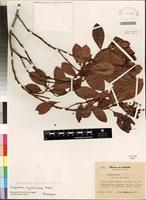
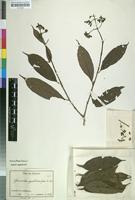
Isotype of Psychotria cyathicalyx Petit [family RUBIACEAE]
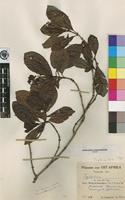
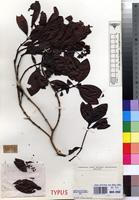
Isotype of Psychotria cyathicalyx E.M.A.Petit [family RUBIACEAE]
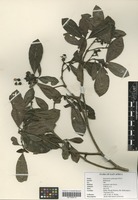
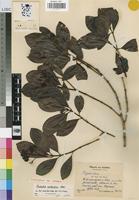
Isotype of Psychotria cyathicalyx E.M.A. Petit [family RUBIACEAE]
Isotype of Psychotria cyathicalyx E.M.A.Petit [family RUBIACEAE]
Filed as Psychotria cyathicalyx E. M. A. Petit [family RUBIACEAE]
Filed as Psychotria cyathicalyx E.M.A.Petit [family RUBIACEAE]
Isotype of Psychotria cyathicalyx E.Petit [family RUBIACEAE]
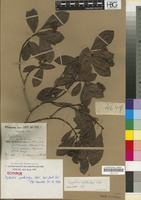
Isosyntype of Grumilea exserta K.Schum. Non DC. [family RUBIACEAE]
Isotype of Psychotria cyathicalyx Petit [family RUBIACEAE]
Filed as Psychotria cyathicalyx E. M. A. Petit [family RUBIACEAE]
Filed as Psychotria cyathicalyx E.M.A.Petit [family RUBIACEAE]
Filed as Psychotria cyathicalyx E. M. A. Petit [family RUBIACEAE]
Holotype of Psychotria cyathicalyx E.M.A.Petit [family RUBIACEAE]
Type? of Grumilea cyathicalyx K. Schum. [family RUBIACEAE]
Isotype of Psychotria cyathicalyx Petit [family RUBIACEAE]
Previous
Next

Name

Identification
Grumilea exserta K.Schum. Non DC. [family RUBIACEAE ] Verified by Not on sheet, Psychotria cyathicalyx E.M.A.Petit [family RUBIACEAE ] (stored under name); Verified by Not on sheet,
Related name
  • Grumilea exserta
  • Psychotria cyathicalyx

Flora

Entry for PSYCHOTRIA cyathicalyx Petit [family RUBIACEAE]
Herbarium
Royal Botanic Gardens, Kew (K)
Collection
Flora of Tropical East Africa
Resource Type
Reference Sources
Entry From
Flora of Tropical East Africa, page 1, (1976) Author: B. VERDCOURT
Names
PSYCHOTRIA cyathicalyx Petit [family RUBIACEAE], in B.J.B.B. 34: 93, t. 2 & photo. 2/K (1964) & in Distr. Pl. Afr. 4, map 119 (1972). Type: Tanzania, S. Kilimanjaro, Schlieben 4649 (BR, holo., B, EA!, HBG, K!, iso.)
Grumilea buchananii [family RUBIACEAE], [sensu T.T.C.L.: 499 (1949), non K. Schum.]
Information
Shrub 2–5 m. tall or tree up to 10 m., with glabrous stems. Leaf-blades elliptic or elliptic-oblanceolate to elliptic-obovate, 2.8–8(–10) cm. long, 1–5 cm. wide, obtusely acuminate, acute or ± obtuse at the apex, mostly narrowly acuminate at the base, glabrous on both surfaces but lower surface looking as if covered with very closely packed minute scales (due to the stomata), moderately thick; nodules and domatia absent; petiole 0.3–3 cm. long, glabrous; stipules whitish, obovate-elliptic to rounded, 0.5–1.5(–1.7) cm. long, obtuse at the apex, glabrous or margin sometimes ciliate, very soon deciduous; nodes with zone of hairs inside at base of stipules. Flowers heterostylous, 5-merous, in much-branched panicles 2.5–6 cm. long; peduncles 0.5–3 cm. long, glabrous or shortly pubescent; branches 0.3–1.2 cm. long, shortly sparsely pubescent; pedicels short or ± 1–2 mm. long, very shortly pubescent or tomentose; main bracts ovate, 2–3 mm. long, clasping the stem, rest small, often apically ciliate. Calyx-tube rounded-conical, 0.5–1 mm. long, glabrous or tomentose; limb campanulate to tubular, 2–3 mm. long, glabrous, often split for ± 1 mm.; lobes obtusely triangular, ± 0.5–1 mm. long, often ciliate on the apical margins. Corolla white or cream or reddish in bud, glabrous outside; tube 4–5 mm. long; lobes oblong-elliptic to ovate, 2 mm. long, 1–1.8 mm. wide, ± uncinate at the apex. Stamens with filaments ± 0.3 mm. long in short-styled flowers. Style 2.5–3 mm. long in short-styled flowers, 4.5 mm. long in long-styled flowers; stigma-lobes ± 0.5 mm. long. Drupes orange-red, with 2 pyrenes, subglobose or ellipsoid, 5–7 mm. long and wide, glabrous, grooved, crowned with the calyx-limb; pyrenes pale brown, semi-globose, 6 mm. long, 5–5.5 mm. wide, 2.5 mm. thick, dorsally 6-grooved. Seeds 5 mm. long, 4.5 mm. wide, 2.2 mm. thick, ventrally flat, dorsally obtusely ribbed; albumen all strongly ruminate. Fig. 2.
Range
DISTR. T2, 3, 6 not known elsewhere
Altitude range
1600–3000 m.
Distribution
TANZANIA Moshi District Kilimanjaro, Bismarck Hill, 28 Feb. 1934, Greenway 3874!TANZANIA Lushoto District W. Usambara Mts., Magamba Peak, 7 Nov. 1947, Brenan & Greenway 8302! & 8302A! & Kwai valley, Matondwe Hill, 28 Feb. 1953, Drummond & Hemsley 1346!TANZANIA Morogoro District Uluguru Mts., S. Uluguru Forest Reserve, edge of Lukwangule Plateau, 17 Mar. 1953, Drummond & Hemsley 1663!
Notes
Certain specimens from the Uluguru Mts. are distinctly atypical and could probably be separated off as a variety. All have a reduced calyx-limb in fruit and some have other variant characteristics, but all have the same close pattern on the undersurfaces of the leaves due to stomata simulating silvery scales which is also evident in all typical specimens. Drummond & Hemsley 1639 (S. Uluguru Forest Reserve, edge of Lukwangule Plateau, 2200 m., 17 Mar. 1953) has been annotated by Petit as sp. nov. aff. P. cyathicalyx; it has the reduced calyx and the leaf venation raised above, Thulin & Mhoro 1026 (same locality, 2300 m., 19 Sept. 1970) has the young infloresscences and midribs on undersides of the very young leaves ferruginous pubescent. Harris et al. 5086 and Gibbon & Pócs 6051/A (both from Uluguru Mts., Bondwa Peak, 26 Sept. 1970 & 12 Oct. 1969) have the reduced calyx-limb. Detailed field investigations are needed to establish the relations between these and typical specimens which also occur in the same areas of the Uluguru Mts.

Related Materials

  • Terms and Conditions
  • Privacy Policy
  • Cookie Policy
  • Cookie Settings
  • Accessibility
  • Help
  • Contact Us
  • Facebook
  • Twitter
ITHAKA

JSTOR is part of ITHAKA, a not-for-profit organization helping the academic community use digital technologies to preserve the scholarly record and to advance research and teaching in sustainable ways.

©2000-2026 ITHAKA. All Rights Reserved. JSTOR®, the JSTOR logo, JPASS®, Aluka®, and ITHAKA® are registered trademarks of ITHAKA.

╳