JSTOR Global Plants Home
  • Home
  • Browse
  • About
  • Access
  • Account
    • Saved Items
    • Profile
  • Log in

Global Plants

Skip to Main Content
  • JSTOR Global Plants Home
  • Global Plants

    • Browse
    • About
    • Access
    • Account
      • Saved Items
      • Profile
Log in
  • Browse
  • About
  • Access
  • Account
    • Saved Items
    • Profile
Advanced Search

Compilation
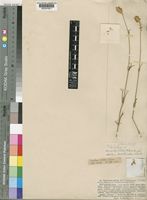
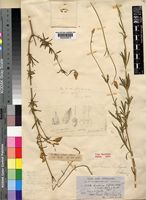
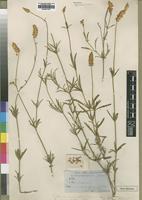
Psilotrichum rubellum

3 Images see all

Centemopsis biflora (Schinz) Schinz [family AMARANTHACEAE]
Type of Centema biflora Schinz [family AMARANTHACEAE]
Previous
Next

Name

Identification
Psilotrichum rubellum Baker [family AMARANTHACEAE ] Centema biflora Schinz [family AMARANTHACEAE ] Centemopsis biflora (Schinz) Schinz [family AMARANTHACEAE ] (stored under name);
Related name
  • Psilotrichum rubellum
  • Psilotrichum unrecorded
  • Centemopsis biflora
  • Centema biflora

Flora

Entry for CENTEMA biflora Schinz [family AMARANTHACEAE]
Herbarium
Royal Botanic Gardens, Kew (K)
Collection
Flora of Tropical Africa
Resource Type
Reference Sources
Entry From
Flora of Tropical Africa, Vol 6, Part 1, page 14, (1913) Author: (By J. G. Baker, with additions by C. H. Wright.)
Names
CENTEMA biflora Schinz [family AMARANTHACEAE], in Engl. Jahrb. xxi. 183. —Schinz in Engl. & Prantl, Pflanzenfam. iii. 1A, 107, in Engl. Pfl. Ost-Afr. C. 172; Hiern in Cat. Afr. Pl. Welw. i. 889; Lopr. in Engl. Jahrb. xxvii. 47 in obs.
CENTEMA polygonoides Lopr. [family AMARANTHACEAE], in Engl. Jahrb. xxvii. 48, in Malpighia, xiv. 442.
Psilotrichum rubellum Baker [family AMARANTHACEAE], in Kew Bulletin, 1897, 279.
Information
Stem erect, 2–3 ft. high, scabrid with tubercles on the ribs. Leaves opposite, up to 3 by 1/2 in. (usually much smaller), pubescent; petioles in the large leaves 1/2 in. long, in the small leaves hardly any. Inflorescences terminal, peduncled, up to 2 by 1/2 in., very dense, with often ovoid heads 1/2 in. long on the same stem. Partial inflorescences with 1 or 2 fertile flowers, brown-reddish or red; sterile flowers with scanty long fine hairs on their back, the bracts ending in straight scabrid short spines. Staminal tube and sterile filaments of the genus. Ovary ovoid, hairy, conic at the top.
Distribution
Angola Lower Guinea Huilla; Morro de Lopollo, Welwitsch, 6509! Humpata; Chella Mountains, Johnston!German East Africa Mozamb. Dist. Uhehe, 5000 ft., Goetze, 656!
Notes
The Nyasa example is altogether larger than the Angola plants, and has mostly 2-flowered partial inflorescences.

Related Materials

  • Terms and Conditions
  • Privacy Policy
  • Cookie Policy
  • Cookie Settings
  • Accessibility
  • Help
  • Contact Us
  • Facebook
  • Twitter
ITHAKA

JSTOR is part of ITHAKA, a not-for-profit organization helping the academic community use digital technologies to preserve the scholarly record and to advance research and teaching in sustainable ways.

©2000-2026 ITHAKA. All Rights Reserved. JSTOR®, the JSTOR logo, JPASS®, Aluka®, and ITHAKA® are registered trademarks of ITHAKA.

╳