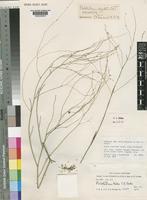
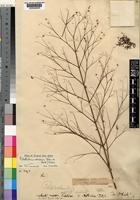
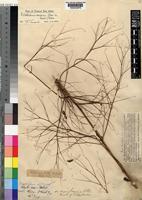
Psilotrichum kirkii(Baker) C.B.Clarke [family AMARANTHACEAE ] Psilotrichum virgatumC.C.Towns. [family AMARANTHACEAE ] (stored under name); Verified by Townsend, C. C.,
Related name
Psilotrichum cordato
Psilotrichum kirkii
Psilotrichum sericeum
Psilotrichum virgatum
Psilotrichum condato
Flora
Entry for PSILOTRICHUM Kirkii C. B. Cl. [family AMARANTHACEAE]
Herbarium
Royal Botanic Gardens, Kew (K)
Collection
Flora of Tropical Africa
Resource Type
Reference Sources
Entry From
Flora of Tropical Africa, Vol 6, Part 1, page 14, (1913) Author: (By J. G. Baker, with additions by C. H. Wright.)
Names
PSILOTRICHUM KirkiiC. B. Cl. [family AMARANTHACEAE]
Psilostachys KirkiiBaker [family ], in Kew Bulletin, 1897, 279.
Information
Leaves (imperfectly preserved) much as of P. cordatum, Moquin. Panicle 1–2 ft. long or more, glabrate, with a central rhachis and numerous suberect lateral branches, which again are divided repeatedly dichotomously. Ultimate branches and the small spikes nearly glabrous. Bracteoles hardly 1/3 the length of the perianth, nearly glabrous. Perianth in fruit hardly 1/8 in. long, strongly ribbed, glabrous or obscurely gland-puberulous between the ribs, more ovoid than that of P. cordatum, Moquin, and the seed less flattened.
Distribution
British East Africa Nile Land Sabaki River, near Malindi, Kirk!