JSTOR Global Plants Home
  • Home
  • Browse
  • About
  • Access
  • Account
    • Saved Items
    • Profile
  • Log in

Global Plants

Skip to Main Content
  • JSTOR Global Plants Home
  • Global Plants

    • Browse
    • About
    • Access
    • Account
      • Saved Items
      • Profile
Log in
  • Browse
  • About
  • Access
  • Account
    • Saved Items
    • Profile
Advanced Search

Compilation
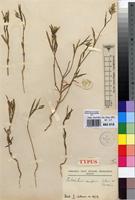
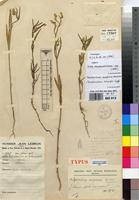
Psilotrichum camporum

2 Images see all

Type of Psilotrichum camporum Hauman [family AMARANTHACEAE]
Previous
Next

Name

Identification
Psilotrichum camporum Hauman [family AMARANTHACEAE ] Verified by Not on sheet, Psilotrichum schimperi Engl. [family AMARANTHACEAE ] (stored under name); Verified by Not on sheet,
Related name
  • Psilotrichum camporum
  • Psilotrichum schimperi

Flora

Entry for Psilotrichum schimperi Engl. [family AMARANTHACEAE]
Herbarium
Royal Botanic Gardens, Kew (K)
Collection
Flora Zambesiaca
Resource Type
Reference Sources
Entry From
FZ, Vol 9, Part 1, page 28, (1988) Author: C. C. Townsend
Names
Psilotrichum schimperi var. gramineum Suesseng. Suesseng. [family AMARANTHACEAE], tom. cit. 1: 194 (1953).
Psilotrichum schimperi Engl. [family AMARANTHACEAE], in Abh. Königl. Preuss. Akad. Wiss. Berlin 1891 (Hochgebirgsflora des trop. Afr.): 207 (1892).—Baker & Clarke in F.T.A. 6, 1: 59 (1909).—Schinz in Engl. & Prantl Pflanzenfam. ed. 2, 16 C: 60 (1934). TAB. 24 fig. C. Type from Ethiopia.
Psilotrichum angustifolium Gilg [family AMARANTHACEAE], in Notizbl. Bot. Gart. Berl. 1: 328 (1897). Type from Tanzania.
Psilotrichum camporum Lebrun & Toussaint ex Hauman [family AMARANTHACEAE], in Bull. Jard. Bot. Brux. 18: 110 (1946).—Hauman in F.C.B. 2: 39 (1951). Type from Rwanda.
Psilotrichum gramineum Suesseng. [family AMARANTHACEAE], in Mitt. Bot. Staatss. München 1: 111 (1952). Type from Kenya.
Information
Erect or decumbent annual, (15) 30–75 cm. tall, with numerous branches from the base upwards (or small plants unbranched below the inflorescence), vegetative parts glabrous or with scattered strigose hairs (especially along the margins and midrib of the upper leaves and on the upper internodes). Stem and branches strongly striate, subsulcate, or the basal internodes terete, nodes slightly swollen. Leaves linear, 3.5–12 × 0.2–1 cm., rather blunt at the apex with a distinct mucro formed by the confluence of the thickened margins and strong, excurrent midrib, attenuate and subsessile at the base. Inflorescences of axillary spikes c. 0.7 cm. wide and finally elongating to as much as c. 14 cm., on peduncles 0.2–6.5 cm. long, the upper often alternate; bracts deltoid-lanceolate, 1.5–2 mm. long, membranous except for the greenish, excurrent midrib, finally spreading; bracteoles similar but slightly smaller. Flowers sessile. Tepals green or sometimes suffused with red or brown, prominently 3-nerved and the nerves confluent with the midrib above but not excurrent in a mucro; outer 2 lanceolate-oblong, 3.5–4 mm. long, obtuse, with a very narrow hyaline border, shortly scabrid-pilose along the margins, nerves and often also between the nerves; inner 2 more broadly hyaline-bordered, the margins fringed with long, white hairs; middle tepal with one margin broadly hyaline and long-pilose, the other narrowly hyaline and scabrid. Stamens c. 2.5 mm. long, very delicate, almost free; pseudostaminodes none. Style c. 0.5 mm. long. Capsule ovoid, 2.75–3 mm. long. Seed ovoid, 1.5–2 mm., black, shining, faintly reticulate.
Habitat
where it also occurs in other damp areas in seasonally wet grassland, in Acacia woodland, even in deep mud in a swamp, but apparently always on black clay
Altitude range
970–1670 m.
1670
970
Distribution
Zambia S Kafue Pilot Polder, Kafue Flats W. of Mazabuka, iii.1962, Brochington 10 (K; SRGH).
Distribution (external)
Uganda
Kenya
Tanzania
Ethiopia
Rwanda
Notes
All the material seen of this species from Zambia (4 gatherings) is from the same area, where one collector (van Rensburg 2677) states that it is a very abundant weed on heavy black clay soil with Paspalum.A further species of this genus certainly occurs in the Flora Zambesiaca area. It is represented by herbarium material: Zambia, Mbala Distr., in shade in ground layer of “Itigi” type thicket of Burttia, Pseudoprosopis etc. near Mpulungu, Lake Tanganyika, 17.xi.1952, Angus 778 (FHO; K). This has been determined as Psilotrichum trichophyllum Bak. (i.e., P. elliotii Bak.), but is apparently not that species. The material is very poor, and the plant needs recollecting.

Related Materials

  • Terms and Conditions
  • Privacy Policy
  • Cookie Policy
  • Cookie Settings
  • Accessibility
  • Help
  • Contact Us
  • Facebook
  • Twitter
ITHAKA

JSTOR is part of ITHAKA, a not-for-profit organization helping the academic community use digital technologies to preserve the scholarly record and to advance research and teaching in sustainable ways.

©2000-2026 ITHAKA. All Rights Reserved. JSTOR®, the JSTOR logo, JPASS®, Aluka®, and ITHAKA® are registered trademarks of ITHAKA.

╳